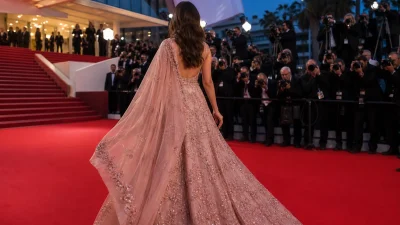
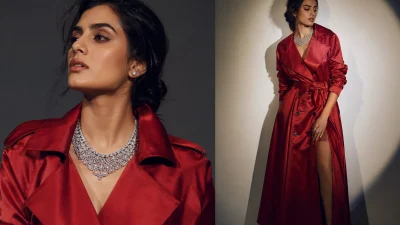
India’s 2026 Fashion Revolution: How Pre-Draped Sarees, Indo-Western Fusion, and Sustainable Design Are Redefining What Women Wear

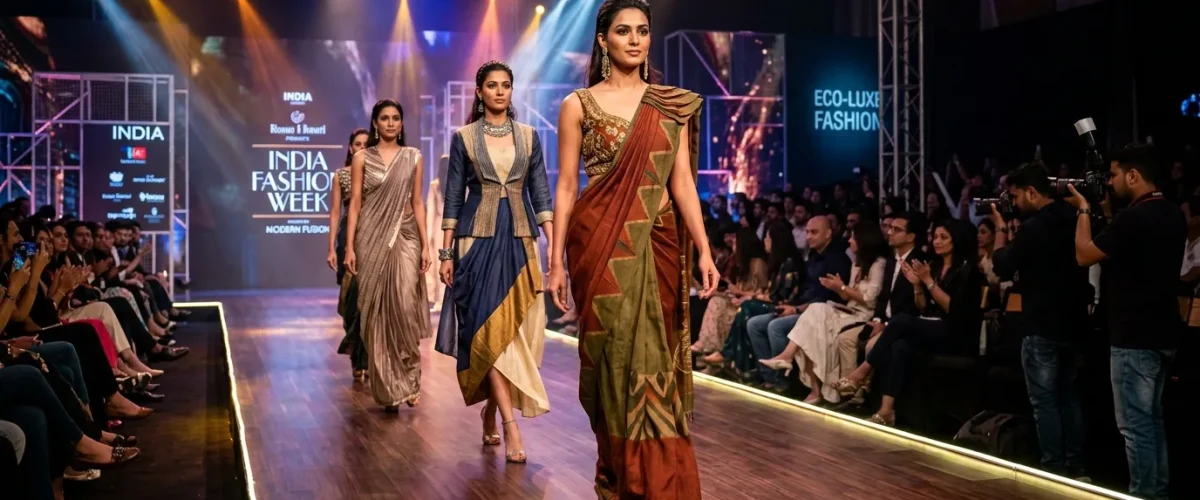
India’s fashion landscape in 2026 is undergoing a quiet but powerful revolution — one driven not by Paris runways or Milan fashion weeks, but by Indian women who refuse to choose between heritage and convenience. The numbers tell the story: pre-draped sarees are selling out in under four hours on platforms like Nykaa Fashion and Ajio; Indo-Western kurta sets have become the single fastest-growing category on Myntra (up 65 percent year-over-year); and sustainable fashion brands built on Indian textiles like khadi, chanderi, and Banarasi silk are commanding premium prices that rival international luxury labels.
This is not just a fashion trend — it’s a cultural movement. For Fashion, the 2026 fashion revolution represents a fundamental shift in how Indian women express identity through clothing.
Pre-Draped Sarees: The Trend That Changed Everything
The pre-draped saree — a saree that comes pre-stitched and can be worn in under 60 seconds without pins, pleats, or the traditional draping process — has gone from a niche party solution to the single most important innovation in Indian women’s fashion in a decade. The concept isn’t new (designers like Anamika Khanna and Shantanu & Nikhil experimented with pre-draped styles in the 2010s), but 2026 is the year it went mass-market.
The catalyst was Nykaa Fashion’s “60-Second Saree” collection, launched in February 2026 in collaboration with designer Masaba Gupta. The collection — featuring pre-draped sarees in contemporary prints priced between ₹4,999 and ₹12,999 — sold out its initial run of 25,000 units in 3 hours and 47 minutes, crashing Nykaa’s servers in the process. The collection has been restocked three times since, with cumulative sales exceeding ₹40 crore.
“The pre-draped saree isn’t replacing the traditional saree — it’s expanding who can wear one,” said Masaba Gupta in an interview with Vogue India. “A 25-year-old woman working at a Bengaluru tech company who has never learned to drape a saree can now wear one to a Wednesday meeting. That’s not cultural dilution — it’s cultural expansion.” Related trends: Holi 2026 and India’s Spring Festivals: Celebrations, Traditions,
Indo-Western Fusion: The New Uniform of Urban India
If pre-draped sarees are the statement piece, Indo-Western fusion is the everyday wardrobe workhorse of 2026. The aesthetic — which combines elements of Indian traditional wear (kurta cuts, Indian textiles, embroidery) with Western silhouettes (wide-leg trousers, structured jackets, shirt dresses) — has moved from experimental designer collections to mainstream fast fashion.
Myntra’s Q1 2026 trend report revealed that Indo-Western sets (kurta with palazzo pants or dhoti pants) now account for 28 percent of all women’s ethnic wear sales on the platform, up from 17 percent in Q1 2025. The average order value for Indo-Western sets (₹2,200) is also higher than for traditional salwar kameez (₹1,800), suggesting that consumers are willing to pay a premium for the fusion aesthetic.
Instagram has been the primary driver. Fashion influencers like Komal Pandey (2.8 million followers), Santoshi Shetty (1.5 million followers), and Dolly Singh (1.2 million followers) have been instrumental in normalizing Indo-Western looks for everyday occasions — not just weddings and festivals. A typical viral Indo-Western outfit post in 2026 features a structured chanderi jacket over wide-leg trousers, accessorized with oxidized silver jewelry and kolhapuri sandals. For the broader Culture & Lifestyle, this fusion aesthetic reflects a generation comfortable with cultural hybridity. Rowdy Place in Tamilnadu
Sustainable Fashion: India’s Textile Heritage Meets Conscious Consumption
The third pillar of India’s 2026 fashion revolution is sustainability — and here, India has a natural advantage. The country’s millennia-old textile traditions — handloom weaving, natural dyeing, block printing, hand embroidery — are inherently sustainable, low-carbon, and artisan-powered. In 2026, a growing cohort of Indian fashion brands is leveraging this heritage to build premium sustainable fashion labels that compete with (and often outsell) international sustainable brands.
Leading the charge is the government’s Khadi initiative. Sales of khadi products through the Khadi and Village Industries Commission (KVIC) crossed ₹1.5 lakh crore in FY2026, a 22 percent increase over FY2025. But it’s the private sector that’s making khadi fashionable. Brands like Khara Kapas, Nicobar, and Grassroot by Anita Dongre are creating contemporary khadi garments — shirt dresses, blazers, wide-leg trousers — that appeal to urban consumers willing to pay ₹3,000-₹8,000 for a single piece.
Chanderi and Banarasi silk are experiencing similar reinventions. Varanasi-based Tilfi, which sells handwoven Banarasi sarees online, reported a 45 percent revenue increase in FY2026, driven by younger buyers (ages 25-35) purchasing their first Banarasi saree. “Our fastest-selling sarees are not the heavy bridal pieces,” said Tilfi co-founder Udit Kumar. “They’re the lightweight, contemporary Banarasi sarees that women can wear to work or a gallery opening.” Related coverage: 1 to 50 Numbers in Sanskrit
Lakme Fashion Week 2026: Setting the Tone
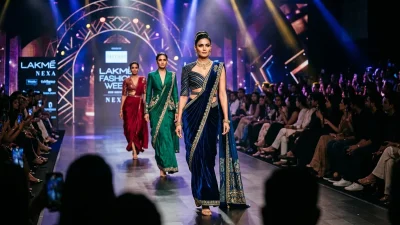
Lakme Fashion Week, held in Mumbai in March 2026, served as the official announcement of these trends to the global fashion industry. The show’s three defining themes were sustainability (50 percent of featured designers used at least 70 percent sustainable materials), inclusivity (models ranged from sizes 0 to 22, with dedicated plus-size shows for the first time), and technology integration (digital twin fashion shows allowed global audiences to experience collections in VR).
Standout collections included Rahul Mishra’s “Roots” collection, which featured hand-embroidered sustainable silks depicting Indian forest ecosystems, Anamika Khanna’s “Neo Drape” line of pre-draped sarees that received a standing ovation, and Sabyasachi’s surprise collaboration with Uniqlo, offering a limited-edition collection of Indo-Western basics priced under ₹3,000 — making high-design Indian fashion accessible to mass-market consumers for the first time.
The Business of Fashion: India’s Apparel Market in 2026
India’s domestic apparel market is projected to reach $110 billion in 2026, according to McKinsey’s “State of Fashion” report, making it the world’s third-largest after the US and China. Ethnic wear, which includes traditional and Indo-Western categories, accounts for approximately 35 percent of the women’s apparel market and is growing at 12 percent annually — faster than Western wear (8 percent) or athleisure (10 percent).
The growth is being fueled by three structural factors: rising disposable incomes in tier-2 and tier-3 cities (where ethnic wear preference is strongest), the wedding and festival economy (India hosts an estimated 10 million weddings annually, each an occasion for new ethnic wear purchases), and cultural pride among Gen Z and millennial consumers who view Indian fashion as a statement of identity rather than tradition.
India’s 2026 fashion revolution is not a rejection of Western fashion — it’s a confident assertion that Indian design can be modern, sustainable, and globally relevant on its own terms. From the working woman who wears a pre-draped saree to her office to the Gen Z student who pairs a khadi jacket with sneakers, Indian fashion in 2026 is defined by one word: choice. And for the first time, that choice is as wide, as creative, and as authentically Indian as the country’s textile heritage deserves.