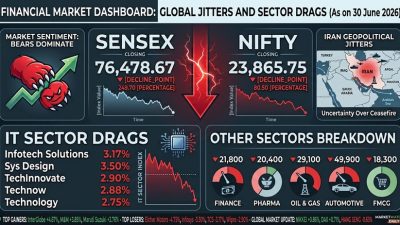
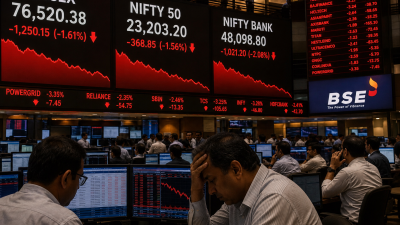
Sensex Falls 750 Points on April 22 as IT Stocks Crash and Iran Ceasefire Doubts Rock Dalal Street

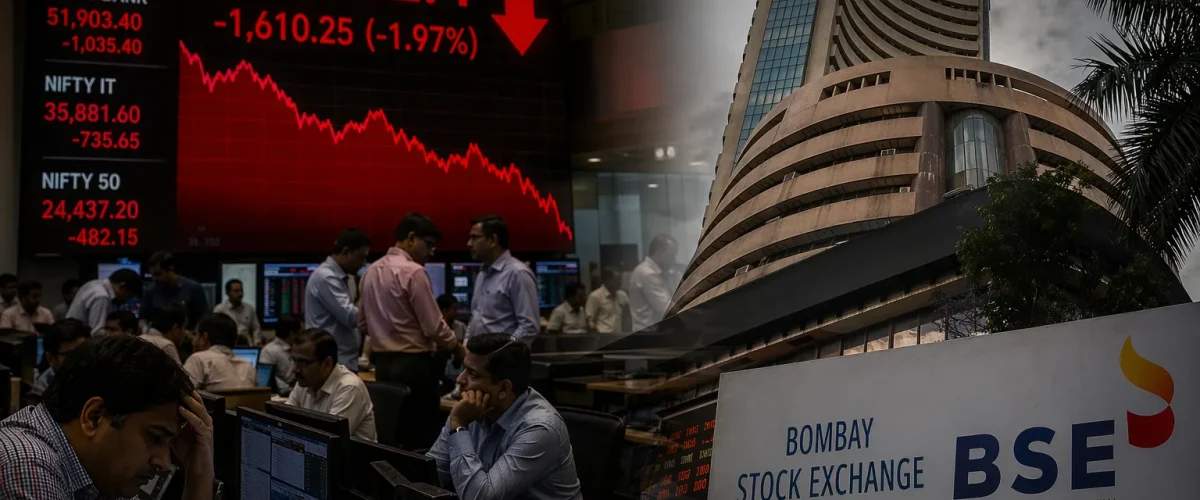
Indian equity markets took a sharp hit on Tuesday, April 22, 2026, as the BSE Sensex plunged approximately 750 points and the Nifty 50 slipped below the crucial 24,400 level. The sell-off, which wiped out the gains from the previous session’s strong rally, was driven by a toxic combination of crashing IT stocks, mounting fears over the expiring US-Iran ceasefire, and a strengthening US dollar that put pressure on foreign portfolio flows.
The benchmark Sensex, which had advanced over 1% on Monday riding a wave of optimism around Q4 corporate earnings, opened lower at 78,872 — down 377 points from the previous close — and never recovered. Selling intensified through the session as news emerged that Iran had definitively pulled out of the second round of peace talks with the United States in Pakistan. By the closing bell, the Sensex had settled roughly 750 points lower, while the Nifty 50 ended the day below 24,400, marking one of the sharpest single-day declines in April.
IT Stocks Lead the Carnage on Dalal Street
The information technology sector was the biggest drag on both benchmark indices. Infosys, India’s second-largest IT services company, tumbled 3% to close at ₹12,721. HCL Technologies, Tech Mahindra, and Wipro all featured prominently among the session’s top losers. The Nifty IT index recorded one of its worst sessions in recent weeks, reflecting a broader global rotation away from technology stocks amid rising risk aversion.
The IT sell-off was driven by multiple converging factors. First, the US dollar strengthened to a week-high against major currencies, including the Indian rupee. While a stronger dollar theoretically benefits Indian IT companies that earn predominantly in US dollars, the current strength is driven by risk-off sentiment rather than economic optimism — a distinction that matters to institutional investors. Second, the tech-heavy Nasdaq Composite in the United States had ended its previous session lower, with Nvidia declining and the broader technology rally losing momentum. Indian IT stocks, which closely track Nasdaq sentiment, followed suit.
Adding to the sector’s woes, concerns about discretionary technology spending cuts by global clients have been mounting. With the US-Iran conflict disrupting energy markets and threatening a global economic slowdown, enterprises worldwide are tightening budgets. The fact that Oracle’s mass layoffs rattled IT sector sentiment in recent weeks has only compounded anxiety about the sector’s near-term earnings outlook. For investors tracking Indian stock market analysis, the IT sector’s weakness signals a potential shift in market leadership.
Iran Ceasefire Doubts Fuel Market Anxiety
The geopolitical backdrop was the primary catalyst for the broad-based selling. The US-Iran ceasefire, brokered on April 8, is set to expire on the evening of April 22 (Washington time), and Iran’s refusal to attend further negotiations in Pakistan has left markets deeply uncertain about what comes next. Brent crude oil prices have been trading between $93 and $95 per barrel, and any resumption of hostilities could push prices above $100 — a scenario that would be particularly damaging for oil-importing economies like India.
The Strait of Hormuz, through which approximately 25% of the world’s seaborne oil passes, has been effectively blockaded since the conflict began in late February. Ship transits through the strategic waterway have collapsed from hundreds per week to near-zero, and Iran’s Islamic Revolutionary Guard Corps has launched over 21 confirmed attacks on merchant vessels. For India, which imports roughly 85% of its crude oil needs, the continued closure of this critical chokepoint is an existential economic threat.
GIFT Nifty had already signalled the weakness before the market opened, trading 146 points lower at 24,428. Global markets were also under pressure, with the FTSE 100 falling 1.05%, the CAC 40 declining 1.14%, and the DAX dropping 0.60%. The risk-off mood was unmistakable across asset classes.
India VIX Surges as Volatility Spikes
The India VIX, often referred to as the “fear gauge” of Dalal Street, surged 5.75% during the session to reach 18.54, up from the previous close of 17.53. The VIX measures the market’s expectation of volatility over the next 30 days using Nifty options pricing, and a sharp rise indicates that traders are bracing for significant price swings ahead.
A VIX level above 18 is notable. While it remains below the 52-week high of 28.91 — reached during the initial outbreak of the US-Iran conflict — the current trajectory suggests that market participants expect turbulence to intensify in the coming sessions. Historically, elevated VIX levels coincide with sharp market corrections, and options traders have been actively hedging their portfolios with protective puts.
The RBI’s recent decision to hold the repo rate at 5.25% has provided some monetary policy stability, but the central bank’s ability to shield markets from external shocks is limited. With crude oil prices elevated and the rupee under pressure, the RBI may need to intervene in currency markets to prevent a disorderly depreciation that could further spook foreign investors.
Sectoral Performance: Winners and Losers
While IT stocks bore the brunt of the selling, the damage was widespread across most sectors. The Bank Nifty fell 0.24% to 57,245 during early trading, while the Fin Nifty declined 0.26% to 26,779. The broader market saw approximately 883 stocks opening in the red against 1,437 in the green, though the ratio deteriorated significantly as the session progressed.
Among individual stocks, Mahindra & Mahindra dropped 2.60% to ₹3,163 as automobile stocks faced headwinds from rising input costs linked to elevated crude prices. Auto companies are particularly sensitive to oil price movements, as higher fuel costs dampen consumer demand for vehicles and increase raw material expenses.
On the positive side, select defensive stocks managed to buck the trend. Tata Consumer Products surged an impressive 3.44% to ₹1,181, while Hindustan Unilever gained 2.62% to ₹23,713. NTPC also rose 2.41% to ₹405.75, benefiting from expectations that elevated energy prices could boost power sector profitability. The rotation into defensive names like FMCG and utilities is a classic risk-off trade that reinforces the bearish market sentiment.
Just last week, the Q4 FY26 earnings season began on a strong note, with TCS and banking heavyweights delivering results that briefly lifted sentiment. However, the geopolitical overhang has proven too powerful for even robust fundamentals to overcome.
Dollar Strength and FII Flows Add to Pressure
The US dollar’s strength has been a persistent headwind for emerging markets, including India. The dollar index rose to a weekly high on April 22, driven by safe-haven demand as investors fled risky assets amid the Middle East uncertainty. A stronger dollar makes emerging market assets less attractive to foreign portfolio investors, who have been net sellers of Indian equities in recent sessions.
Foreign institutional investors (FIIs) have been reducing their exposure to Indian markets, with net outflows adding to the selling pressure. The rupee, which had stabilised in recent weeks, came under renewed pressure as the dollar strengthened, creating a negative feedback loop: a weaker rupee reduces the dollar-denominated returns for foreign investors, prompting further selling that weakens the rupee even more.
What Should Investors Do Now?
Market analysts are advising a cautious, wait-and-watch approach. The next 48 hours are critical — if the US-Iran ceasefire expires without renewal and hostilities resume, markets could face another sharp leg lower. Conversely, any last-minute diplomatic breakthrough could trigger a relief rally.
“Investors are waiting for greater clarity on the Middle East situation, which has contributed to higher volatility. The next few days are going to be highly crucial. As of now, it’s best to adopt a wait-and-watch policy,” noted analysts at Kotak Securities in their post-market commentary.
For retail investors, the current environment underscores the importance of diversification and risk management. Those with well-structured personal finance strategies — including adequate emergency funds, diversified asset allocation, and systematic investment plans (SIPs) — are better positioned to weather short-term volatility without making panic-driven decisions.
Key levels to watch on Wednesday include Nifty support at 24,200, with resistance at 24,600. A decisive break below 24,200 could open the door to further declines toward 23,800 — levels last seen during the April 13 sell-off when the Sensex fell 703 points and the Nifty ended below 23,850. The India VIX trajectory will be equally important: a continued rise above 20 would signal that the market expects further turbulence, while a pullback would suggest that the worst of the selling may be behind us.