India EV Sales Smash All-Time Record at 24.5 Lakh Units in FY26 as Electric Cars Surge 84 Percent

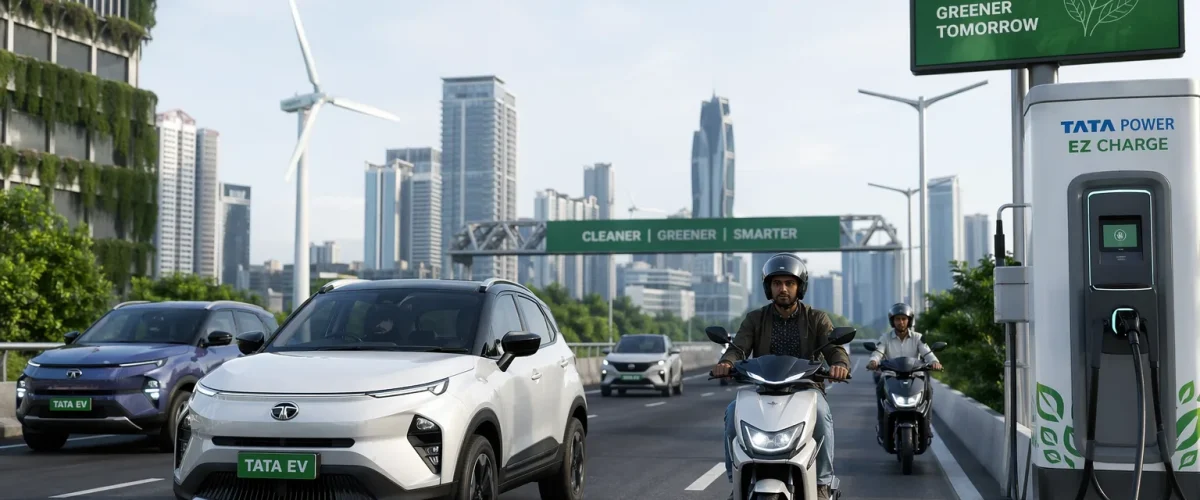
India’s electric vehicle revolution hit a major milestone in FY2025-26 (FY26), with total EV retail sales smashing all previous records at approximately 24.5 lakh (2.45 million) units — a remarkable 25 percent increase from the 19.67 lakh units sold in FY25. The most dramatic story belongs to electric passenger cars, which surged an astonishing 84 percent year-on-year, signaling that India’s EV transition is accelerating far faster than industry analysts predicted. For the latest on top Indian companies news driving this transformation, the FY26 numbers tell a compelling story of ambition, competition, and consumer confidence.
Record 24.5 Lakh EV Sales: Breaking Down the Numbers
According to data from the Federation of Automobile Dealers Associations (FADA), India’s EV industry clocked retail sales of over 24.5 lakh units across all vehicle categories in FY26. FADA President C.S. Vigneshwar described FY26 as a “defining period” for the industry, with every EV segment posting strong double-digit growth.
Electric two-wheelers remained the largest segment with 14 lakh (1.4 million) units sold, accounting for 57 percent of India’s total EV market. This represented a healthy 22 percent year-on-year growth from 11.5 lakh units in FY25. EV penetration in the two-wheeler segment rose to 6.5 percent of total two-wheeler sales, up from approximately five percent in the previous fiscal year.
Electric three-wheelers delivered a solid performance with approximately 8.3 lakh units, continuing their dominance as the most electrified vehicle category in India. Electric three-wheelers now account for nearly 58 percent of all three-wheeler sales, demonstrating how completely the segment has embraced the EV transition.
Electric passenger vehicles recorded the fastest growth, with registrations rising 84 percent year-on-year to nearly 2 lakh (198,224) units in FY26 from roughly 1.08 lakh units in FY25. EV car penetration in India’s 47-lakh passenger vehicle market stood at 4.3 percent, up from 2.7 percent the previous year. Electric commercial vehicles also witnessed rapid expansion, with sales climbing 121 percent to 19,454 units.
Electric Cars: Tata Leads, But Mahindra Is the Breakout Star
Tata Motors retained its leadership in the electric car segment, selling 78,811 units in FY26 — a 36 percent increase from 57,994 units the previous year. EVs comprised approximately 12 percent of Tata’s total passenger vehicle sales of 6.42 lakh units, significantly higher than the industry average. The company’s success was driven by strong demand for models like the Nexon EV, Punch EV, and the newly launched Harrier EV. However, Tata’s EV market share declined from 53.4 percent to 39.2 percent, reflecting intensifying competition.
JSW MG Motor India held the number two position with 53,089 units, marking a 74 percent jump from 30,569 units in FY25. The company’s aggressive pricing and expanded model lineup helped it maintain a 26.4 percent market share.
The biggest surprise of FY26 was Mahindra & Mahindra, which emerged as the fastest-growing player with a jaw-dropping 407 percent surge in EV car sales to 42,721 units from just 8,426 units in FY25. Its expanding electric portfolio, including the XEV9E, BE6, and XEV9S, propelled Mahindra from a marginal player to the number three position with a 21.2 percent market share, up from just 7.8 percent the previous year.
Other notable performers included Hyundai, which more than doubled its EV sales to 5,885 units driven by the Creta Electric, and Kia India, whose sales rose nearly nine-fold to 3,738 units thanks to the Carens Clavis EV. Maruti Suzuki entered the EV race with the e-Vitara, selling 1,416 units in less than two months. In the luxury segment, BMW recorded 3,537 EV sales — a 124 percent increase — while Tesla, which began Indian operations in July 2025 with the Model Y, sold 342 units during its debut partial year.
Two-Wheeler EV Wars: TVS Dethrones Ola Electric
The electric two-wheeler segment witnessed a dramatic reshuffling of market positions in FY26. TVS Motor Company emerged as the undisputed market leader, overtaking Ola Electric, which had dominated the category in previous years. TVS’s iQube and newer models like the Orbiter delivered consistent volumes, backed by India’s most extensive EV service network.
Bajaj Auto secured the number two position with 289,323 e-scooters sold — a 25 percent increase — driven by its popular Chetak electric range. The Pune-based company surpassed the 250,000 milestone for the first time, commanding a 21 percent market share.
Ather Energy held strong in third place with approximately 235,000 units, recording 68 percent year-on-year growth in certain months. The Bengaluru-based company’s successful transition from niche premium brand to mass-market player was driven by the Rizta family scooter, which now accounts for the majority of its volume.
Hero MotoCorp’s Vida brand also emerged as a surprise performer, recording explosive growth of over 700 percent year-on-year in some months and steadily building presence in Tier-2 and Tier-3 cities.
The most striking story was Ola Electric’s dramatic decline. The company that once commanded nearly 40 percent of the electric two-wheeler market saw a 53 percent drop in sales from FY25, falling to fifth position with roughly six percent market share. Service quality issues, consumer trust challenges, and intensifying competition from legacy manufacturers contributed to the startup’s struggles. In January 2026 alone, Ola recorded just 7,516 unit registrations — down 69 percent year-on-year.
Three-Wheeler Electrification: India’s Quiet Revolution
India’s electric three-wheeler segment continued its quiet but transformative growth in FY26. Total three-wheeler retail sales stood at 13.63 lakh units for the full fiscal year, with electric variants accounting for nearly 58 percent of the mix. Bajaj Auto dominated the overall three-wheeler market with 4.73 lakh units, while Mahindra Last Mile Mobility held the second position at 1.10 lakh units.
In the electric three-wheeler space specifically, Bajaj Auto overtook long-time leader Mahindra for the first time in January 2026, selling 7,064 units compared to Mahindra’s 6,321 units. TVS Motor emerged as a strong challenger, with three-wheeler volumes doubling to 55,488 units from 25,882 units in FY25.
Much like India’s bullet train project nearing inaugural run, the country’s three-wheeler electrification represents a broader infrastructure modernization drive reshaping mobility from the ground up.
What’s Driving the EV Surge: Policy, Prices, and Geopolitics
Several factors fueled India’s record EV adoption in FY26. The PM E-DRIVE scheme, which provides purchase incentives for electric vehicles, played a crucial role in driving consumer adoption. The scheme’s deadline, initially set for March 31, 2026, prompted a rush of year-end purchases before being extended to July 2026.
Strategic price reductions by manufacturers, combined with aggressive promotions during the festive season and financial year-end, brought EVs closer to price parity with internal combustion engine (ICE) vehicles. New model launches across every price segment — from the ₹10-lakh Tata Punch EV to premium offerings like the Mahindra XEV9E — gave consumers more choices than ever before.
The Iran oil crisis in early 2026 also played an unexpected role, pushing many fence-sitters to consider EVs as crude oil prices surged. This geopolitical uncertainty reinforced the economic argument for electric mobility. With Delhi-Dehradun Expressway inaugurated by PM Modi and other new highway infrastructure coming online, range anxiety is also declining as charging networks expand along major routes.
India’s CAFE-2 (Corporate Average Fuel Efficiency) norms also pushed carmakers to boost EV sales volumes to meet regulatory requirements, creating a virtuous cycle of increased supply and competitive pricing.
The Road Ahead: FY27 and India’s EV Ambitions
Industry experts expect India’s EV momentum to accelerate further in FY27. With new launches planned from nearly every major automaker — including Tata’s Sierra EV and Safari EV, Toyota’s electric SUV, and additional models from VinFast and Kia — the electric passenger vehicle market could potentially double again.
The expanding charging infrastructure, growing domestic battery manufacturing capacity, and increasingly competitive pricing suggest that India’s target of 30 percent EV penetration in private cars by 2030 (set under the COP26 declaration) is becoming more realistic with each passing quarter. With India’s startup ecosystem attracting record funding, the EV supply chain — from battery technology to software platforms — is also benefiting from significant investment.
For the latest in latest gadgets and technology driving India’s EV revolution, FY26 will be remembered as the year electric mobility crossed the tipping point — and there’s no looking back.
The FY26 results underscore the accelerating transformation of India’s automotive landscape. With every vehicle category posting strong double-digit growth and new players entering the fray, the country’s electric mobility ecosystem has gained the structural resilience needed for long-term, sustainable expansion. India’s EV story is no longer about potential — it is now about performance, scale, and the race to lead Asia’s largest automotive market into an electric future.