Artemis 2 Moon Mission: NASA Astronauts Complete First Crewed Lunar Flyby in Over 50 Years and Return Safely to Earth

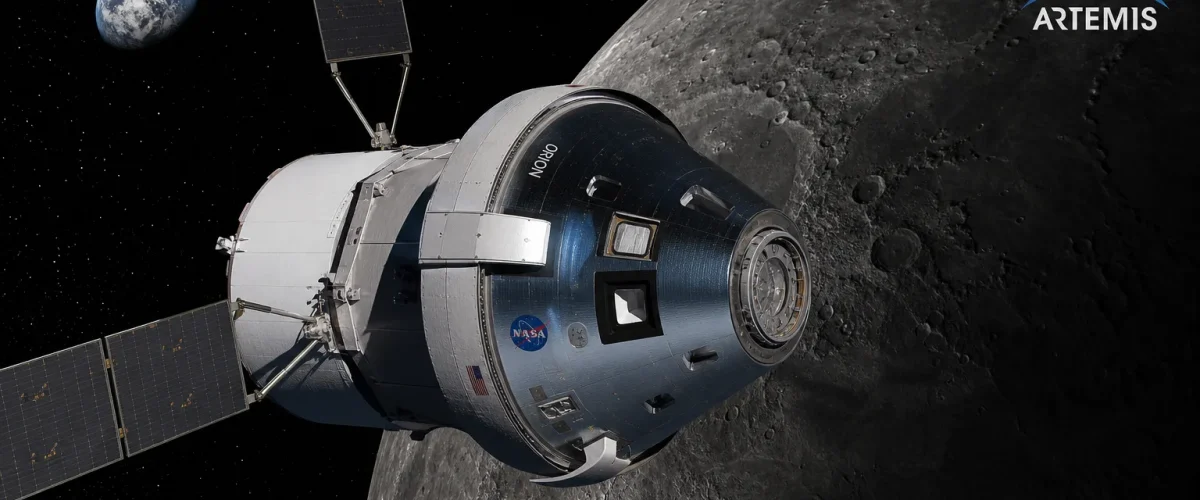
NASA’s Artemis 2 mission, which ran from 01 April to 11 April 2026, has been confirmed as a complete success following the safe splashdown of the Orion spacecraft in the Pacific Ocean. The mission marked the first time humans had travelled beyond low Earth orbit since the Apollo 17 mission in December 1972 — a gap of more than 54 years — and sets the stage for NASA’s ambitious plan to return astronauts to the lunar surface with the upcoming Artemis 4 mission.
The four-person crew aboard the Orion spacecraft, which they named Integrity, broke the record for the greatest human distance from Earth during their lunar flyby. The crew reached a maximum distance of 252,756 miles (406,771 kilometres) from Earth, surpassing Apollo 13’s long-standing record of 248,655 miles (400,171 kilometres) set in 1970.
The Crew: Making History on Multiple Fronts
The Artemis 2 crew was selected not only for their technical expertise but also for the historic milestones they represent:
- Reid Wiseman (Commander): A NASA veteran and former Navy test pilot who became the oldest person to travel beyond low Earth orbit and around the Moon.
- Victor Glover (Pilot): Became the first person of colour to fly beyond low Earth orbit, a milestone that resonated deeply across the United States and around the world.
- Christina Koch (Mission Specialist 1): Already a record-holder for the longest single spaceflight by a woman (328 days aboard the ISS), Koch became the first woman to travel beyond low Earth orbit.
- Jeremy Hansen (Mission Specialist 2): A Canadian Space Agency astronaut who became the first non-US citizen to fly beyond low Earth orbit, marking a significant moment for international cooperation in space exploration.
Mission Timeline and Key Milestones
The mission began with the launch of the Space Launch System (SLS) rocket from Kennedy Space Centre’s Launch Complex 39B on 01 April 2026. The launch had originally been targeted for early February but was delayed by the January 2026 North American winter storm, which disrupted preparations at the launch site. A subsequent helium flow issue detected on 21 February required a rollback to the Vehicle Assembly Building, pushing the launch to April.
Once in orbit, the crew spent approximately 10 days testing the Orion spacecraft’s systems, including its life support, navigation, and communication capabilities. The mission’s primary objective was to validate these systems ahead of the Artemis 4 mission, which is planned to land astronauts on the lunar surface.
The lunar flyby itself was the highlight of the mission. As the spacecraft swung behind the Moon, the crew experienced a period of communications blackout — the same phenomenon that occurred during the Apollo missions — before re-establishing contact with Mission Control in Houston. The crew conducted scientific observations and photography during the flyby, capturing what NASA described as “the most detailed human-taken images of the lunar far side.”
Significance for Global Space Exploration
Artemis 2’s success is significant not only for NASA but for the broader global space community. The mission demonstrates that the SLS rocket and Orion spacecraft — both of which have faced years of development delays and cost overruns — are capable of safely carrying humans to the Moon and back.
For India, the mission holds particular resonance. ISRO’s Gaganyaan programme is currently preparing for its G1 uncrewed flight, which will be India’s first step toward sending its own astronauts into space. The success of Artemis 2 provides valuable lessons and technical benchmarks that ISRO and other space agencies can reference as they develop their own crewed spaceflight capabilities.
The international dimension of the mission — highlighted by Jeremy Hansen’s participation as the first non-American to travel to the Moon — also reflects a shift in how space exploration is conducted. Unlike the Apollo era, which was driven by Cold War competition between the US and the Soviet Union, the Artemis programme is built on a framework of international partnerships through the Artemis Accords, which have been signed by over 40 countries including India.
Challenges Overcome
The path to Artemis 2 was far from smooth. The mission was originally scheduled for September 2025 but was delayed multiple times due to engineering issues with the Orion spacecraft’s heat shield and life support system. Investigations following the uncrewed Artemis 1 mission in 2022 had revealed that the heat shield experienced unexpected charring during re-entry — a problem that required extensive redesign and testing.
The January 2026 winter storm and the subsequent helium flow issue added further delays, testing the patience of both NASA leadership and the broader space community. However, the successful completion of the mission has vindicated the decision to take extra time for safety, and NASA Administrator has called the mission “a triumph of engineering and human determination.”
What Comes Next: Artemis 4 and the Return to the Lunar Surface
With Artemis 2 complete, attention now turns to the next phase of NASA’s lunar programme. Artemis 3, originally planned as the first crewed lunar landing, was restructured into Artemis 4 following programme redesigns. Artemis 4 is currently targeted for late 2028 and will use SpaceX’s Starship Human Landing System to put astronauts on the Moon’s south polar region for the first time.
The south pole of the Moon is of particular scientific interest because of the presence of water ice in permanently shadowed craters — a resource that could potentially be used to sustain a long-term human presence on the lunar surface. NASA’s long-term goal is to establish a permanent lunar outpost, known as the Artemis Base Camp, which would serve as both a scientific research station and a staging point for future missions to Mars.
India’s own space ambitions continue to grow in parallel. Private Indian space companies are launching innovative satellites, while ISRO’s expanding satellite constellation programme reflects the country’s growing ambitions in both civil and military space operations.
Nearly 350,000 people travelled to Florida’s Space Coast to witness the Artemis 2 launch in person — a powerful reminder that even in an age of streaming and social media, the spectacle of human space exploration retains its ability to inspire. For the generation of scientists, engineers, and dreamers watching from research labs and classrooms around the world, Artemis 2 is not just a mission — it is a promise that humanity’s greatest adventures are still ahead.