ISRO Gaganyaan G1 Mission: India’s First Uncrewed Crew Module Flight Nears Launch After 8000 Ground Tests

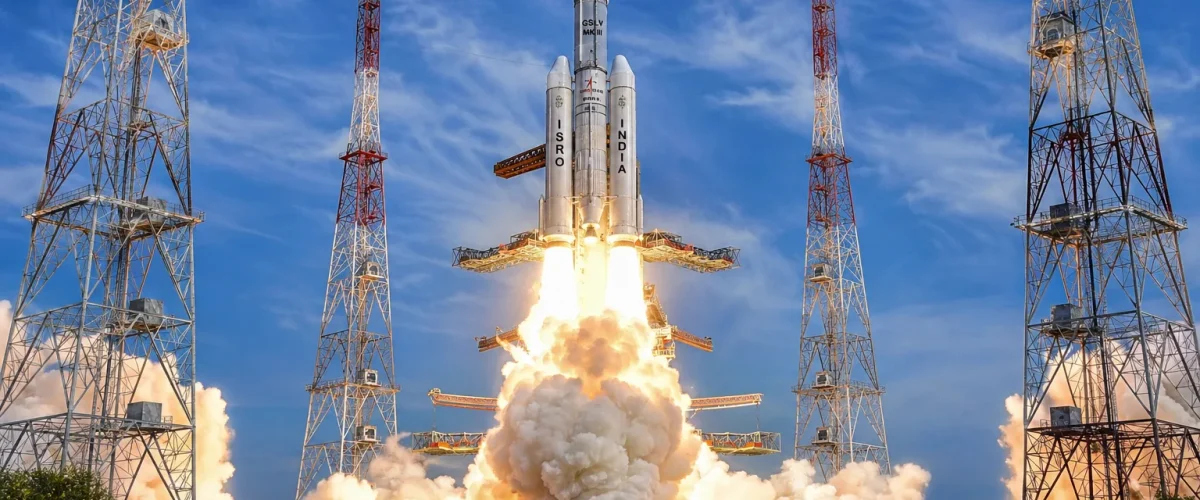
The Indian Space Research Organisation (ISRO) is in the final phase of preparations for the Gaganyaan G1 mission — India’s first uncrewed test flight of the crew module that will eventually carry Indian astronauts to space. With more than 8,000 ground tests completed, including structural qualifications, propulsion validations, and environmental simulations, the mission represents the most significant milestone in India’s human spaceflight programme since its inception.
The G1 mission will deploy Vyommitra, a half-humanoid robot developed by ISRO, to low Earth orbit at an altitude of approximately 400 kilometres for a three-day flight. The mission’s primary objective is to validate the life support systems, crew escape mechanisms, re-entry thermal protection, and parachute-aided splashdown recovery systems that will safeguard human astronauts on subsequent flights.
Mission Architecture and Objectives
The Gaganyaan G1 will be launched aboard an upgraded LVM3 (Launch Vehicle Mark 3) rocket — India’s heaviest operational launch vehicle — from the Satish Dhawan Space Centre at Sriharikota, Andhra Pradesh. The mission profile closely mirrors what the crewed flight will look like, with the crew module being placed into a designated orbit, conducting systems checks, and then executing a controlled re-entry followed by a splashdown in the Bay of Bengal.
ISRO Chairman V. Narayanan confirmed that every system involved in the mission has been individually qualified, and that an Integrated Mission Review Committee has been formed to scrutinise critical design and simulation gaps before giving the final go-ahead. “The Gaganyaan programme is planned for 2027. Before that, three uncrewed missions are planned. We are working towards the first uncrewed mission,” he stated.
The G1 mission is approximately 90 per cent complete, with the remaining work focused on integrated software simulations and final environmental validation tests. The crew module, service module, and launch vehicle interface have all passed their individual qualification milestones.
Vyommitra: India’s Robot Astronaut
Vyommitra, whose name combines the Sanskrit words for “space” and “friend,” is a half-humanoid robot designed to simulate the conditions a human crew member would experience during spaceflight. Equipped with environmental sensors, cameras, and communication systems, Vyommitra will monitor cabin conditions including temperature, humidity, oxygen levels, and radiation throughout the three-day mission.
The robot can perform limited operations such as activating switches and responding to commands from ground control, providing ISRO with real-time data on how the crew module’s life support and environmental control systems perform in the microgravity environment of low Earth orbit. Vyommitra was first unveiled in 2020 and has undergone extensive upgrades to prepare for the G1 mission.
India’s Growing Space Ambitions
The Gaganyaan programme sits at the heart of India’s rapidly expanding space ambitions. ISRO’s space economy has already crossed $13 billion in value, driven by a combination of government missions, commercial satellite launches, and the emergence of private space companies such as Skyroot Aerospace and Agnikul Cosmos.
If the G1 mission succeeds, it will be followed by the G2 uncrewed mission in late 2026 — which will carry more advanced payloads and test additional abort scenarios — and ultimately the G3 crewed mission in 2027, when Indian astronauts Shubhanshu Shukla, Prasanth Balakrishnan Nair, Ajit Krishnan, and Angad Pratap will make history as the first Indians to reach space aboard an Indian spacecraft.
The programme has received strong financial support from the government, with a dedicated allocation in the Union Budget. The 55-satellite military constellation and multiple commercial PSLV and GSLV missions planned for the coming years further underscore the strategic importance India places on space capabilities.
Challenges and Risks
Human spaceflight is among the most technically demanding endeavours any nation can undertake. The Gaganyaan programme has faced delays — originally targeted for 2022, the timeline was pushed back by the Covid-19 pandemic and the need for additional testing of critical safety systems.
The crew escape system, which must be capable of pulling the crew module away from the launch vehicle in the event of an abort during any phase of flight, has been tested in dedicated pad abort and high-altitude abort missions. However, the G1 mission will be the first time all systems are tested together in an integrated flight environment — a moment of truth for the entire programme.
ISRO has also invested heavily in the recovery infrastructure, with the Indian Navy conducting multiple sea trials to validate the procedures for locating and recovering the crew module after splashdown. The precise landing zone in the Bay of Bengal has been selected based on ocean current patterns, weather history, and proximity to naval assets.
What G1 Means for India
A successful G1 mission would make India only the fourth country — after the United States, Russia, and China — to demonstrate the end-to-end capability of launching a crew-rated spacecraft, maintaining it in orbit, and recovering it safely. For India’s scientific community, it would validate decades of research and engineering. For the nation, it would mark the next step in a space journey that began with a sounding rocket launched from a church in Thumba, Kerala, in 1963.
As the countdown continues, all eyes are on Sriharikota. The G1 mission is not just a test flight — it is a rehearsal for the moment when an Indian astronaut, launched by an Indian rocket from Indian soil, will look down at the Earth and see a country that dared to reach for the stars.