SBI Branches May Remain Shut for Up to 6 Days From May 23 to 28 Due to Weekends Strike and Bakrid Holidays

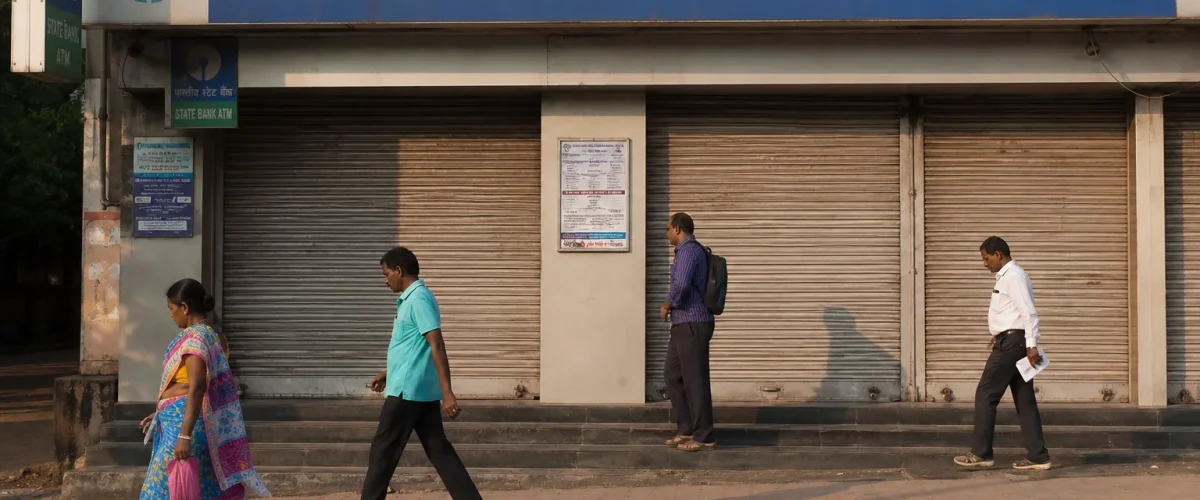
Six-Day Closure Window Combines Weekends, Strike, and Bakrid
Customers of the State Bank of India, the country’s largest public sector lender, may face a prolonged disruption to branch banking services as a combination of weekend closures, a proposed staff strike, and festival holidays threatens to keep branches shut for up to six consecutive days from 23 to 28 May 2026. The extended closure period has prompted SBI to advise customers to complete pending branch transactions in advance and to use digital banking channels for routine needs.
The possible six-day disruption begins with the regular weekend break. SBI branches will not open on 23 May, which is a Saturday, or 24 May, a Sunday. Under the Reserve Bank of India’s guidelines, banks remain closed on the second and fourth Saturdays of every month, and 23 May falls on the fourth Saturday. Combined with Sunday, this creates the first two days of the potential closure window.
The situation escalates on 25 and 26 May, when SBI staff may go on a two-day nationwide strike. The All India State Bank of India Staff Federation, the body representing SBI workmen employees across the country, has issued a strike notice covering these dates. The federation has raised multiple grievances including concerns over outsourcing, internal parity in promotions, the Human Resource Management System, and the choice of pension fund managers under the National Pension System.
Strike Demands Centre on Jobs and Outsourcing
The largest concern driving the proposed strike action is the growing practice of outsourcing within SBI and its impact on permanent jobs. The staff federation argues that an increasing number of banking functions, including customer service, data entry, and back-office operations, are being contracted to third-party vendors at lower costs. While this reduces operational expenses for the bank, the federation contends that it undermines job security for existing employees and reduces the quality of service provided to customers.
Additional demands include addressing disparities in promotion criteria between different employee categories, improving the HRMS technology platform that staff use for attendance, leave, and performance tracking, and revisiting the selection of pension fund managers for employees enrolled under the NPS. The federation has argued that certain pension fund managers have delivered sub-optimal returns compared to the Employee Provident Fund Organisation, effectively reducing the retirement benefits of newer employees.
SBI management has acknowledged the concerns and has indicated willingness to negotiate, but the strike notice remains active as of the time of writing. Under Indian labour law, bank employees are required to give advance notice before striking, and the management has the option to seek intervention from the labour commissioner or the relevant government authority to avert the action. However, the tight timeline before the proposed strike date leaves limited room for prolonged negotiations.
Bakrid Holidays Add to the Closure Stretch
Adding to the disruption, Eid-ul-Adha, commonly known as Bakrid, falls on 27 and 28 May 2026. The RBI’s annual holiday list designates Bakrid as a bank holiday in most states, though the exact date varies slightly depending on the region. Most major metros and banking centres, including Mumbai, Delhi, Kolkata, Chennai, Hyderabad, and Bengaluru, will observe the holiday on 27 May. Some states and union territories may observe the holiday on 28 May instead, while certain regions may close for both days.
This means that even if the strike is called off at the last minute, branches in many parts of the country will still face a five-day closure window spanning the weekend and Bakrid holidays. For customers who rely on branch banking for services that cannot be performed digitally, such as locker access, physical document verification, and certain types of account modifications, this represents a significant inconvenience.
Digital Channels Remain Fully Operational
SBI has reassured customers that all digital banking services will continue to function normally throughout the closure period. Internet banking, mobile banking through the YONO app, UPI payments, ATM withdrawals, and debit and credit card transactions will operate as usual since these services are powered by automated systems that do not depend on branch staff presence.
The bank has encouraged customers to download the YONO app if they have not already done so, noting that the platform now supports a comprehensive range of banking functions including fund transfers, bill payments, fixed deposit creation and management, loan applications, and account statement generation. For most routine banking needs, the digital channels offer the same functionality as a branch visit, often with the added convenience of 24-hour availability.
ATM networks across the country will also continue to operate, and SBI has said it is ensuring that cash replenishment schedules are being adjusted to account for potentially higher ATM demand during the branch closure period. Customers are advised to keep adequate cash on hand for the extended weekend, particularly in rural and semi-urban areas where digital penetration may be lower and cash transactions remain more common.
Customers Advised to Plan Ahead
Financial advisors and banking experts are urging SBI customers to complete any pending branch transactions before 23 May. This includes clearing cheques, updating KYC documentation, accessing safe deposit lockers, and initiating processes such as account closure or address changes that require physical presence and documentation.
Customers with time-sensitive financial obligations, such as loan EMI payments or insurance premium deadlines falling within the closure window, should ensure that these payments are set up for automatic deduction or are made in advance through digital channels. While most scheduled payments are processed automatically regardless of branch operations, manual payments or those requiring branch-level intervention could face delays.
The closure also has implications for businesses that depend on branch banking services for daily operations, including cash deposits, cheque collections, and trade finance transactions. Small and medium enterprises that maintain current accounts with SBI are particularly affected, as many still rely on physical branch visits for their banking needs despite the availability of digital alternatives.
Is This Becoming a Recurring Pattern?
The convergence of weekends, strike notices, and festival holidays creating extended bank closure periods has become a recurring concern for Indian banking customers. Similar situations have arisen in previous years, prompting calls for reform of the banking holiday calendar and more flexible branch operating hours. Some analysts have suggested that banks should consider operating essential services on designated holidays, particularly when multiple closures coincide.
The broader context of India’s financial inclusion journey also adds urgency to these disruptions. While digital banking penetration has grown enormously, tens of millions of Indians, particularly in rural areas and among older demographics, continue to depend on physical branch services. Extended closures disproportionately affect these communities, who may lack the digital literacy or connectivity to access online banking alternatives. As the RBI continues to promote financial inclusion, ensuring reliable access to banking services even during holiday periods remains an important policy consideration.
Related Stories on DailyTips
- SRH Beat RCB by 55 Runs in IPL 2026 Match 67 but Joy for Bengaluru as They Seal First Place in Points Table
- Election Commission Announces Rajya Sabha Polls for 24 Seats Across 10 States on June 18 2026
- Venezuela Overtakes Saudi Arabia and US to Become India Third Largest Crude Oil Supplier in May 2026 Amid West Asia Crisis
Explore more: Personal Finance | Business