UK Royal Marines Seize Russian Shadow Fleet Oil Tanker in Dramatic English Channel Operation

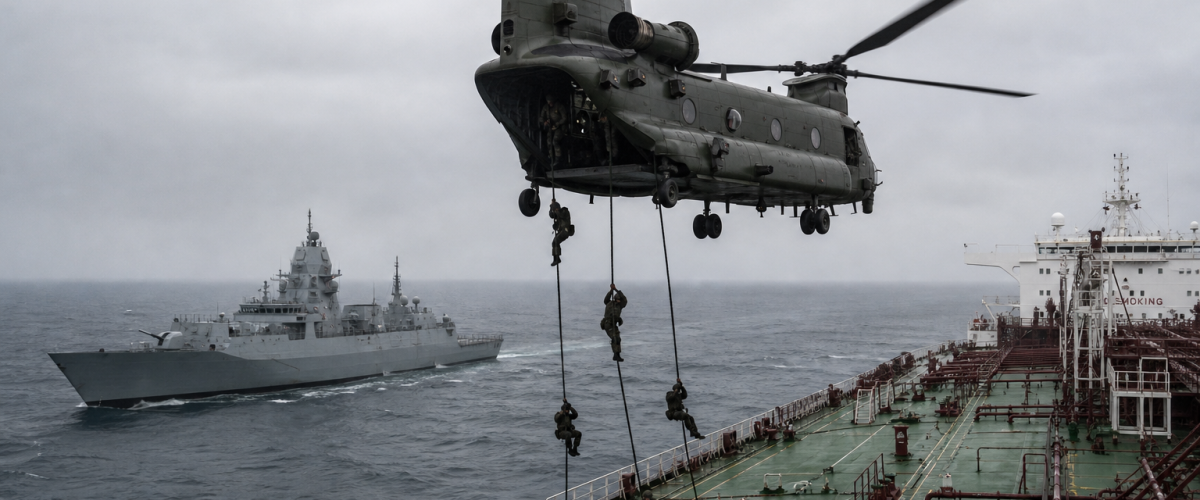
In a dramatic display of maritime power, UK Royal Marine Commandos boarded and seized a suspected Russian shadow fleet oil tanker in the English Channel on Sunday, in what the British government described as the first time British forces have acted unilaterally to intercept a vessel linked to Russia’s sanctions-evading oil trade. The operation, which involved helicopters, a Royal Navy frigate, and a minehunter, marks a significant escalation in Western efforts to disrupt the financial networks funding Russia’s war in Ukraine.
The vessel, named Smyrtos, was flying under a Cameroonian flag and had departed the Russian Baltic port of Ust-Luga on June 5, reportedly bound for Port Said, Egypt. British intelligence agencies had been tracking the tanker for several days before the decision was made to intercept it as it attempted to transit one of the world’s busiest shipping lanes.
The Operation: Six Hours on the High Seas
The boarding operation began in the early hours of Sunday morning and took approximately six hours to complete. Royal Marine Commandos, supported by officers from the National Crime Agency (NCA), fast-roped from Chinook helicopters onto the tanker’s deck in a meticulously planned operation that combined military precision with law enforcement procedures.
A Royal Navy frigate and a minehunter provided maritime support, establishing a security cordon around the vessel during the boarding. The operation was conducted without violence, though the crew initially showed reluctance to cooperate before complying with the boarding party’s instructions.
The Smyrtos has been relocated to an anchorage off England’s South Coast, where it will be held and monitored for potential environmental and safety hazards. The vessel’s cargo — believed to be Russian crude oil — is being assessed, and its documentation is under examination by NCA investigators and sanctions compliance specialists.
What Is the Shadow Fleet?
The term “shadow fleet” refers to a network of aging, often poorly maintained tankers used by Russia to circumvent Western sanctions on its oil exports. Following the imposition of a G7 price cap on Russian oil in December 2022 and subsequent rounds of sanctions, Russia assembled a fleet of hundreds of tankers — many purchased from obscure shell companies and registered under flags of convenience — to continue exporting crude oil at market prices.
The shadow fleet, estimated to comprise 600-800 vessels, represents a significant portion of global tanker capacity and has become a major source of revenue for the Russian government, generating billions of dollars annually that directly fund the war effort in Ukraine. The fleet also poses environmental risks, as many vessels lack adequate insurance, maintenance records, and safety certifications.
Several shadow fleet tankers have been involved in near-misses, mechanical failures, and oil spills in recent years, raising concerns among Baltic and North Sea nations about the environmental consequences of unregulated oil transport through sensitive maritime environments.
Political Reactions and Implications
British Prime Minister Keir Starmer hailed the operation as “a significant setback for Russia,” adding: “This serves as a reminder to those supporting Putin’s war in Ukraine that we will not allow them to evade accountability.” Defence Secretary John Healey described the boarding as a demonstration of Britain’s commitment to enforcing international sanctions and protecting the rules-based maritime order.
The operation is likely to trigger diplomatic repercussions. Russia has not yet issued a formal response, but Moscow has previously characterised Western sanctions enforcement actions as “piracy” and “illegal interference with freedom of navigation.” The Cameroonian flag state, under whose registration the Smyrtos was operating, faces questions about its oversight of vessels flying its flag.
European allies have broadly welcomed the UK’s action, with officials from the EU, NATO, and individual member states expressing support for more aggressive sanctions enforcement. However, some legal analysts have raised questions about the precedent set by the unilateral seizure of a vessel in international waters, noting that the legal framework for such actions is complex and not fully settled.
Broader Sanctions Enforcement Landscape
The Smyrtos seizure comes amid growing pressure on Western governments to move beyond paper sanctions and take concrete enforcement actions against Russia’s sanctions-evasion infrastructure. While the G7 oil price cap has theoretically limited Russia’s oil revenues, the shadow fleet has allowed Moscow to sell crude at prices well above the cap, undermining the policy’s effectiveness.
The UK operation could encourage other nations to take similar actions, potentially creating a more aggressive enforcement environment that raises the costs and risks for shadow fleet operators. For the tanker crews, shipping companies, and intermediaries involved in the trade, the message is clear: the era of consequence-free sanctions evasion may be ending.
Also Read
- Russia Ukraine Ceasefire Under Severe Strain as Both Sides Trade Blame for Weekend Attacks and Three Killed in Drone Strikes
- Trump Announces 3-Day Russia-Ukraine Ceasefire and 1,000-Prisoner Swap Starting May 9 as Both Sides Confirm Agreement
- Chernobyl 40th Anniversary: IAEA Signs Energy Reconstruction Deal With Ukraine as World Marks Four Decades Since Nuclear Disaster
- Jaishankar Hits Back at European Criticism of India’s Russia Policy — ‘European Weapons Have Been Used Against India’
- Axiom Mission 4: Indian Astronaut Subhanshu Shukla Completes Historic 14-Day Stay on International Space Station