Venezuela Overtakes Saudi Arabia and US to Become India Third Largest Crude Oil Supplier in May 2026 Amid West Asia Crisis

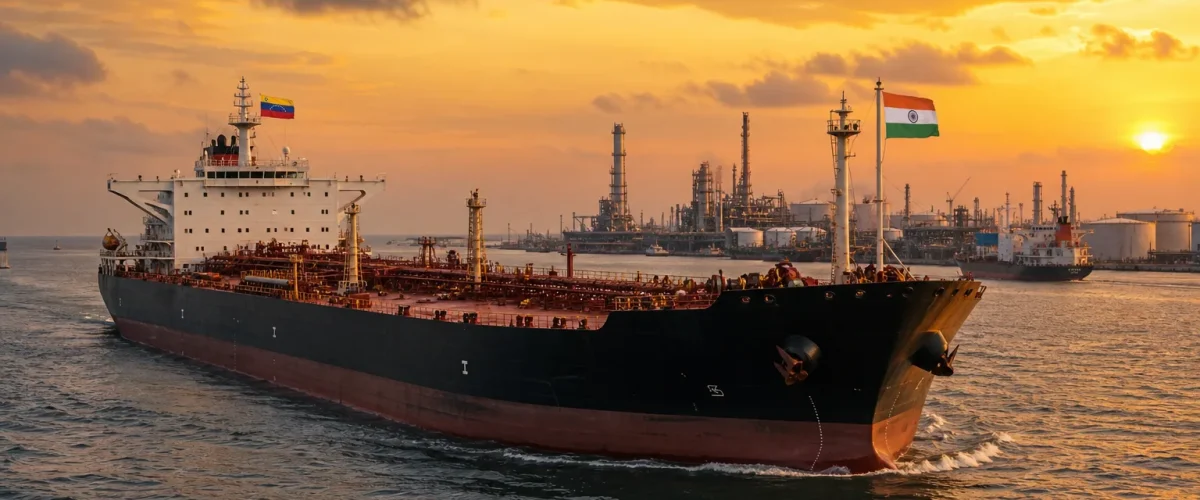
Venezuela Supplies 417,000 Barrels Per Day to India in May
In a dramatic reshaping of global energy trade flows, Venezuela has surged to become India’s third-largest crude oil supplier in May 2026, overtaking both Saudi Arabia and the United States. According to data from energy cargo tracker Kpler, Venezuela supplied approximately 417,000 barrels per day of crude oil to India this month, a sharp increase from 283,000 barrels per day in April. Remarkably, the South American nation had supplied zero crude to India during the previous nine months, making this resurgence all the more striking.
Only Russia and the United Arab Emirates now supply more crude oil to India than Venezuela, highlighting the extent to which the West Asia crisis has fundamentally altered India’s energy procurement strategy. Russian crude continues to dominate India’s import basket, a trend that has persisted since Western sanctions following the Ukraine conflict redirected much of Russia’s oil exports to Asian markets. The UAE has also increased its share as Indian refiners seek reliable suppliers outside the conflict zone.
The shift towards Venezuelan crude is driven primarily by economics. Venezuelan heavy crude grades trade at a significant discount to Middle Eastern benchmarks, offering Indian refiners substantial cost savings at a time when global oil prices remain elevated above 90 dollars per barrel. India’s refining sector, one of the largest and most sophisticated in the world, is well-equipped to process the heavier Venezuelan grades that many other refining centres cannot efficiently handle.
West Asia Conflict Reshapes India’s Oil Import Map
The immediate catalyst for Venezuela’s emergence as a major supplier is the ongoing conflict in West Asia involving the United States, Israel, and Iran. The crisis, which entered its tenth week in May, has disrupted traditional shipping routes through the Strait of Hormuz and raised insurance costs for tankers transiting the Persian Gulf. Saudi Arabia, which was India’s third-largest crude supplier before the conflict began in February, has seen its shipments to India drop sharply as logistical challenges and higher freight costs make Gulf-sourced crude less competitive.
Indian refiners, led by Reliance Industries and state-owned companies like Indian Oil Corporation and Bharat Petroleum, have responded to the disruption by aggressively diversifying their supply sources. The pivot to Venezuela is part of a broader strategy that includes increased purchases from West African nations, continued heavy reliance on Russian crude, and opportunistic buying from any source that offers competitive pricing.
The rupee’s decline to record lows against the US dollar has added urgency to the search for cheaper crude. Since oil is priced in dollars, every point of depreciation in the rupee increases the effective cost of oil imports in local currency terms. By sourcing discounted Venezuelan crude, Indian refiners can partially offset the currency impact and protect their refining margins.
Geopolitical Implications of India-Venezuela Energy Ties
The surge in Indian purchases of Venezuelan crude carries significant geopolitical implications. Venezuela has been under various forms of US sanctions for years, and the current US administration under President Donald Trump has maintained a complex posture towards the Maduro government. However, the practical reality of global oil markets means that crude continues to flow from Venezuela to willing buyers, with India emerging as one of the most significant destinations.
India’s foreign policy establishment has long maintained that its energy procurement decisions are driven by commercial considerations rather than political alignment. New Delhi has consistently argued that as the world’s third-largest oil importer, it has both the right and the responsibility to source crude from wherever it can at the best possible price. This pragmatic approach has allowed India to maintain energy trade relationships with countries that are subject to Western sanctions, including Russia and now Venezuela.
The renewed India-Venezuela energy relationship also opens the door for broader bilateral engagement. Diplomatic sources suggest that the oil trade could facilitate discussions on other areas of cooperation, including technology transfer, agricultural trade, and cultural exchange. Venezuela possesses the world’s largest proven oil reserves, and a stable long-term supply arrangement with India could benefit both nations significantly.
Impact on India’s Energy Security Strategy
India’s energy security framework has evolved rapidly in response to the West Asia crisis. The government has accelerated strategic petroleum reserve filling, with the three operational caverns at Visakhapatnam, Mangalore, and Padur now at near-full capacity. Simultaneously, the Ministry of Petroleum has been in discussions with multiple countries to establish emergency supply agreements that would guarantee crude availability in the event of a prolonged disruption to Middle Eastern supplies.
The diversification of import sources is a central pillar of this strategy. By reducing dependence on any single region, India aims to insulate its economy from the kind of supply shock that has historically caused inflation spikes, industrial slowdowns, and current account deficits. The fact that Venezuela, a country on the opposite side of the globe from India’s traditional Middle Eastern suppliers, can now rank among the top three importers illustrates the flexibility and adaptability of India’s energy procurement apparatus.
However, analysts caution that the Venezuelan supply channel faces its own risks. Political instability in Venezuela, the poor condition of its oil infrastructure, and the possibility of tightened sanctions could all disrupt supplies. Indian refiners are therefore treating Venezuelan crude as a valuable but not fully reliable component of their diversified supply strategy rather than a permanent replacement for traditional Middle Eastern sources.
What This Means for Consumers and the Economy
For Indian consumers, the procurement of cheaper Venezuelan crude offers a potential buffer against further fuel price increases. While the government controls retail fuel pricing through its administered pricing mechanism, the cost of imported crude ultimately determines the fiscal burden of subsidies and the margin available for oil marketing companies. Cheaper crude inputs translate to reduced subsidy outflows and better financial performance for state-owned oil companies, which are among the largest contributors to government revenue through dividends and taxes.
The broader economic implications are equally significant. India’s oil import bill, which typically accounts for the largest single component of the trade deficit, has been under severe pressure since the West Asia tensions escalated. Any reduction in the per-barrel cost of imported crude directly improves the current account balance and relieves pressure on the rupee. At a time when the Reserve Bank of India is carefully managing liquidity and interest rates, a more manageable oil import bill provides the central bank with additional policy space.
The Venezuela story is ultimately a microcosm of India’s broader challenge: managing the energy needs of the world’s most populous nation in an increasingly volatile geopolitical environment. India’s willingness to look beyond traditional suppliers and embrace unconventional sources like Venezuela reflects the pragmatism that has characterised its energy policy for decades. As the West Asia crisis continues to reshape global oil markets, India’s nimble procurement strategy may prove to be one of its most important economic assets.
Related Stories on DailyTips
- SRH Beat RCB by 55 Runs in IPL 2026 Match 67 but Joy for Bengaluru as They Seal First Place in Points Table
- Election Commission Announces Rajya Sabha Polls for 24 Seats Across 10 States on June 18 2026
- India Successfully Tests Vayu Astra-1 Loitering Munition at Pokhran With 100 km Strike Range and 10 kg Warhead
Explore more: Economy | Business

- Fentanyl Vaccine Breakthrough: Scripps Research Develops Shot That Blocks Deadly Overdoses Before They Reach the Brain - June 13, 2026
- Nipah Virus Returns to Kerala — First Case of 2026 Confirmed, State Declares High Alert - June 12, 2026
- Jill Biden Reveals She Wanted to Keep PM Modi’s 7.5-Carat Diamond Gift but Returned It After State Department Valued It at $20,000 - June 8, 2026