WHO Declares Ebola Outbreak in Congo and Uganda a Global Health Emergency as Cases Cross 300 and Deaths Reach 88

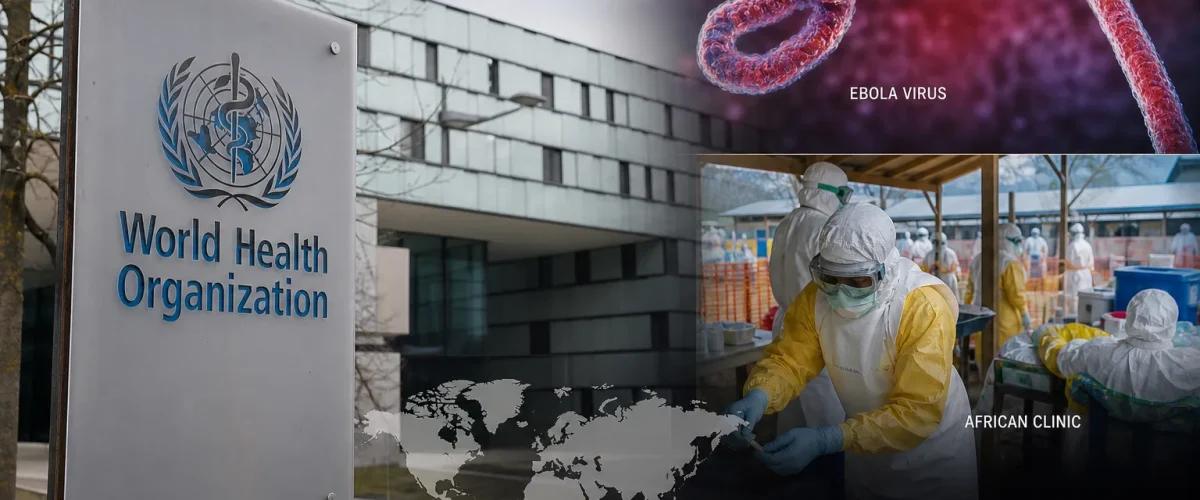
The World Health Organization (WHO) has declared the ongoing Ebola disease outbreak in the Democratic Republic of Congo (DRC) and neighbouring Uganda a Public Health Emergency of International Concern (PHEIC), the highest level of alarm the global health body can raise. The declaration, made on Saturday, May 17, came after the outbreak caused by the rare Bundibugyo variant of the Ebola virus crossed 300 suspected cases and claimed at least 88 lives across both countries.
What Is the Bundibugyo Ebola Variant and Why Is It Dangerous?
The current outbreak is caused by the Bundibugyo ebolavirus, one of the rarest and least-studied strains of the Ebola disease. Unlike the more commonly known Zaire ebolavirus — which was responsible for the devastating 2014–2016 West African Ebola epidemic that killed over 11,000 people — the Bundibugyo variant has no approved therapeutics or vaccines. This makes the current outbreak particularly concerning for public health authorities and scientists, as the medical community has limited tools to combat it.
The Bundibugyo strain was first identified in 2007 in the Bundibugyo district of western Uganda and has since been associated with only a handful of outbreaks. It has a lower case fatality rate compared to the Zaire strain — estimated at around 25 to 35 per cent versus over 60 per cent for Zaire — but its rarity means there is far less clinical experience and no targeted treatments available.
Timeline of the Current Outbreak
Health authorities were first alerted to the outbreak via social media reports on May 5, 2026, by which time approximately 50 deaths had already occurred in remote communities in eastern Congo. The rapid spread of the virus across the porous border into Uganda prompted both countries to declare national health emergencies within days.
By Saturday, the Africa Centres for Disease Control and Prevention (Africa CDC) reported 336 suspected cases and 87 deaths in the DRC alone, with additional cases confirmed in Uganda. The WHO’s emergency committee convened on Friday and Saturday to assess the situation before issuing the PHEIC declaration.
“This outbreak is extraordinary in its speed of spread and the challenge posed by the Bundibugyo variant, for which we have no approved vaccines or specific treatments,” WHO Director-General Dr Tedros Adhanom Ghebreyesus said in a statement. “The PHEIC declaration is meant to galvanise the international community into immediate action.”
What Does PHEIC Declaration Mean?
A Public Health Emergency of International Concern is the WHO’s highest-level alert mechanism, designed to spur international cooperation, funding, and coordinated response. The designation does not automatically mean the outbreak is a pandemic — the WHO explicitly stated that the Ebola outbreak does not meet the criteria of a pandemic emergency like COVID-19 — but it signals that the event is serious, there is a risk of international spread, and a coordinated global response is required.
Importantly, the WHO has advised against the closure of international borders, noting that such measures could hamper the delivery of medical supplies and personnel to affected areas. Instead, the agency has recommended enhanced surveillance at airports and border crossings in the region, along with temperature screening for travellers departing from affected zones.
The PHEIC declaration is expected to unlock emergency funding from donor agencies and governments worldwide. The WHO has called for an immediate $150 million in emergency funding to support containment efforts, including the deployment of mobile laboratories, isolation units, and contact tracing teams to affected communities.
Impact on India and Global Travel
India’s Union Health Ministry convened an emergency meeting on Sunday morning to assess the risk posed by the Ebola outbreak to the country. Health Secretary Apurva Chandra said India has activated its Integrated Disease Surveillance Programme (IDSP) network and issued advisories to all international airports to screen passengers arriving from Central and East African nations.
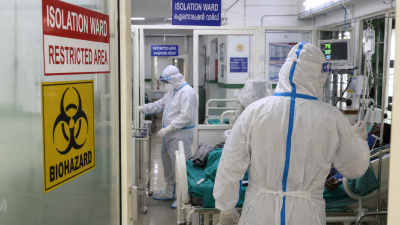
“India has no confirmed or suspected cases of Ebola at this time. However, given the history of international travel-related transmission during previous Ebola outbreaks, we are taking all precautionary measures,” Chandra told reporters in New Delhi. The ministry has also placed the National Centre for Disease Control on high alert and instructed state health departments to prepare isolation facilities.
The outbreak comes at a time when global health systems are still recovering from the long tail of the COVID-19 pandemic and dealing with multiple concurrent health challenges, including the ongoing mpox situation in parts of Africa and rising antimicrobial resistance worldwide. Developments in biology and medical research will be critical to the global response.
Response Efforts in Congo and Uganda
In the DRC, President Félix Tshisekedi has deployed military units to assist with quarantine enforcement in eastern provinces. The government has set up over 20 isolation centres in North Kivu and South Kivu provinces, where the majority of cases have been reported. However, the ongoing armed conflict in eastern Congo — involving dozens of militia groups — is severely hampering relief efforts, with some health workers unable to access affected communities due to security concerns.
Uganda has closed its western border crossings with the DRC and established screening checkpoints at all remaining entry points. The Ugandan Ministry of Health reported 24 confirmed cases within its borders as of Saturday, with 9 deaths. Contact tracing teams are actively monitoring over 500 individuals who may have been exposed to the virus.
Médecins Sans Frontières (MSF) has deployed emergency teams to both countries and called for an urgent scale-up of the response. “The Bundibugyo variant presents a unique challenge because existing Ebola vaccines, including the rVSV-ZEBOV vaccine that proved effective against the Zaire strain, have not been tested against this variant,” said Dr. Christos Christou, International President of MSF. “We are essentially fighting this outbreak with 19th-century tools — isolation, contact tracing, and barrier nursing.”
Race to Develop Treatments
Pharmaceutical companies and research institutions are scrambling to assess whether existing Ebola treatments and vaccines might offer any cross-protection against the Bundibugyo variant. The US National Institutes of Health (NIH) announced on Saturday that it would fast-track clinical trials for a modified version of the rVSV-ZEBOV vaccine targeting the Bundibugyo strain, but cautioned that results could take months.
Meanwhile, the Coalition for Epidemic Preparedness Innovations (CEPI) has allocated $30 million in emergency funding to support vaccine development efforts. Several mRNA vaccine platforms — similar to those used during the COVID-19 pandemic — are being explored as potential rapid-response options, though none are expected to be available for at least 12 to 16 weeks.
Historical Context: India’s Previous Ebola Preparedness
India has never reported a case of Ebola disease, but the country has had scares during previous outbreaks. During the 2014–2016 West African epidemic, India screened over 37,000 passengers at airports and placed more than 28,000 travellers from affected countries under community surveillance. The experience led to significant improvements in India’s epidemic preparedness infrastructure, including the establishment of dedicated high-containment isolation facilities at major government hospitals.
The WHO’s PHEIC declaration for Ebola adds to a growing list of global health challenges in 2026, underscoring the need for sustained investment in pandemic preparedness and global health security. As the international community mobilises its response, the next two to three weeks will be critical in determining whether the outbreak can be contained or whether it will spread further across the African continent and beyond.

- Fentanyl Vaccine Breakthrough: Scripps Research Develops Shot That Blocks Deadly Overdoses Before They Reach the Brain - June 13, 2026
- Nipah Virus Returns to Kerala — First Case of 2026 Confirmed, State Declares High Alert - June 12, 2026
- Jill Biden Reveals She Wanted to Keep PM Modi’s 7.5-Carat Diamond Gift but Returned It After State Department Valued It at $20,000 - June 8, 2026