Mumbai Celebrates UNESCO Creative City of Film Status with Special Exhibitions and Industry Events at NGMA

India’s Film Capital Marks UNESCO Recognition with Cultural Programme
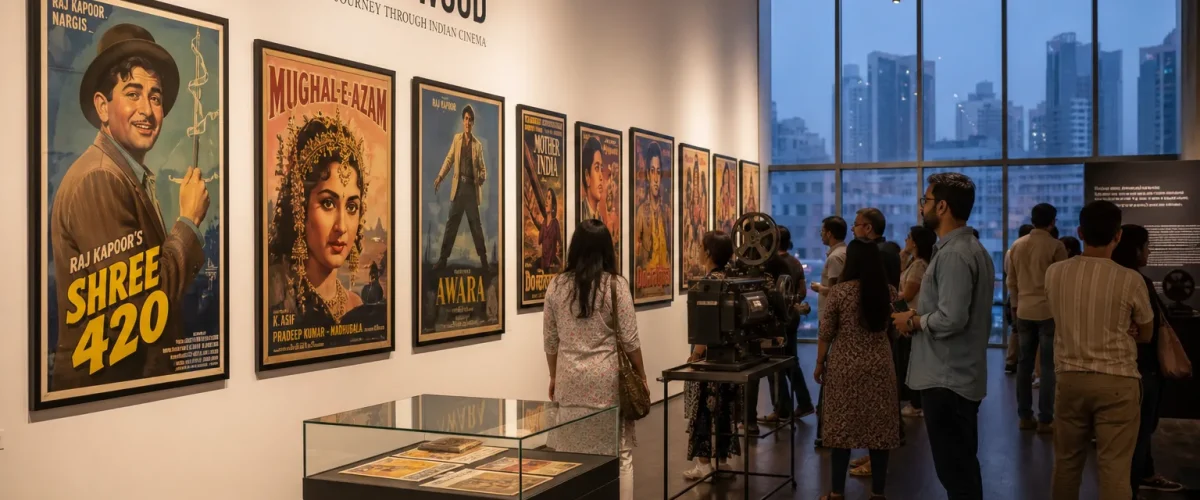
Mumbai, the undisputed capital of Indian cinema, is celebrating its status as India’s only UNESCO Creative City of Film with a series of special events launched on Sunday, 25 May 2026. The centrepiece of the celebrations is an exhibition at the National Gallery of Modern Art in South Mumbai featuring an extensive collection of vintage and contemporary Hindi and Marathi film posters, accompanied by panel discussions, masterclasses and industry networking events that highlight the city’s profound and enduring relationship with the art of filmmaking.
The UNESCO Creative Cities Network, established in 2004, recognises cities that have identified creativity as a strategic factor for sustainable urban development. Mumbai was inducted into the network under the City of Film designation, joining an exclusive group that includes global cinema capitals such as Rome, Sydney, Busan, Łódź and Bristol. The recognition acknowledges Mumbai’s extraordinary concentration of film production infrastructure, its vast pool of creative talent and the central role that cinema plays in the city’s economic and cultural life.
The NGMA Exhibition — A Visual History of Indian Cinema
The exhibition at the NGMA is curated around the theme “City of Dreams, City of Film” and traces the evolution of Mumbai’s film industry from the silent era of the early 1900s to the contemporary digital age. Over 200 original film posters, many sourced from private collectors and the archives of major production houses, are displayed across three galleries, offering visitors a vivid visual timeline of how Indian cinema has evolved aesthetically, thematically and technologically over more than a century.
The first gallery focuses on the founding decades of Indian cinema, featuring posters from Raja Harishchandra (1913), the first full-length Indian feature film, directed by Dadasaheb Phalke in what was then Bombay. The gallery traces the development of the studio system in the 1930s and 1940s, with posters from iconic studios like Bombay Talkies, Prabhat Film Company and V. Shantaram’s Rajkamal Kalamandir that shaped the visual grammar of Indian cinema.
The second gallery covers the golden age of Hindi cinema from the 1950s through the 1970s, arguably the most creatively fertile period in Bollywood history. Posters from landmark films including Mother India, Mughal-e-Azam, Guide, Sholay and Deewaar are displayed alongside lesser-known but critically acclaimed Marathi films that were being produced simultaneously in the same city. This juxtaposition highlights a key curatorial decision to present Mumbai’s film heritage as a dual tradition encompassing both Hindi and Marathi cinema, rather than focusing exclusively on Bollywood.
The third gallery brings the timeline to the present day, featuring posters and production materials from contemporary Indian films that have garnered international recognition. Works by directors such as Anurag Kashyap, Zoya Akhtar, Sanjay Leela Bhansali, and Marathi filmmakers like Nagraj Manjule and Chaitanya Tamhane are represented, demonstrating the continuity between Mumbai’s cinematic heritage and its living creative present.
Panel Discussions and Masterclasses
Alongside the exhibition, the celebrations include a programme of panel discussions featuring prominent figures from the Indian film industry. Sunday’s inaugural panel, titled “The Future of Film in a Streaming World,” brought together producers, directors and platform executives to discuss how the rise of over-the-top streaming services has transformed the economics and creative ambitions of Indian filmmaking.
Upcoming sessions this week will cover topics including the role of artificial intelligence in film production, the preservation of India’s vast but deteriorating film heritage, the economics of regional cinema in the streaming era, and the potential for Mumbai to serve as a hub for international co-productions. These discussions reflect the city’s ambition to leverage its UNESCO designation not merely as an honorary title but as a catalyst for practical policy initiatives and industry development.
Film education is also a focus of the celebrations, with masterclasses scheduled for emerging filmmakers and students from Mumbai’s numerous film schools. These sessions, led by established professionals in cinematography, sound design, visual effects and scriptwriting, aim to bridge the gap between academic training and industry practice, one of the persistent challenges facing India’s film education ecosystem.
Mumbai’s Film Industry by the Numbers
The scale of Mumbai’s film industry is staggering by any measure. The city is home to over 1,000 production companies, 150 post-production facilities and dozens of recording studios, dubbing theatres and screening rooms. An estimated 1,500 to 2,000 films are produced in Mumbai annually across Hindi, Marathi and other languages, making it one of the most prolific film production centres in the world by volume.
The economic impact is equally significant. The film industry directly employs an estimated 300,000 people in Mumbai and supports an additional 500,000 jobs indirectly through related sectors including hospitality, transportation, catering, construction and technology. The industry’s contribution to Maharashtra’s GDP is estimated at over Rs 20,000 crore annually, a figure that is growing as streaming platforms invest heavily in original content produced in Mumbai.
The city’s infrastructure advantage is formidable. Film City, the sprawling studio complex in Goregaon, provides approximately 520 acres of purpose-built filming facilities. Major studios including Yash Raj Films, Dharma Productions and T-Series maintain their headquarters and production facilities in Mumbai, and the city’s diverse architectural and geographical landscape offers filmmakers an extraordinary range of locations within a single metropolitan area.
What the UNESCO Designation Means Going Forward
Being part of the UNESCO Creative Cities Network opens specific opportunities for Mumbai’s film community. The designation facilitates collaboration with other network cities, potentially enabling co-production agreements, talent exchanges and joint festival programming that can elevate Mumbai’s profile on the global cinema stage. It also provides a framework for policy advocacy, giving the city’s film industry a recognised international platform from which to engage with government authorities on issues such as taxation, censorship, infrastructure investment and heritage preservation.
The celebrations this week are intended to serve as a launchpad for more sustained engagement with the UNESCO framework. City officials have indicated that they plan to establish a permanent Film Heritage Centre in Mumbai, drawing on the UNESCO designation to attract both public funding and private sponsorship. The centre would serve as a museum, archive, screening venue and educational facility, creating a permanent home for the kind of cultural programming that is currently being showcased at the NGMA exhibition.
For a city that has defined itself through cinema for over a century, the UNESCO recognition is both a validation of past achievement and an invitation to imagine new possibilities. As the commercial success of Indian cinema continues to grow and the boundaries between regional and global filmmaking continue to blur, Mumbai’s Creative City of Film status positions it to play an even more central role in the global entertainment landscape.
Explore more: Culture & Lifestyle | Entertainment
Related Articles
- Drishyam 3 Crosses Rs 100 Crore Worldwide in 3 Days
- Karuppu Box Office Crosses Rs 100 Crore in 6 Days
- Spider-Noir Season 1 Premieres on Amazon Prime Video
- Cannes 2026 Palme d’Or Goes to Cristian Mungiu’s ‘Fjord’ Starring Sebastian Stan

- Indian Army Gets New Chief as General Dwivedi Hands Over Command Amid Push for Indigenous Defence Tech - July 1, 2026
- Ayodhya Ram Temple Donation Scandal Deepens as Trustees Resign and SIT Arrests Eight - June 29, 2026
- Bengal Seven Weeks On: Modi’s Historic Win and the Questions That Won’t Go Away - June 28, 2026