Supreme Court Upholds Election Commission’s Power to Conduct SIR — Rules Special Intensive Revision ‘Breathes Life Into Constitution’

Landmark Verdict Affirms EC’s Authority Over Electoral Roll Revision
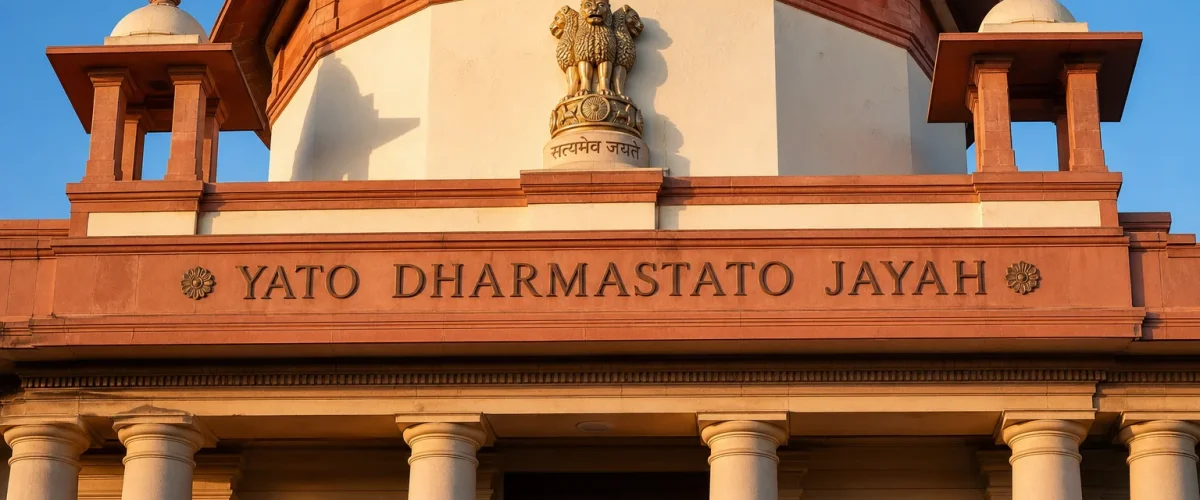
In a landmark verdict delivered on Wednesday, the Supreme Court of India upheld the Election Commission’s power to conduct Special Intensive Revision of electoral rolls, rejecting a batch of petitions that challenged the legality of the exercise. A bench headed by Chief Justice Surya Kant ruled that the SIR process has a direct nexus with the goal of ensuring free and fair elections and that the poll panel had not acted outside its statutory powers by undertaking the exercise.
The Court declared that the Special Intensive Revision process breathes life into the constitutional mandate of universal adult suffrage by ensuring that electoral rolls are accurate, comprehensive and up to date. The verdict is being seen as a major win for the Election Commission of India, which had faced sustained criticism from several opposition parties and civil society groups over the SIR exercise conducted in multiple states earlier this year.
What Is Special Intensive Revision and Why Was It Challenged?
Special Intensive Revision is a comprehensive door-to-door enumeration exercise undertaken by the Election Commission to verify, update and purify electoral rolls. Unlike the routine summary revision that takes place annually, the SIR involves physical verification of every voter’s identity and residence, aiming to remove duplicate entries, entries of deceased persons and voters who have shifted out of their registered constituencies.
The exercise was challenged on multiple grounds by petitioners from several states. The primary argument was that the SIR led to the deletion of genuine voters from electoral rolls, particularly from marginalised communities, migrant workers and slum dwellers who may not have been available at their registered addresses during the verification process. Several petitioners alleged that the exercise was conducted without adequate notice and that the deletions were carried out in a non-transparent manner.
Critics also raised concerns about the timing of the SIR, arguing that it was conducted suspiciously close to state assembly elections in certain states, raising questions about whether the exercise was politically motivated to benefit particular parties. Some petitioners sought a complete rollback of the deletions, arguing that the right to vote is a fundamental aspect of citizenship that cannot be extinguished through an administrative exercise.
Supreme Court’s Six Key Findings
The Supreme Court addressed six key questions raised by SIR critics in its comprehensive verdict. First, the Court held that the Election Commission possesses both statutory and constitutional authority to undertake the SIR, deriving its power from Article 324 of the Constitution and the Representation of the People Act, 1950. The bench observed that the Constitution vests superintendence, direction and control of elections in the ECI, and the preparation of accurate electoral rolls is an integral part of this mandate.
Second, the Court ruled that exclusion from the voter list does not mean that a person’s citizenship has ended. This was a critical clarification, as several petitioners had argued that deletion from electoral rolls amounted to stripping individuals of their citizenship rights. The Court emphasised that citizenship and voter registration are distinct legal concepts, and that any person wrongly deleted from the rolls retains the right to apply for re-inclusion through established procedures.
Third, the Court acknowledged that while the SIR process is necessary, the Election Commission must ensure adequate safeguards to prevent genuine voters from being unfairly excluded. The bench directed the ECI to establish a robust grievance redressal mechanism and to provide sufficient time and opportunity for affected individuals to file claims and objections before any deletions are finalised.
Fourth, the Court rejected the argument that the SIR was politically motivated, noting that the exercise was conducted uniformly across states regardless of which party was in power. The bench held that allegations of political bias require concrete evidence, and the petitioners had failed to demonstrate any systemic pattern of partisan targeting.
Fifth, the Court upheld the EC’s use of technology and data analytics in the SIR process, including the use of Aadhaar-linked databases to identify duplicate entries, while cautioning that technological tools must complement rather than replace physical verification processes.
Sixth, the bench directed the Election Commission to assist voters who were deleted during the SIR in getting re-registered, particularly those belonging to vulnerable sections of society. The Court suggested that the ECI could consider setting up special camps in areas with high deletion rates to facilitate re-registration.
Political Reactions to the Verdict
The verdict drew sharply divided reactions from India’s political spectrum. The ruling party welcomed the Supreme Court’s decision, describing it as a validation of the Election Commission’s commitment to ensuring clean and accurate electoral rolls. Senior party leaders said the verdict underscored the importance of removing bogus and duplicate entries that undermine the integrity of the democratic process.
Opposition parties, however, expressed disappointment with the ruling while acknowledging the Court’s directive for better safeguards. Several opposition leaders reiterated their demand for greater transparency in the SIR process and called for an independent audit of the deletions to ensure that no genuine voter has been disenfranchised. Congress leader Rahul Gandhi, who has been vocal about the SIR issue, said his party would study the judgment carefully and continue to fight for the voting rights of every Indian citizen.
The broader political landscape in India has been marked by intense debates over electoral processes, with the SIR verdict adding another chapter to the ongoing conversation about institutional autonomy and democratic governance.
Implications for Future Elections
Legal experts believe the verdict will have far-reaching implications for future elections in India. By affirming the EC’s authority to conduct SIR exercises, the Supreme Court has effectively given the poll panel the legal backing to undertake similar exercises before major elections. However, the Court’s emphasis on safeguards and grievance redressal mechanisms means that future SIR exercises will need to be more transparent and inclusive than the ones that sparked the current round of litigation.
The verdict also raises important questions about the balance between electoral integrity and voter accessibility. While clean electoral rolls are essential for credible elections, the challenge lies in ensuring that the process of cleaning these rolls does not inadvertently exclude the most vulnerable sections of society, including migrant workers, homeless individuals and those living in informal settlements.
The Supreme Court’s recent interventions in matters of institutional governance, from the NEET-UG examination controversy to the SIR verdict, reflect a judiciary that is actively engaging with questions of systemic accountability while respecting the autonomy of constitutional bodies.
Explore more: Social Trends | Culture
Related Articles
- Quad Foreign Ministers Meet in New Delhi
- Supreme Court Raps NTA Over NEET-UG 2026 Cancellation
- ED Raids Former Kerala CM Pinarayi Vijayan’s Premises in CMRL Case — CPI(M) Call

- Indian Army Gets New Chief as General Dwivedi Hands Over Command Amid Push for Indigenous Defence Tech - July 1, 2026
- Ayodhya Ram Temple Donation Scandal Deepens as Trustees Resign and SIT Arrests Eight - June 29, 2026
- Bengal Seven Weeks On: Modi’s Historic Win and the Questions That Won’t Go Away - June 28, 2026