Meta Launches Paid ‘Plus’ Subscription Plans for Instagram, WhatsApp and Facebook — Premium Features Behind Paywall in India

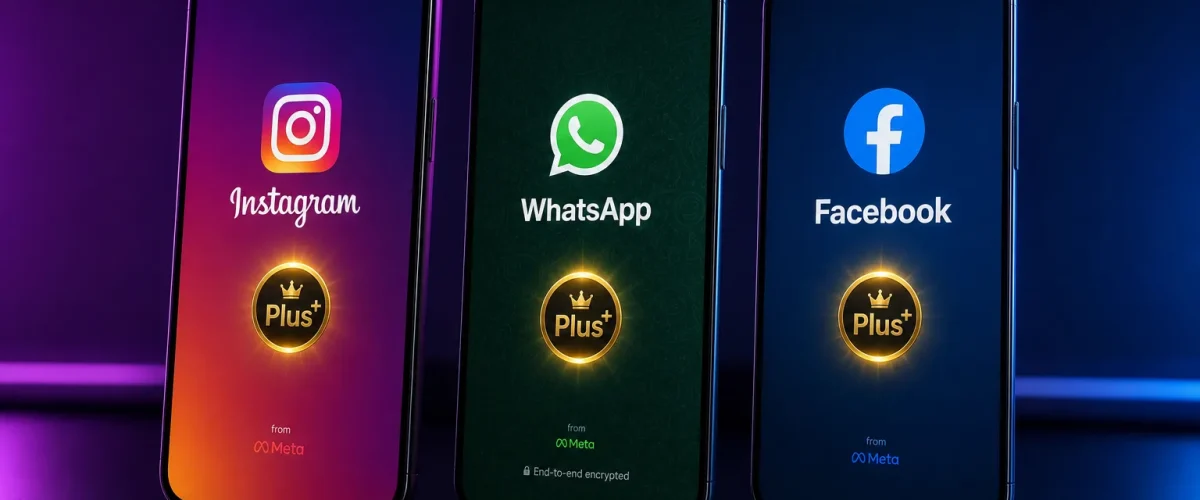
Social Media Giant Pivots to Subscription Revenue Model Across All Three Platforms
Meta Platforms is preparing what could be the most significant shift in the business model of social media since the advent of ad-supported platforms, announcing the rollout of new paid subscription plans called ‘Plus’ for Instagram, Facebook and WhatsApp across global markets including India. The move marks a dramatic pivot by Mark Zuckerberg’s company towards diversifying revenue streams beyond the advertising model that has underpinned its growth for two decades.
The Plus plans, details of which were released on Thursday, offer a tiered subscription structure with exclusive premium features designed to appeal to both individual users seeking an enhanced experience and businesses looking for advanced tools to reach their audiences. The plans are expected to go live in India and select markets in June 2026, with a global rollout planned by the third quarter of the year.
What Do the Plus Plans Offer?
The subscription tiers vary across the three platforms, with each offering features tailored to the specific use case of the app. For Instagram, the Plus plan includes an ad-free browsing experience, priority access to new features and filters, advanced analytics for creators, and the ability to use Meta’s latest AI-powered editing and content creation tools. The Instagram Plus plan is priced at $11.99 per month globally, with Indian pricing expected to be set at Rs 199 per month.
For WhatsApp, the Plus plan targets business users with features including AI-powered automated customer service chatbots, advanced catalogue management, payment processing integration, and the ability to send broadcast messages to larger groups without being flagged as spam. The WhatsApp Plus Business plan is priced at Rs 499 per month in India, positioned as a significant upgrade over the existing WhatsApp Business app which remains free but with limited functionality.
Facebook’s Plus plan offers an ad-free News Feed, advanced group management tools, enhanced privacy controls, and the ability to create AI-generated content for pages and profiles. The Facebook Plus plan is priced at Rs 149 per month in India, making it the most affordable of the three subscriptions. A bundled plan offering all three Plus subscriptions is available at Rs 699 per month, representing a 15 per cent discount over purchasing them individually.
Why Is Meta Making This Move Now?
The shift towards subscription revenue comes at a time when Meta faces mounting challenges to its traditional advertising business. Apple’s App Tracking Transparency framework, introduced in 2021, has significantly reduced the effectiveness of targeted advertising on iOS devices, costing Meta billions of dollars in annual revenue. The European Union’s Digital Markets Act and similar regulatory frameworks in other jurisdictions have further restricted Meta’s ability to collect and monetise user data for advertising purposes.
Simultaneously, the massive capital expenditure required for Meta’s AI infrastructure — the company has invested over $50 billion in AI research, data centres and custom chip development over the past two years — has put pressure on margins. Subscription revenue offers a more predictable and higher-margin revenue stream that can help offset the declining effectiveness of advertising and fund continued AI investment.
Industry analysts at Morgan Stanley estimated that if just 5 per cent of Meta’s 3.3 billion monthly active users across its family of apps subscribe to Plus plans, the company could generate approximately $20 billion in additional annual revenue. “This is Meta’s insurance policy against the secular decline of ad-supported social media,” said analyst Brian Nowak in a research note.
Implications for India — Meta’s Largest Market
India is Meta’s largest market by user base, with over 500 million WhatsApp users, approximately 350 million Instagram users and around 400 million Facebook users. The introduction of paid plans in India is particularly significant given the country’s price-sensitive consumer market, where most digital services have traditionally been offered for free or at heavily subsidised rates.
The WhatsApp Plus Business plan is expected to find the most traction in India, where the messaging platform has become an essential tool for small and medium businesses. An estimated 15 million businesses in India use WhatsApp Business, and the Plus plan’s AI-powered automation features could significantly reduce the cost of customer engagement for these businesses. However, digital rights organisations have expressed concern that essential communication features could eventually migrate behind the paywall, creating a two-tier system of access.
The Internet Freedom Foundation, a Delhi-based digital rights organisation, called on Meta to ensure that the free versions of its platforms remain “fully functional and not deliberately degraded to push users towards paid subscriptions.” The organisation noted that WhatsApp has become a critical infrastructure for communication, education and commerce in India, and that any restrictions on free access could disproportionately affect low-income users and rural communities.
Competition and Market Response
Meta’s subscription push comes amid a broader industry trend towards paid tiers in social media. X (formerly Twitter) has been offering premium subscriptions since 2022, YouTube launched its Premium service several years ago, and Snapchat has experimented with Snapchat+ subscriptions. However, Meta’s move is arguably the most significant given its unparalleled scale and the essential role its platforms play in daily communication and commerce across the world.
Competitors are likely to respond by either matching Meta’s premium features in their free tiers or accelerating their own subscription offerings. Google, which operates YouTube and Google Workspace, may feel pressure to bundle social and productivity features into its existing subscription plans. Similarly, the nascent but growing ecosystem of decentralised social platforms could see increased interest from users unwilling to pay for features that were previously free.
Privacy and Data Concerns
Digital privacy advocates raised concerns about the implications of Meta offering ad-free experiences for a fee, arguing that it creates a troubling paradigm where privacy becomes a luxury available only to those who can afford to pay for it. The European Data Protection Board has already signalled that it will scrutinise the Plus plans to ensure they comply with GDPR requirements, particularly the principle that consent for data processing must be freely given and not conditional on payment.
In India, where a comprehensive data protection law is still being implemented, the regulatory landscape is less clear. The Digital Personal Data Protection Act of 2023 provides broad guidelines for data processing but does not specifically address the question of whether offering privacy as a paid feature constitutes a violation of data protection principles.
As Meta prepares to roll out what could be the most consequential change to social media’s business model, the coming months will determine whether users are willing to pay for features they have long taken for granted — and whether the company can execute a transition that satisfies shareholders, regulators and billions of users simultaneously.
Related Articles
- Pope Leo XIV Releases First Encyclical Calling for AI Guardrails — Magnifica Humanitas Warns Against Unchecked Technological Power
- Supreme Court Upholds 28% GST on Online Fantasy Gaming — Landmark Verdict Could Wipe Out India’s Rs 1 Lakh Crore Online Gaming Industry
- Reliance’s Ambani Green Energy Giga Complex Ships First Batch of High-Efficiency Solar Modules from Jamnagar — India’s Clean Energy Push Gets Major Boost

- India’s Startup Funding Crosses $7.2 Billion in H1 2026 - July 1, 2026
- After Ireland Shock, India’s T20I Side Faces Bigger Test - July 1, 2026
- Ireland Stun World Champions India 2-0 in Belfast, Sooryavanshi Debate Rages On - June 29, 2026