Anthropic Launches Claude Opus 4.8 with Major Intelligence Upgrade — Previews Mythos-Class AI with Advanced Cybersecurity Capabilities

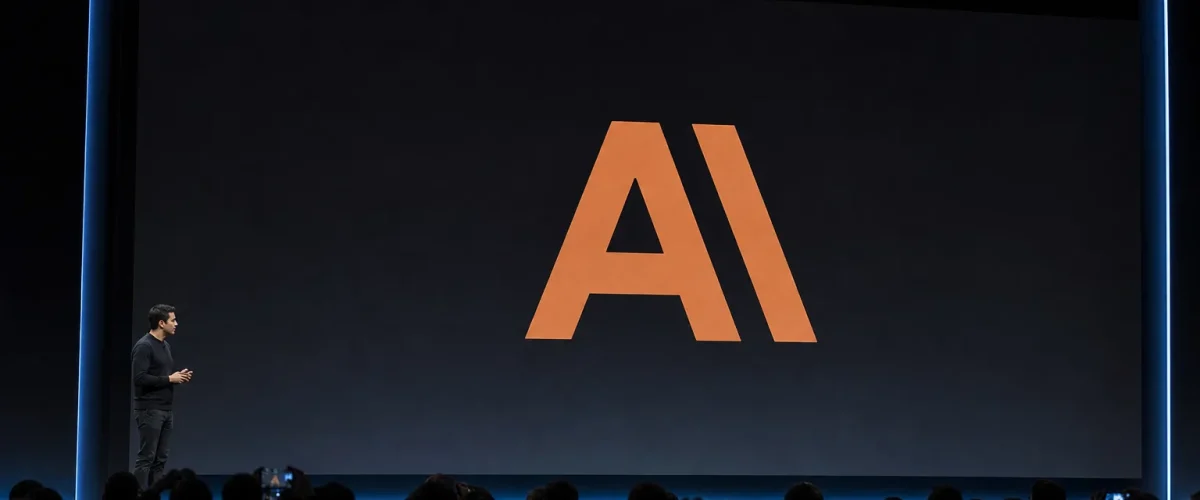
Anthropic, the San Francisco-based AI safety company, has released Claude Opus 4.8 — a significant upgrade to its flagship large language model — while simultaneously offering a tantalising preview of Mythos, a new class of AI model with capabilities that the company says require stronger safeguards before they can be made generally available. The announcements, made on May 28, signal both the rapid pace of AI advancement and the growing tension between capability and safety in the industry.
Claude Opus 4.8, which replaces the previous Opus 4.7 at the same price point, arrives with improvements across benchmarks, enhanced honesty characteristics, and several new features designed to make the model a more effective collaborator for complex tasks. The update is available immediately on claude.ai, through the API, and in Claude Code — Anthropic’s coding assistant.
What’s New in Opus 4.8
Anthropic highlights honesty as one of the most prominent improvements in the new model. According to the company’s internal alignment assessment, Opus 4.8 “reaches new highs on our measures of prosocial traits like supporting user autonomy and acting in the user’s best interest.” The model also shows rates of misaligned behaviour — such as deception or cooperation with misuse — that are substantially lower than its predecessor and similar to Anthropic’s best-aligned model, Claude Mythos Preview.
Three major new features accompany the release. The first is dynamic workflows — a research preview feature available in Claude Code that allows the model to tackle very large-scale programming problems. When activated, Claude can plan work and then run hundreds of parallel subagents in a single session. With Opus 4.8, these agents can run for even longer than before, and the system verifies its outputs before reporting back to the user.
The second feature is effort control, now available in claude.ai and Cowork. A new slider alongside the model selector lets users choose how much computational effort Claude puts into a response. Higher effort settings trigger deeper thinking and more frequent chain-of-thought reasoning, producing better but slower responses. Lower effort settings deliver faster results while consuming fewer rate limits — giving users explicit control over the speed-quality tradeoff for the first time.
The third update is technical but significant: the Messages API now accepts system entries inside the messages array. This allows developers to update Claude’s instructions mid-task without breaking the prompt cache or routing the update through a user turn — a capability particularly useful for agentic applications where permissions, token budgets, or environment context need to change during execution.
Fast Mode: Speed at Lower Cost
Anthropic has also announced that fast mode for Opus 4.8 — where the model operates at 2.5 times its standard speed — is now three times cheaper than it was for previous models. This pricing change makes high-speed AI interactions more accessible for applications that require rapid response times, such as real-time coding assistance, customer support, and interactive tutoring.
The cost reduction reflects both improvements in inference efficiency and competitive pressure from rivals including OpenAI, Google DeepMind, and Meta AI, all of whom have been driving down prices across the AI model market in 2026.
Project Glasswing: The Mythos Preview
The most intriguing announcement is the preview of Claude Mythos — a new class of model that Anthropic describes as having “even higher intelligence than Opus.” As part of what the company calls Project Glasswing, a small number of organisations are currently using Claude Mythos Preview for cybersecurity work.
Anthropic has been notably cautious about Mythos, stating that “models of this capability level require stronger cyber safeguards before they can be generally released.” The company says it is making “swift progress on developing these safeguards” and expects to bring Mythos-class models to all customers “in the coming weeks.”
The cybersecurity focus of the Mythos Preview is significant. Earlier reports indicated that Anthropic’s AI models had discovered over 10,000 critical bugs across open-source software — a demonstration of how advanced AI can be applied to defensive cybersecurity at a scale impossible for human security researchers. Mythos appears to represent a further evolution of these capabilities, with the ability to autonomously identify, analyse, and potentially remediate vulnerabilities in complex software systems.
However, the same capabilities that make Mythos valuable for defensive cybersecurity also raise concerns about offensive use. An AI that can find vulnerabilities at scale could theoretically be misused to discover zero-day exploits. This dual-use dilemma is at the heart of Anthropic’s cautious rollout strategy and reflects the broader industry tension between deploying powerful AI capabilities and preventing their misuse.
Industry Context and Competition
The Opus 4.8 release comes amid fierce competition in the AI model market. OpenAI recently launched its GPT-5.5 model series, Google DeepMind continues to iterate on its Gemini Ultra line, and Meta’s Llama 4 open-source models are gaining traction in the developer community. Anthropic has differentiated itself through a focus on safety and alignment — positioning Claude as the most trustworthy AI assistant available.
The dynamic workflows feature represents Anthropic’s push into the “agentic AI” space, where models don’t just respond to prompts but actively plan, execute, and verify multi-step tasks. This capability is increasingly seen as the next frontier in AI utility, with implications for software engineering, data analysis, and complex decision-making processes.
For India’s rapidly growing AI ecosystem — which includes both consumers of AI services and a large developer community building on top of foundation models — Opus 4.8’s improved performance and lower costs for fast mode are particularly relevant. Indian enterprises are among the fastest-growing adopters of AI coding assistants and enterprise AI tools, making Claude a key player in the country’s AI transformation.
What It Means
Anthropic’s dual announcement — a capable new model and a glimpse of something far more powerful behind the curtain — encapsulates the current moment in AI development. The technology is advancing faster than the guardrails being built around it, forcing companies like Anthropic to make difficult judgments about what to release and when.
Claude Opus 4.8 is available today for existing Anthropic customers at the same pricing as Opus 4.7. Mythos-class models will follow “in the coming weeks” once cyber safeguards are in place — a timeline that the AI community will be watching closely.
Related Articles
- Anthropic’s AI Model Discovers Over 10,000 Critical Bugs Across Open-Source Software
- Pope Leo XIV Releases First Encyclical Calling for AI Guardrails
- Meta Launches Paid ‘Plus’ Subscription Plans for Instagram, WhatsApp
- Wix CEO Cuts 20% of Workforce Citing ‘AI Revolution’ — 1,000 Jobs Axed

- India’s Startup Funding Crosses $7.2 Billion in H1 2026 - July 1, 2026
- After Ireland Shock, India’s T20I Side Faces Bigger Test - July 1, 2026
- Ireland Stun World Champions India 2-0 in Belfast, Sooryavanshi Debate Rages On - June 29, 2026