Centre Orders Delhi Gymkhana Club to Vacate Lutyens Premises by June 5 for National Security — 113-Year-Old Elite Club Faces Eviction

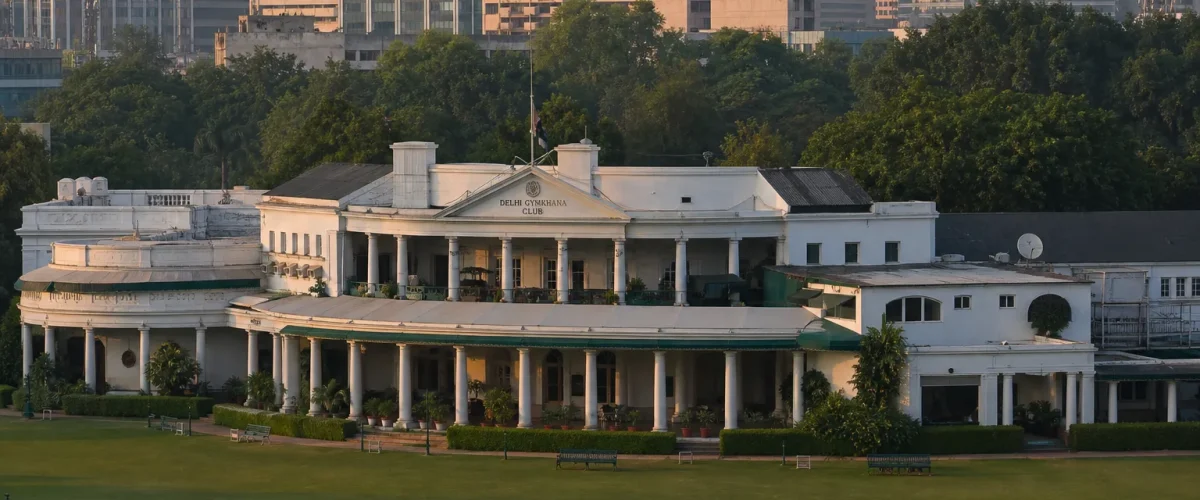
The central government has ordered the Delhi Gymkhana Club, one of India’s oldest and most exclusive social institutions, to vacate its 27.3-acre premises in Lutyens’ Delhi by 5 June 2026. The Land and Development Office under the Ministry of Housing and Urban Affairs cited “strengthening and securing of defence infrastructure and other vital public security purposes” as the reason for the eviction.
The order terminates the club’s perpetual lease, which dates back to 1928, with “immediate effect.” It directs the club to hand over “peaceful possession of the premises,” warning that if it fails to comply, possession “shall be taken over in accordance with law.” Upon re-entry, all buildings, structures, lawns and fittings on the property vest with the government.
The Delhi Gymkhana Club has operated from 2 Safdarjung Road since 1913, when it was known as the Imperial Delhi Gymkhana Club. The property sits adjacent to the Prime Minister’s official residence at 7 Lok Kalyan Marg, which is partly why the government has framed the eviction as a national security requirement.
A Decades-Long Battle, Not a Sudden Move
This eviction order did not materialise overnight. The process traces back to the 1980s, when the government first began examining the terms of the club’s lease. Over the decades, multiple investigations have found allegations of mismanagement, nepotism in membership selection and financial irregularities at the club.
In 2020, the National Company Law Tribunal stepped into the club’s affairs following complaints about governance failures. The NCLT appointed a government administrator to oversee operations, and the National Company Law Appellate Tribunal set a deadline for reforms and fresh elections — a deadline that passed without resolution.
The current order is effectively the culmination of this years-long process. According to India Today’s detailed timeline, “what began as a regulatory intervention has now culminated in the government moving to take back its land.”
Why the Location Matters So Much
The 27.3 acres occupied by Delhi Gymkhana Club represent some of the most valuable real estate in India. Lutyens’ Delhi — the government enclave designed by British architect Edwin Lutyens — houses Parliament, the Supreme Court, key ministries and official residences. Land in this zone is not available for commercial development, and the government has been reclaiming properties along this corridor for several years.
The club’s proximity to the PM’s residence is the stated security rationale, but the move also fits a broader pattern. The government has issued similar directives to occupants of other government land along Lok Kalyan Marg and surrounding areas. Defence and intelligence agencies are understood to have requested additional space for infrastructure near the seat of government.
For context, the Delhi Gymkhana Club’s membership list has historically included senior bureaucrats, military officers, diplomats and business leaders. The club is known for its colonial-era architecture, tennis courts, swimming pools and dining rooms, and membership has traditionally been considered a mark of social status in the capital.
The Legal Challenge Ahead
The club has announced it will move the Delhi High Court to challenge the eviction order. Legal experts expect the case to raise several important constitutional questions. Can the government terminate a perpetual lease for national security without following due process under the Public Premises (Eviction of Unauthorised Occupants) Act? Does the club have property rights that override the government’s sovereign claim?
The Supreme Court’s recent approach to cases involving government authority and institutional rights suggests that courts will scrutinise the eviction closely, but may ultimately defer to the national security rationale if the government can substantiate it.
The club’s legal team is expected to argue that the “re-entry” clause cited by the government applies only in cases of lease violation, and that the club has maintained the property in good order. They will also likely challenge the breadth of the “national security” justification, asking the court to require specific evidence that the land is needed for defence purposes.
What Happens to the Members?
The Delhi Gymkhana Club has approximately 6,000 members, many of whom are retired government officials and their families. If the eviction proceeds, these members would lose access to facilities they have used — and paid annual subscriptions for — over decades.
The club’s assets, including its building, furnishings and reserves, would also be subject to government disposition. It is unclear whether members would receive any compensation or whether the club could relocate to an alternative site.
This situation mirrors, in some ways, the security-driven changes that have reshaped New Delhi’s institutional landscape in recent years. The capital’s most protected zones are being reimagined for a security-first era, and institutions that once operated under colonial-era arrangements are finding those arrangements abruptly terminated.
The 5 June deadline is less than a week away. Whether the court grants an interim stay or the government proceeds with physical repossession will determine the next chapter in the story of one of Delhi’s most storied cultural institutions.
The case is being watched not just by the club’s members but by dozens of similar institutions across India — gymkhana clubs, cantonment boards and heritage societies that operate on government land under lease arrangements that may no longer align with the state’s current priorities. A ruling in the government’s favour could set a precedent that reverberates far beyond Lutyens’ Delhi.