Delhi Police Bust ISI-Backed Shahzad Bhatti Terror Module Planning Attacks on Temples and Military Camps

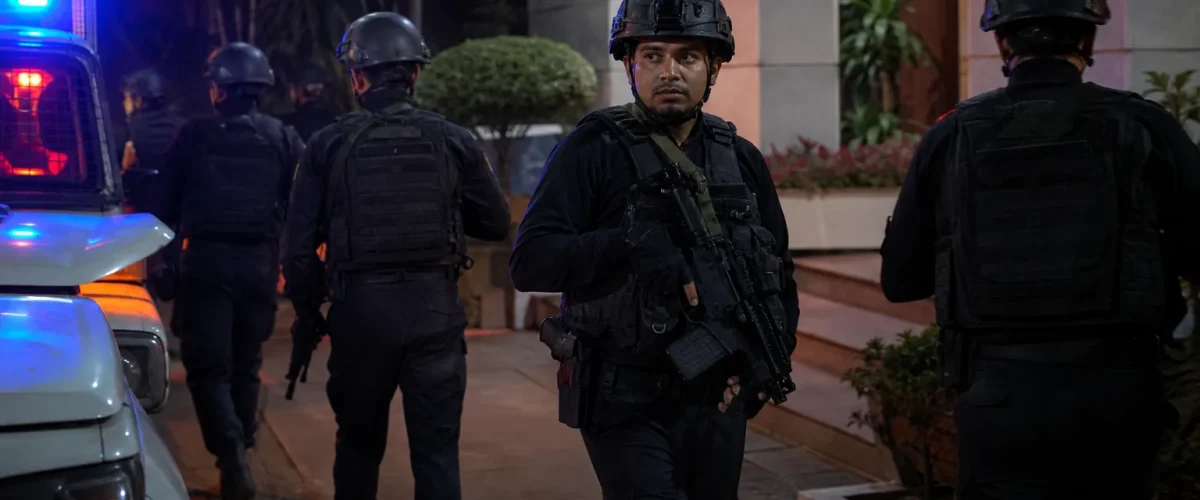
The Delhi Police Special Cell has busted a Pakistan ISI-backed terror module led by social media personality-turned-intelligence asset Shahzad Bhatti, arresting multiple operatives across Delhi and several other states in one of the most significant counter-terrorism operations of 2026. The module was allegedly planning coordinated attacks on a historic temple in Delhi, a popular dhaba on the Delhi-Sonipat national highway, and a military camp in Hisar, Haryana.
The arrests, carried out in multiple phases starting from early May, have yielded weapons, explosive materials, communication devices, and detailed reconnaissance notes on the intended targets. On Saturday, the Delhi Police confirmed that four additional suspects linked to the network were detained, bringing the total number of arrests to 13 across multiple states.
Who Is Shahzad Bhatti — From Social Media Star to ISI Handler
Shahzad Bhatti, a 34-year-old Pakistani national, initially gained prominence as a social media content creator on YouTube and TikTok, where his videos on geopolitics and India-Pakistan relations attracted millions of views. According to intelligence officials, Bhatti was recruited by Pakistan’s Inter-Services Intelligence (ISI) approximately three years ago and has since been operating as a handler for sleeper cells in India.
Bhatti’s modus operandi was distinctly modern. He used encrypted messaging platforms including Signal and Telegram to coordinate with operatives, and employed cryptocurrency transactions to funnel money for weapons procurement and logistics. A senior Special Cell officer described the module as “one of the most technologically sophisticated ISI operations we have encountered in recent years.”
Unlike traditional cross-border terror networks that rely on infiltration through the Line of Control or the international border in Punjab, the Bhatti module primarily recruited Indian nationals through online radicalisation. At least seven of the 13 arrested individuals are Indian citizens from Uttar Pradesh, Haryana, and Rajasthan who were contacted and radicalised through social media interactions with Bhatti and his associates.
The Planned Attacks — Three Targets Identified
Interrogation of the arrested operatives has revealed three primary targets that were at advanced stages of planning. The first was a historic temple in central Delhi — security agencies have not disclosed the specific temple to avoid public panic, but sources indicate it is a prominent religious site that attracts thousands of visitors daily.
The second target was a highway dhaba on the Delhi-Sonipat stretch of NH-44, one of India’s busiest national highways. The dhaba, frequented by truck drivers and travellers, was selected for its high footfall and relatively low security presence. Reconnaissance photographs and hand-drawn maps of the establishment were recovered from one of the arrested operatives.
The third and most alarming target was a military camp in Hisar, Haryana. The operatives had allegedly conducted multiple visits to the area surrounding the camp over the past two months, mapping entry and exit points, guard patrol timings, and communication infrastructure. An IED (improvised explosive device) assembly manual was found on a laptop seized during the raids.
The Investigation — How the Module Was Uncovered
The breakthrough came from signals intelligence shared by the Research and Analysis Wing (RAW) with the Intelligence Bureau in March 2026. Intercepted communications between a Pakistan-based number and multiple Indian mobile numbers flagged suspicious activity patterns. The Special Cell’s anti-terror unit was tasked with the investigation, which involved nearly two months of surveillance before the first arrests were made on 8 May.
The operation’s scale is notable in the context of India’s evolving security challenges. The Rs 1,150 crore cocaine bust off the Gujarat coast earlier this month had already highlighted the growing sophistication of cross-border criminal networks. The Bhatti module’s combination of online recruitment, cryptocurrency financing, and encrypted communications represents a newer, harder-to-detect threat paradigm.
Geopolitical Context — India’s Security Posture Under Pressure
The busting of the Bhatti module comes at a sensitive geopolitical moment. India is hosting the Myanmar President’s official visit, the Quad foreign ministers meeting in New Delhi has underscored India’s strategic partnerships, and the volatile geopolitical landscape including the US-Iran ceasefire has shifted regional security dynamics.
National Security Advisor Ajit Doval was briefed on the operation and is reported to have instructed a comprehensive review of all active ISI-linked threats across the country. The Ministry of Home Affairs has issued an advisory to all state police forces to heighten vigilance at religious sites, transportation hubs, and military installations.
India’s relationship with Pakistan remains strained, and the discovery of yet another ISI-backed operation on Indian soil is likely to further complicate any diplomatic thaw. Pakistan’s Foreign Ministry has not responded to requests for comment on the arrests.
Legal Proceedings and What Comes Next
The 13 arrested operatives have been charged under the Unlawful Activities (Prevention) Act (UAPA), the Arms Act, the Explosive Substances Act, and relevant sections of the Bharatiya Nyaya Sanhita. They have been remanded to 14 days of police custody by a Delhi court, and the National Investigation Agency (NIA) is expected to take over the case given its cross-border dimensions.
For the Special Cell, the immediate priority is determining whether the network extends beyond the 13 arrested individuals. Intelligence sources suggest that Bhatti may have additional sleeper cells in other Indian cities, and the ongoing interrogation is focused on identifying any remaining operatives before they can either execute plans or flee. The operation remains active, and further arrests have not been ruled out.