India’s Live Music Boom: Coldplay, Diljit, and the Concert Economy Transforming Indian Entertainment

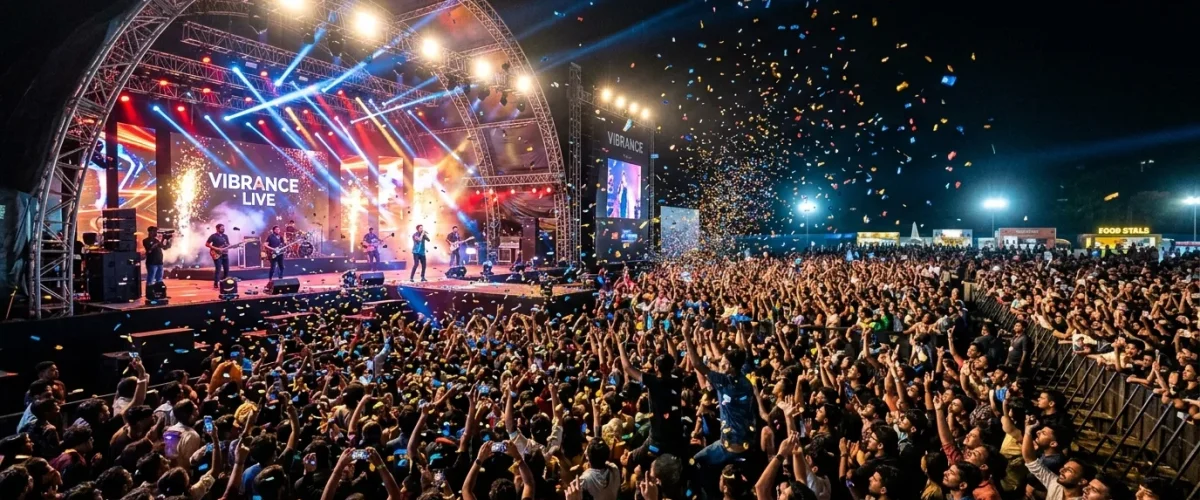
India has emerged as one of the world’s most exciting live music markets, with 2026 marking a watershed year for concerts, tours, and music festivals across the country. From Coldplay’s record-shattering stadium shows to Diljit Dosanjh’s triumphant domestic tour and the proliferation of boutique festivals in unexpected locations, the Indian live music economy has grown into a multi-billion-rupee industry that is transforming how Indians experience entertainment.
Coldplay’s India Extravaganza: A Cultural Milestone
Coldplay’s extended India tour has been the defining live music event of early 2026. Following their enormously successful 2025 concerts in Mumbai and Ahmedabad, the British rock band returned for an expanded run of shows across multiple Indian cities, including Delhi, Bengaluru, Hyderabad, and Kolkata. The tour’s Ahmedabad dates at the Narendra Modi Stadium—the world’s largest cricket venue—attracted over 130,000 attendees per show, setting records for the largest concert audiences in Indian history.
The commercial scale of Coldplay’s India operations has been staggering. With ticket prices ranging from ₹2,500 for general admission to ₹35,000 for premium packages, the tour’s Indian leg has generated estimated gross revenues exceeding ₹500 crore. The secondary economic impact—including hospitality, transportation, food and beverage, and merchandise spending—has been valued at several multiples of the direct ticket revenue, providing a significant boost to local economies in each host city.
Beyond the economics, Coldplay’s India tour has functioned as a cultural phenomenon that transcended traditional music fandom. The concerts became social events of the highest order, with attendees ranging from college students to corporate executives, creating shared experiences that dominated social media feeds and water-cooler conversations for weeks. The band’s incorporation of Indian musical elements and their visible affection for India contributed to an atmosphere of cultural celebration that resonated deeply with audiences. The event’s significance parallels other major entertainment phenomena covered in IPL 2026 Season Preview: Key Transfers, Injuries, and Franchise Strategies.
Diljit Dosanjh’s Dil-Luminati Tour: A Homegrown Triumph
If Coldplay’s tour demonstrated India’s appetite for international acts, Diljit Dosanjh’s Dil-Luminati Tour has proven that homegrown artists can command comparable scale and enthusiasm. The Punjabi superstar’s domestic tour has been a revelation, with stadium and arena shows across 15 Indian cities attracting a cumulative audience estimated at over 1.5 million. The tour’s production values—featuring elaborate stage designs, cutting-edge lighting and sound systems, and immersive visual experiences—have set new benchmarks for Indian concert production.
Diljit’s tour has also been commercially groundbreaking. Average ticket prices for arena shows have ranged from ₹1,500 to ₹15,000, with VIP experiences commanding premium pricing. The tour’s merchandise line—featuring clothing, accessories, and limited-edition collectibles—has generated additional revenue streams that were previously uncommon in Indian touring. Industry analysts estimate the Dil-Luminati Tour’s total Indian revenues at approximately ₹350 crore, making it the highest-grossing domestic tour by an Indian artist in history.
The tour’s cultural significance extends beyond commercial metrics. Diljit’s journey from Punjabi music sensation to global touring act has inspired a generation of Indian artists who aspire to build careers independent of the Bollywood film ecosystem. His success has demonstrated that there is a viable commercial path for Indian artists willing to invest in live performance as a primary career pillar.
The Festival Circuit: Growth and Diversification
India’s music festival landscape has expanded dramatically, with 2026 featuring a calendar of events that spans genres, geographies, and audience demographics. Lollapalooza India, now in its fourth year, has established itself as the country’s premier multi-genre festival, attracting international headliners alongside a curated selection of Indian artists. The festival’s 2026 edition, held in Mumbai, featured over 80 artists across five stages, drawing a two-day attendance of approximately 60,000.
NH7 Weekender continues to serve as a showcase for India’s independent music scene, with editions in Pune, Shillong, and Goa providing platforms for emerging artists who might otherwise lack access to large audiences. Magnetic Fields, the boutique electronic music festival held in a Rajasthani palace, has cultivated a devoted following among aesthetically minded festival-goers seeking immersive cultural experiences beyond standard concert formats.
New entrants to the festival market have added further diversity. A classical music festival in Varanasi, combining traditional Hindustani performances with contemporary fusion acts, attracted international visitors and media attention, while a hip-hop focused festival in Mumbai’s Bandra neighbourhood drew over 20,000 attendees. As interest in AI Summit 2026: India Showcases Ambitions but Structural Gaps Exposed continues to grow, the festival circuit represents an increasingly important channel for cultural expression and community building.
Infrastructure and Industry Maturation
The growth of India’s live music market has been supported by significant improvements in event infrastructure. Several cities have invested in purpose-built concert venues and arenas that offer world-class acoustics, seating, and audience amenities. The recently completed Mumbai Arena, with a capacity of 20,000, has been designed specifically for live entertainment and has already hosted several major concerts and sporting events.
The professionalisation of India’s live events industry has accelerated, with international event management companies establishing Indian operations and domestic companies adopting global best practices in areas including stage design, sound engineering, crowd management, and artist hospitality. The availability of trained technicians, riggers, and production professionals has improved markedly, reducing the industry’s historical reliance on imported expertise for major productions.
Ticketing infrastructure has also evolved, with platforms like BookMyShow, Paytm Insider, and Zomato Live offering sophisticated digital ticketing solutions that include dynamic pricing, waitlist management, and anti-scalping measures. The introduction of blockchain-based ticketing by some platforms has addressed concerns about counterfeit tickets and unauthorised resale.
Economic Impact and Tourism Potential
The economic ripple effects of India’s live music boom extend well beyond direct ticket revenues. State governments have begun recognising concerts and festivals as significant tourism drivers, with several offering tax incentives and logistical support to event organisers. The Rajasthan and Goa state governments have been particularly proactive, positioning their states as premier destinations for music tourism.
The tourism potential of major concerts has been demonstrated by the Coldplay and Diljit tours, which prompted spikes in hotel bookings, flight reservations, and restaurant visits in host cities. Industry data suggests that the average concert attendee from outside the host city spends approximately ₹15,000-25,000 on travel, accommodation, and ancillary expenses—expenditure that directly benefits the local hospitality and retail sectors.
Challenges: Accessibility and Safety
Despite the sector’s impressive growth, challenges remain. Ticket pricing for premium international and domestic acts has placed live music experiences beyond the reach of many potential attendees, particularly younger fans and those from lower-income backgrounds. The gap between general admission pricing and the actual resale market—where scalped tickets can command 5-10x face value—has been a source of frustration and calls for regulatory intervention.
Safety and crowd management remain critical concerns, particularly for large-scale outdoor events. While India’s event management standards have improved significantly, the sheer scale of stadium concerts—with attendances exceeding 100,000—presents logistical challenges that require meticulous planning and execution. The industry has responded by adopting international safety protocols and investing in crowd simulation technology to anticipate and mitigate potential risks. Coverage of March 2026 in Bollywood: Anil Kapoor Leads Bold Storytelling highlights similar infrastructure and management challenges across the entertainment sector.
The Future of Live Music in India
The trajectory of India’s live music market points towards continued expansion and diversification. Industry projections suggest that the sector’s annual revenues could reach ₹5,000 crore by 2028, driven by increasing consumer willingness to spend on experiential entertainment, the growth of India’s middle class, and the entry of international touring acts seeking to capitalise on one of the world’s most youthful and enthusiastic concert-going populations.
For India’s music industry, the live music boom represents more than a revenue opportunity—it is a cultural transformation that is reshaping the relationship between artists and audiences, creating new career pathways for musicians, and establishing India as a must-play destination on the global touring circuit.

- India’s Startup Funding Crosses $7.2 Billion in H1 2026 - July 1, 2026
- After Ireland Shock, India’s T20I Side Faces Bigger Test - July 1, 2026
- Ireland Stun World Champions India 2-0 in Belfast, Sooryavanshi Debate Rages On - June 29, 2026