Hampi and Badami: Karnataka’s Ancient Ruins See Record Tourist Footfall in Early 2026

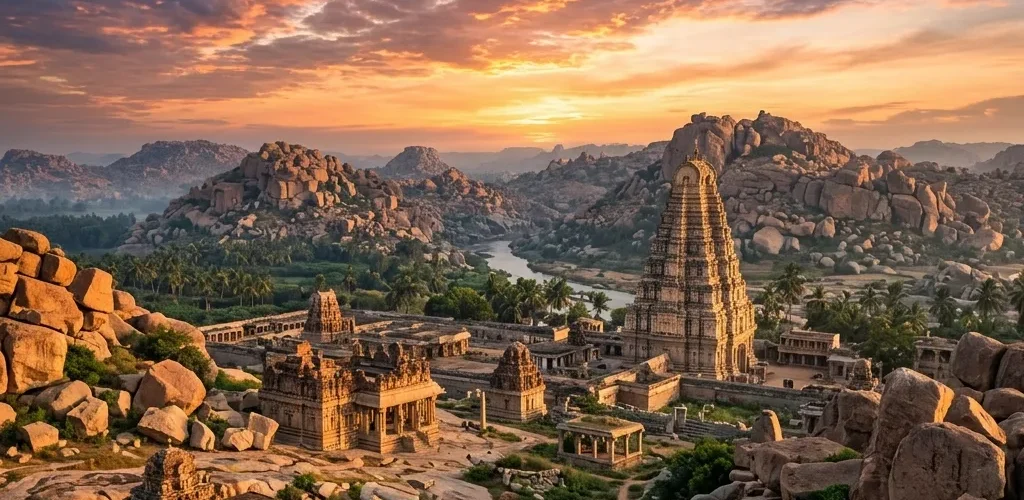
Karnataka’s extraordinary archaeological treasures — the UNESCO World Heritage Site of Hampi and the rock-cut cave temples of Badami — are experiencing an unprecedented surge in tourism in early 2026. Official data from the Vijayanagara and Bagalkot district administrations reveals that combined visitor numbers to both sites crossed the 12 lakh mark in the first quarter of the year, representing a 38 per cent increase over the same period in 2025. The surge reflects a broader trend of Indian travellers increasingly gravitating towards heritage and cultural destinations, driven by improved infrastructure, social media visibility, and a deepening national pride in India’s civilisational heritage.
Hampi’s Extraordinary Footfall: Numbers Tell the Story
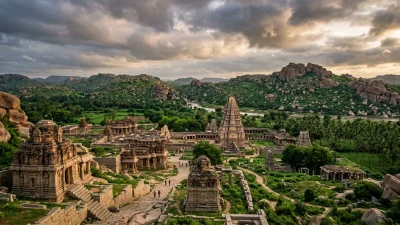
Hampi, the sprawling 14th-century capital of the Vijayanagara Empire spread across 4,100 hectares of boulder-strewn terrain along the Tungabhadra River, recorded approximately 8.5 lakh visitors between January and March 2026. This figure includes a remarkable spike during the Christmas-New Year holiday period of late 2025, when an estimated four to five lakh tourists converged on the site within a single week — one of the highest concentrations ever recorded. The surge was driven by a combination of educational tours organised by schools and colleges, domestic holiday travel, and growing international interest fuelled by Hampi’s frequent appearances on global “must-visit” lists published by leading travel magazines.
The Stone Chariot, Virupaksha Temple, Vittala Temple Complex with its iconic musical pillars, and the Lotus Mahal remained the most visited monuments, with long queues reported throughout the peak period. Local traders, guides, souvenir sellers, and auto-rickshaw operators reported brisk business, with some guides estimating that their earnings during the holiday week exceeded their typical monthly income.
Badami’s Cave Temples: The Quieter Marvel Finding Its Audience
While Hampi commands global recognition, Badami — located approximately 150 kilometres to the northwest — is quietly emerging as a compelling companion destination. The town’s four rock-cut cave temples, dating from the 6th century Chalukya dynasty, represent some of the finest examples of early Indian rock architecture. Carved into the red sandstone cliffs overlooking the Agasthya Lake, the caves feature intricate sculptures of Vishnu, Shiva, and Jain Tirthankaras that rival the artistry found at Ajanta and Ellora.
Badami recorded approximately 3.5 lakh visitors in the first quarter of 2026, a 45 per cent increase over the previous year. The growth has been supported by improved road connectivity — the recently completed Badami bypass road reduces travel time from Hubli to under two hours — and the inclusion of Badami in Karnataka Tourism’s “Heritage Triangle” promotional campaign alongside Hampi and Pattadakal. The Archaeological Survey of India has also completed conservation work on Cave 3, the largest and most ornate of the four temples, and has installed new interpretive panels explaining the iconography and construction techniques of the Chalukyan artisans.
Infrastructure Challenges and Government Response
The tourism boom has, however, exposed significant infrastructure gaps at both sites. At Hampi, the sheer volume of visitors during the holiday surge overwhelmed available accommodation, with many tourists forced to stay in community halls or travel to Hosapete, the nearest town 13 kilometres away, for lodging. Public amenities — including restrooms, drinking water stations, and waste management facilities — proved inadequate during peak periods, drawing criticism from visitors and environmental advocates.
In response, the Vijayanagara district administration has announced a comprehensive Tourism Infrastructure Enhancement Plan worth Rs 350 crore. The plan includes the construction of 500 new budget accommodation units in designated tourism zones around Hampi, improved public amenities at all major monument clusters, a new visitor management centre with real-time crowd monitoring, and expanded parking facilities on the periphery of the heritage zone with electric shuttle services to the monuments. The Karnataka government has also earmarked funds for a Hampi Heritage Interpretation Centre that will use interactive displays, virtual reality reconstructions of the Vijayanagara Empire at its zenith, and multimedia presentations to enrich the visitor experience.
Sustainable Tourism: Protecting Heritage While Welcoming Growth
The surge in tourist numbers has intensified the perennial debate about balancing access with conservation at India’s heritage sites. UNESCO observers have noted that while increased tourism brings economic benefits to local communities, unregulated growth risks damaging the fragile archaeological landscape. The Hampi World Heritage Area Management Authority has responded by implementing several protective measures in 2026, including strict vehicle restrictions within the core heritage zone, designated photography points to prevent congestion at sensitive monuments, and a “Carry In, Carry Out” waste policy for all visitors.
Community engagement is also a priority. Local residents, who have historically had a complex relationship with heritage regulations that restrict construction and agricultural activity within the protected zone, are being integrated into the tourism economy through training programmes for heritage guides, hospitality workers, and artisan entrepreneurs. A new cooperative of Hampi women artisans, specialising in traditional Lambani embroidery and stone craft, has begun selling their products at a dedicated market near the Virupaksha Temple entrance, creating a direct economic link between conservation and community prosperity.
Planning Your Hampi-Badami Heritage Circuit
For travellers planning a visit in 2026, the optimal window is October through March, when the weather is pleasant and the landscape at its most photogenic. Hampi is accessible via Hubli Airport (approximately 160 kilometres), which offers direct flights from Bengaluru, Mumbai, and Hyderabad. The recently upgraded Hosapete Junction railway station connects to Bengaluru via overnight services, making a weekend heritage trip feasible for those based in Karnataka’s capital. Travellers exploring multi-destination itineraries might consider combining the Karnataka circuit with Kerala’s enchanting backwater experience for a comprehensive South Indian journey.
Accommodation options range from heritage guesthouses within Hampi village to comfortable hotels in Hosapete and Badami. The Karnataka Tourism Development Corporation operates well-maintained properties at both locations. For a richer experience, consider hiring a local heritage guide — available through the Hampi Guides Association — who can bring the ruins to life with stories of Krishnadevaraya’s court, the empire’s legendary diamond markets, and the cataclysmic Battle of Talikota that sealed Vijayanagara’s fate in 1565.
A Heritage Renaissance in the Making
The record tourism numbers at Hampi and Badami in early 2026 signal something deeper than a seasonal spike — they reflect a cultural renaissance in Indian travel. As domestic travellers increasingly seek meaningful encounters with their own history, and as international visitors discover the depth of India’s archaeological wealth beyond the Taj Mahal, Karnataka’s ancient ruins are claiming their rightful place on the global heritage tourism map. With sustained investment, responsible management, and community partnership, the Vijayanagara legacy is poised to inspire a new generation — just as India’s entertainment industry is reaching new audiences and its technology ambitions are drawing global attention, the nation’s ancient heritage is experiencing its own thrilling moment of rediscovery.