CBSE Re-Evaluation Fee Controversy — Rahul Gandhi Accuses Board of Profiting from Its Own Mistakes

Rahul Gandhi Targets CBSE Over Post-Result Fee Structure
Leader of the Opposition in the Lok Sabha Rahul Gandhi launched a sharp attack on the Central Board of Secondary Education (CBSE) on Monday, accusing the board of charging students exorbitant fees for re-evaluation and verification of marks — even when discrepancies are allegedly caused by the board’s own errors in its digital scanning and marking process.
In a post on X (formerly Twitter), Gandhi wrote: “Beware of pickpockets — today they’re sitting inside CBSE. If marks come out wrong due to CBSE’s mistake, what do you get? A bill: Digital scan copy: Rs 100 per subject. Re-totalling: Rs 100 per paper. Re-evaluation: Rs 25 per question. A child might have to shell out up to Rs 2,000 just to get their own answer sheet properly checked.”
He added: “Think about it: when 4 lakh kids have filed such applications, how much money is CBSE making from its own mistakes? The mistake is CBSE’s, the punishment is for students, and the earnings go to the government.”
The Background: What Went Wrong with CBSE’s Digital Marking
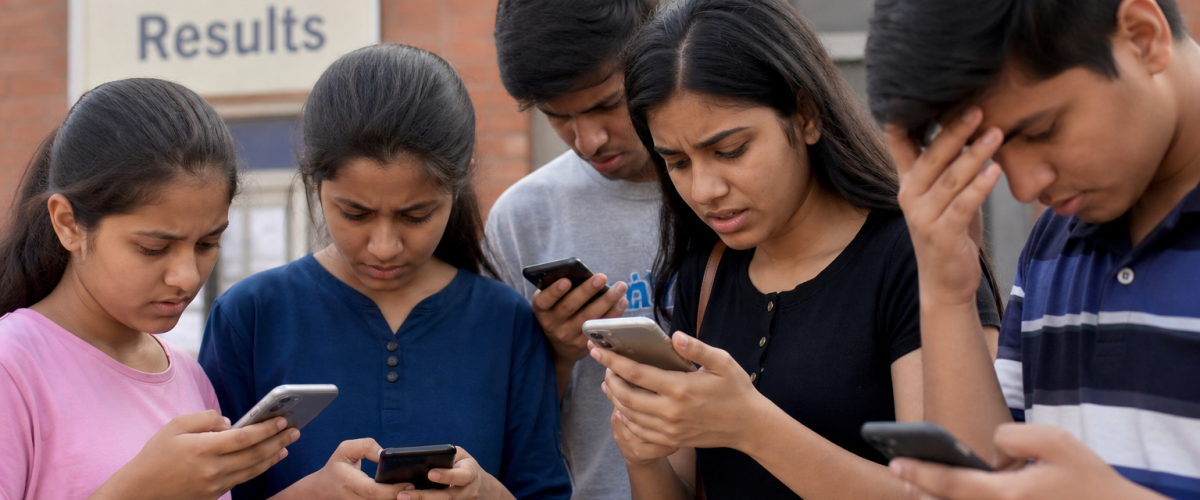
The controversy erupted after CBSE declared Class 12 results on 12 May 2026, when thousands of students discovered unexpected discrepancies in their marks. Many reported significant drops from their pre-board and practice test scores, with some alleging that entire sections of their answer sheets appeared to have gone unscanned or unread during the digital evaluation process.
An investigation by ethical hackers, reported earlier in May, exposed security vulnerabilities in CBSE’s Online Scanning and Marking (OSM) system. The report found that the digital scanning process occasionally failed to capture certain pages of handwritten answer sheets, leading to incomplete evaluations. CBSE admitted to the security gaps but maintained that the system’s core integrity was intact.
The board subsequently opened a portal for students to apply for verification of marks, obtaining photocopies of evaluated answer sheets, and re-evaluation. However, each of these services comes with a fee, which has become the focal point of the current political controversy.
The Fee Structure Under Fire
CBSE’s post-result service fees are as follows: obtaining a digital scan copy of an evaluated answer sheet costs Rs 100 per subject; re-totalling (checking whether marks have been correctly added up) costs Rs 100 per paper; and re-evaluation (having the answer sheet re-marked by a different examiner) costs Rs 25 per question, which can add up to Rs 500–750 per subject depending on the number of questions.
For a student who wants all three services for five subjects — not uncommon for those who suspect systemic errors — the total cost can exceed Rs 2,000. For families from economically weaker sections, many of whom are the primary beneficiaries of government education schemes, this amount represents a significant burden.
Education activists point out that if the errors are in fact caused by CBSE’s scanning process, making students pay to correct them amounts to penalising the victim. “The board made the mistake, but the student has to pay to get it fixed. This is fundamentally unjust,” said Ashok Agarwal, a Delhi-based education rights lawyer who has filed cases against CBSE in the past.
Scale of the Problem
The numbers underscore the scale of the crisis. CBSE has acknowledged that approximately 4 lakh students — out of roughly 18.9 lakh who appeared for Class 12 exams in 2026 — have filed applications for one or more post-result services. This represents over 21 percent of total candidates, a significantly higher proportion than in previous years, suggesting that the marking discrepancies are widespread rather than isolated.
If the average student pays Rs 1,000 across various services, CBSE stands to collect approximately Rs 40 crore from post-result applications alone. Critics argue that this creates a perverse incentive: the more errors the system produces, the more revenue the board generates from correction requests.
CBSE Controller of Examinations denied this characterisation, stating that fees are “nominal and intended to cover administrative costs, not generate revenue.” The board said it was working to improve the OSM system and would provide free re-evaluation for cases where scanning errors are confirmed.
Political Reactions Pour In
Gandhi’s attack has triggered a broader political debate about the state of India’s examination system. Congress and other opposition parties have demanded that CBSE make all post-result services free for students, given the acknowledged flaws in the digital marking system.
Union Education Minister Dharmendra Pradhan responded by saying that the government takes “examination integrity very seriously” and that CBSE is implementing “systemic reforms to prevent future errors.” He did not directly address the fee issue but said that financial assistance would be provided to economically disadvantaged students seeking re-evaluation.
The controversy comes at a sensitive time politically, with the broader education system already under scrutiny following the NEET paper leak scandal and questions about the National Testing Agency’s competence. The Cockroach Janta Party, a protest movement founded by activist Abhijeet Dipke, has announced plans for a Jantar Mantar demonstration on 6 June specifically targeting Education Minister Pradhan’s resignation.
What Students Can Do
Students who believe their marks are incorrect have a structured but time-bound process to follow. The verification of marks window opened on 2 June 2026 and will remain open for a limited period. Students must apply through the CBSE website with their roll number, school code, and examination details.
Education counsellors advise students to first obtain the digital scan copy of their answer sheet before deciding on re-evaluation. “Sometimes the scan copy itself reveals obvious errors — missing pages, incorrectly totalled marks — that can be addressed without the full re-evaluation process,” said Jayanti Dalmia, a Delhi-based career counsellor.
For students from economically weaker backgrounds, several NGOs and education foundations have announced they will cover re-evaluation costs. The National Students’ Union of India (NSUI), Congress’s student wing, has set up helpdesks in major cities to assist affected students.
The Bigger Picture
The CBSE fee controversy is part of a larger crisis of confidence in India’s examination infrastructure. From the NEET paper leaks to JEE Advanced controversy to CBSE’s digital marking failures, the institutions that millions of students rely on for fair assessment are facing unprecedented scrutiny.
As one parent in Delhi put it: “My daughter studied for two years. She knows what she wrote. When her marks don’t match her preparation, and we have to pay money to prove the board’s system failed — something is deeply wrong with the education system in this country.”
The Supreme Court, which is already hearing petitions related to examination reforms, is expected to take up the CBSE re-evaluation fee issue during its next hearing. Legal experts say there is a strong constitutional argument that students should not bear the financial burden of institutional failures.