Cockroach Janta Party Founder Abhijeet Dipke to Return to India on June 6 for Jantar Mantar Education Protest

Dipke Announces Delhi Return with Call to Action for Students
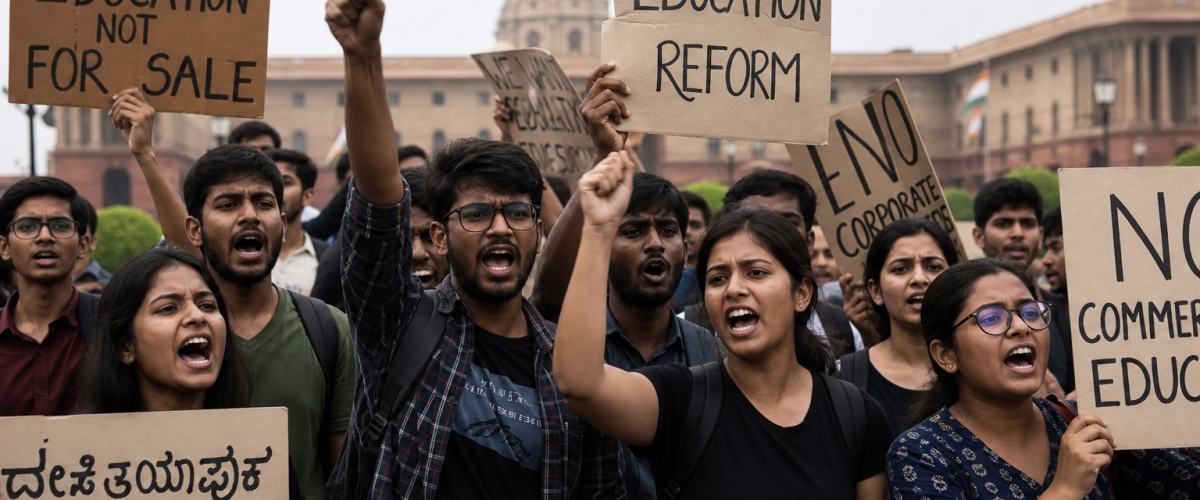
Abhijeet Dipke, the founder of the viral protest movement “Cockroach Janta Party,” announced on Monday that he will return to India on 6 June 2026 to lead a peaceful protest at Jantar Mantar in New Delhi, demanding the resignation of Union Education Minister Dharmendra Pradhan over what he describes as a systematic failure to protect the integrity of India’s examination system.
In a video posted simultaneously on X (formerly Twitter) and Instagram, Dipke called on students, parents, and education activists to join him at Delhi’s Indira Gandhi International Airport on Saturday morning, June 6, and march together to Parliament Street Police Station to seek formal permission for a demonstration at Jantar Mantar.
“It seems that the system can make as many mistakes as it wants and there are no consequences for that. All the consequences are for the students,” Dipke said in the video, which has already garnered over 2 million views within hours of posting. “I have decided that I will come to Delhi on Saturday morning, June 6. Please join me at the airport and together we will go to the Parliament Street police station to ask for permission to hold a peaceful protest at Jantar Mantar.”
Who is Abhijeet Dipke and What is the Cockroach Janta Party?
The Cockroach Janta Party (CJP) is not a traditional political party but rather a satirical protest movement that has captured the imagination of millions of young Indians frustrated with the country’s education system. Founded by Dipke, a young activist who has been based abroad, the movement takes its name from the resilience of cockroaches — symbolising students who refuse to be crushed by a system that repeatedly fails them.
The movement gained viral traction in early 2026 following the NEET paper leak scandal, which exposed fundamental security failures in how India’s most important medical entrance examination is conducted. The CJP’s social media presence combines dark humour, memes, and sharp political commentary to highlight the absurdities of India’s examination system — a approach that resonates deeply with the country’s digitally native youth.
Dipke himself has become something of a folk hero among Indian students. His straightforward, unvarnished criticism of the education establishment — delivered in a mix of Hindi and English that mirrors how young Indians actually communicate — stands in stark contrast to the bureaucratic language typically used to discuss examination reforms.
The Specific Grievances
Dipke’s protest is focused on several interconnected failures in India’s examination ecosystem. The NEET UG 2026 paper leak, where question papers were allegedly leaked before the examination, remains the most high-profile issue. The Supreme Court has already taken a critical view of the National Testing Agency (NTA), saying it “has not learnt its lessons” despite previous scandals, and a re-examination has been scheduled for 21 June.
Beyond NEET, the movement highlights the CBSE’s digital marking errors that have affected lakhs of Class 12 students, the recurring controversies around JEE examinations, and the broader question of why India — with its massive IT industry and technical expertise — cannot conduct secure, fair examinations for its students.
“Every year it’s the same story with a different exam,” Dipke’s video stated. “Paper leaks, marking errors, server crashes, wrong answer keys. And every time, the ministers say ‘we will investigate’ and nothing changes. The minister should take responsibility. If you can’t run the exams properly, step down.”
The Demand: Pradhan’s Resignation
The specific demand for Education Minister Dharmendra Pradhan’s resignation reflects a growing sentiment among students and education activists that accountability must start at the top. Pradhan has been Education Minister since 2021 and has presided over multiple examination scandals, including the NEET 2024 controversy, the UGC-NET cancellation, and now the NEET 2026 paper leak.
Pradhan has defended his record, pointing to structural reforms including the implementation of the National Education Policy (NEP) 2020 and investments in digital education infrastructure. However, critics argue that the focus on policy frameworks has come at the expense of basic operational competence in conducting examinations fairly.
The BJP has rejected calls for Pradhan’s resignation, with party spokespersons calling the demand “politically motivated” and arguing that examination security is an operational matter for the NTA rather than the minister personally. Opposition parties, including Congress and the AAP, have supported the demand, with Congress leader Rahul Gandhi recently criticising CBSE’s fee structure for re-evaluation.
Will the Protest Make a Difference?
India has a long tradition of Jantar Mantar protests — the site near Parliament has been a designated protest zone for decades. However, most such demonstrations attract limited attention and produce few tangible results. The Cockroach Janta Party movement is different in several ways that could make this protest more impactful.
First, the movement’s massive social media following — estimated at over 5 million across platforms — means that the protest will generate significant online buzz regardless of physical turnout. Second, the specific timing, coming just weeks before the NEET re-examination on 21 June, creates natural media interest. Third, the grievances are shared across political lines: students affected by examination failures include supporters of every political party.
Dipke has been careful to position the movement as non-partisan. “This is not about BJP or Congress or AAP. This is about our students’ future. Whichever party is in power, the examination system should work. That’s a basic expectation, not a political demand,” he said in his video.
Broader Implications for Indian Education
The Cockroach Janta Party phenomenon reflects a deeper crisis in Indian education governance. India conducts some of the world’s largest competitive examinations — NEET alone sees over 20 lakh candidates annually — but the institutional infrastructure for conducting them securely and fairly has not kept pace with the scale.
The Supreme Court has been increasingly active in this space, hearing multiple petitions seeking systemic reforms to the examination system. Legal experts anticipate that the court may eventually mandate comprehensive reforms, including potentially restructuring the NTA or creating a new independent examination authority with greater accountability mechanisms.
For now, all eyes will be on Delhi’s IGI Airport on the morning of 6 June, where Abhijeet Dipke’s arrival will test whether the energy of a viral online movement can translate into meaningful real-world pressure for change.