Monsoon Set to Reach Mumbai Within 48 Hours: IMD Forecasts Advance Into Maharashtra, Bihar, Odisha

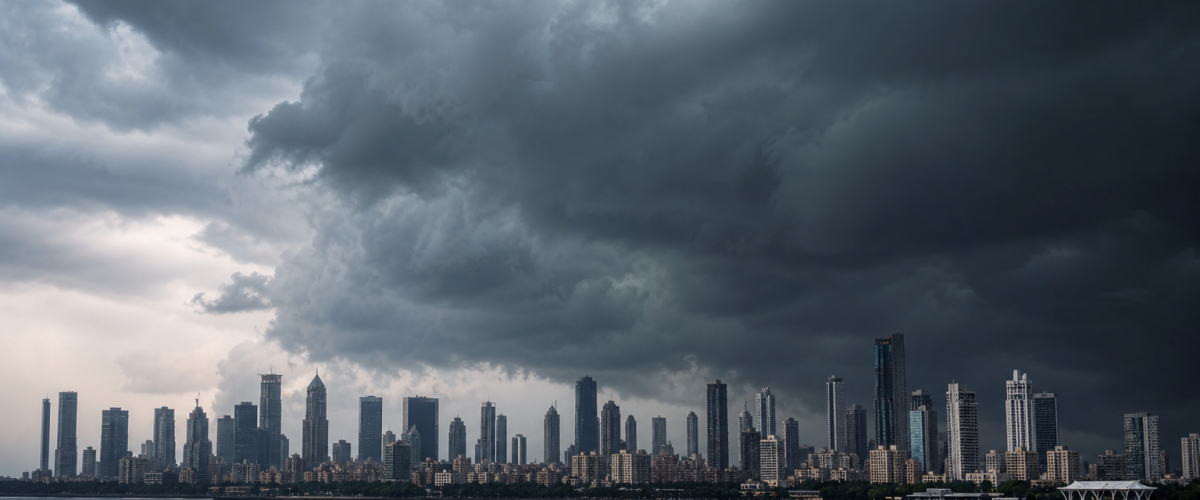
The India Meteorological Department (IMD) has announced that conditions are favourable for the southwest monsoon to advance into Mumbai, remaining parts of Maharashtra, Telangana, Odisha, and parts of Bihar, Jharkhand, and Chhattisgarh within the next 48 hours — a development that could bring crucial relief to regions experiencing a significant rainfall deficit and reshape the trajectory of the 2026 monsoon season. The forecast, issued in the IMD’s June 22 press release, suggests that Mumbai could see the monsoon’s arrival as early as June 23 or 24.
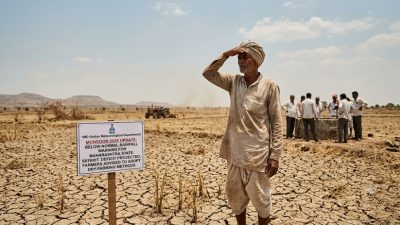
The advance represents the most significant westward and northward push of the monsoon since it reached India’s southwestern coast on June 1. For weeks, the monsoon has been stalled — concentrated heavily in the northeast while large swathes of central and western India waited. The expected advance into Maharashtra, including India’s financial capital, could mark the turning point that the agricultural sector and the water-stressed Marathwada and Vidarbha regions desperately need.
What’s Driving the Advance
Several meteorological factors are combining to push the monsoon into its next phase:
Cross-Equatorial Flow Strengthening: The monsoon’s engine — the cross-equatorial flow of moisture-laden winds from the southern Indian Ocean — has strengthened over the past 72 hours. This increased moisture feed is creating the conditions necessary for the monsoon trough to extend westward across the Indian peninsula.
Low-Pressure System: A developing low-pressure system over the north-central Bay of Bengal is expected to pull the monsoon northward into Odisha, Jharkhand, and Bihar. This system, if it intensifies as forecast, could produce widespread rainfall across eastern India over the coming week.
Arabian Sea Branch: The Arabian Sea branch of the monsoon — which brings rainfall to Mumbai, Maharashtra, and Gujarat — is showing signs of activation. Moisture from the Arabian Sea, combined with favourable wind patterns, is expected to trigger the monsoon’s arrival in Mumbai within the 48-hour window.
Mumbai’s Monsoon Arrival
Mumbai’s monsoon onset is one of India’s most closely watched weather events, with implications that extend far beyond meteorology:
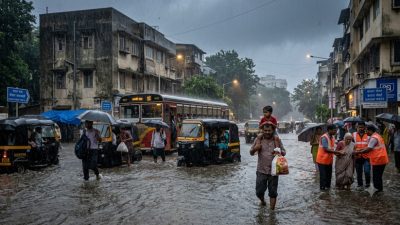
Economic Impact: Mumbai’s infrastructure — its local train network, road systems, and drainage — is tested to its limits during the monsoon. The city’s municipal corporation (BMC) has announced pre-monsoon preparations including drain cleaning, deployment of flood pumps, and pre-positioning of disaster response teams. Whether these preparations will be adequate depends on the intensity of the initial monsoon surge.
Agricultural Relief: For Maharashtra’s farmers — particularly in the rain-dependent regions of Marathwada and Vidarbha — the monsoon’s arrival is the most important event of the agricultural calendar. Delayed sowing due to the monsoon deficit has created anxiety across the farming community. If the monsoon arrives as forecast, kharif crop sowing could accelerate rapidly.
The Deficit Question
The broader monsoon picture remains concerning. The nationwide rainfall deficit — currently around 40% — reflects weeks of below-normal precipitation across most of India outside the northeast. The question is whether the anticipated advance will narrow this deficit or whether it represents a temporary surge that fails to establish sustained rainfall.
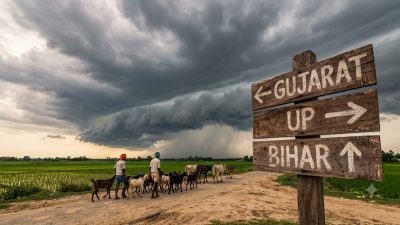
The IMD’s forecast models suggest that the advance into Maharashtra and central India could be followed by further progression into Madhya Pradesh, Rajasthan, and Gujarat over the subsequent week. If this materialises, the monsoon season could still recover to near-normal levels by July — a critical threshold for India’s agricultural output and water reservoir levels.
For Mumbai, the forecast is clear: the monsoon is coming. Whether it arrives as a gentle transition or a deluge will determine the city’s first week of what promises to be an intense monsoon season.
Also Read
- Southwest Monsoon Advances Rapidly: IMD Forecasts Above-Normal Rainfall for Most of India in Coming Weeks
- Super El Nino 2026 Threatens India Southwest Monsoon as IMD Forecasts Below-Normal Rainfall and Drought Risk Looms Over 60 Percent Farmers
- Monsoon Marches On: IMD Says Southwest Monsoon to Cover Maharashtra, Bihar by June 23
- Southwest Monsoon 2026 Advances Rapidly — IMD Predicts Heavy Rain Across Southern and Central India
- Southwest Monsoon Advances Into West Bengal and Bihar — IMD Issues Wet Spell Warning for Northwest India