Southwest Monsoon 2026 Advances Into 12 States — IMD Issues Red Alert for Coastal Karnataka, Heatwave Grips North India

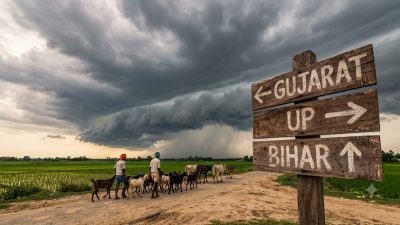
The Southwest Monsoon has made significant progress across the Indian subcontinent, advancing into 12 states by June 8, 2026, according to the India Meteorological Department (IMD). However, the monsoon’s arrival has created a stark climatic divide across the country — while southern and western coastal regions experience heavy to extremely heavy rainfall, large parts of northern India remain in the grip of a punishing heatwave, creating an extraordinary weather contrast within a single nation.
Monsoon’s March Across India
The Southwest Monsoon, which set in over Kerala on June 4, 2026, has advanced rapidly in its initial phase. By June 8, it had progressed into Kerala, Karnataka, Goa, parts of Maharashtra, Andhra Pradesh, Telangana, the northeastern states including Manipur, Nagaland, and Mizoram, and parts of the west-central and east-central Arabian Sea.
The IMD’s latest bulletin confirmed that the monsoon has covered significant portions of the western coastline and is expected to advance further into central Maharashtra, Chhattisgarh, and Odisha over the next 48 to 72 hours. The monsoon’s progress has been aided by favorable wind patterns, including the strengthening of the cross-equatorial flow and the formation of cyclonic circulations in the Bay of Bengal.
“The monsoon’s onset and initial progress have been largely in line with our forecasts,” said Dr. Mrutyunjay Mohapatra, Director General of the IMD. “We expect the monsoon to cover most of the country by the end of June, which would be consistent with the normal timeline.”
Red Alert for Coastal Karnataka
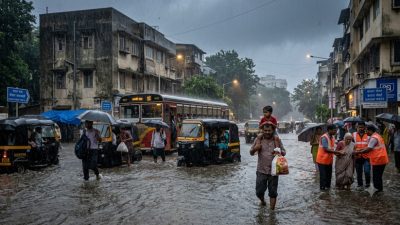
The IMD has issued a red alert — its highest warning level — for coastal Karnataka, where extremely heavy rainfall exceeding 200 mm in 24 hours is expected over the next two days. Districts including Dakshina Kannada, Udupi, and Uttara Kannada have been placed on high alert, with authorities instructed to prepare for potential flooding, landslides, and disruptions to transportation.
The Karnataka State Disaster Management Authority (KSDMA) has activated its emergency response mechanisms, deploying National Disaster Response Force (NDRF) teams to vulnerable areas and setting up relief camps in flood-prone zones. Fishermen have been warned against venturing into the Arabian Sea, where wind speeds could reach 55-65 km/h.
Similar warnings have been issued for parts of Kerala and Goa, where heavy rainfall is expected to continue through the week. The Goa government has directed schools in coastal areas to shift to online classes as a precautionary measure.
North India’s Heatwave Agony
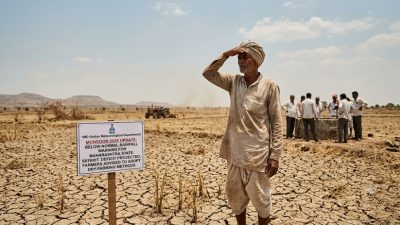
In a dramatic contrast to the monsoon-fed rainfall in the south, large parts of northern India continue to endure extreme heatwave conditions. Delhi, Punjab, Haryana, and Rajasthan have recorded temperatures exceeding 45°C in several locations, with the IMD issuing orange and yellow heat warnings for these regions.
Delhi, which recorded a maximum temperature of 46.2°C at the Mungeshpur weather station, is experiencing one of its most prolonged heat spells in recent memory. The national capital’s power demand has surged to record levels, straining the electricity grid and causing intermittent outages in several areas.
“The heatwave in northern India is being sustained by a combination of dry westerly winds and the absence of moisture influx from the monsoon, which is still several days away from reaching this region,” explained a senior IMD scientist.
Monsoon and Agricultural Implications
For India’s agricultural sector, which employs nearly half the country’s workforce and depends heavily on monsoon rainfall, the progress of the 2026 monsoon is being watched with intense interest. The timely onset in Kerala and rapid initial progress have been positive signs, but the crucial factor will be the monsoon’s coverage and distribution over the coming weeks.
Farmers in Maharashtra have begun sowing operations for the kharif season, with soybean, cotton, and pulses being the primary crops. However, agricultural experts caution that the current dry conditions in central and northern India have delayed sowing in many areas, and a timely advance of the monsoon into these regions is critical for crop health.
“The first two weeks of June are crucial for kharif sowing decisions. If the monsoon reaches central India by June 15 and northern India by June 20-25, we can expect a normal agricultural season,” said Dr. Ashok Dalwai, agricultural policy expert.
El Niño Concerns
Adding a layer of complexity to the monsoon outlook is the emerging El Niño condition in the Pacific Ocean. El Niño, characterised by warming of sea surface temperatures in the central and eastern Pacific, has historically been associated with below-normal monsoon rainfall in India.
The IMD has acknowledged the El Niño signal but maintained its forecast for a “normal” monsoon season overall, with total rainfall expected to be within 4 percent of the long-period average. However, the distribution of rainfall — both spatial and temporal — could be significantly affected by El Niño, potentially leading to extended dry spells interspersed with heavy rainfall events.
“El Niño doesn’t necessarily mean a drought. What it typically does is alter the distribution pattern, creating more variability — some areas get excess rain while others face deficits,” explained Dr. Raghu Murtugudde, a climate scientist at the Indian Institute of Technology, Bombay.
Delhi Airport Disruption
In a related development, sudden strong winds and a brief but intense thunderstorm at Delhi’s Indira Gandhi International Airport on Sunday evening caused significant disruptions. Three Air India aircraft suffered damage from the storm, and flight operations were suspended for approximately 90 minutes. The storm, a pre-monsoon thundershower driven by converging wind systems, brought wind speeds exceeding 70 km/h to parts of the national capital.
Also Read
- Delhi Heatwave Alert Intensifies as IMD Warns Temperatures May Soar to 45 Degrees Celsius With Severe Heat Gripping North India Till May 22
- India Heatwave 2026: Temperatures Soar Past 47 Degrees Celsius in Maharashtra as IMD Warns of Below-Normal Monsoon
- Super El Nino 2026 Threatens India Southwest Monsoon as IMD Forecasts Below-Normal Rainfall and Drought Risk Looms Over 60 Percent Farmers
- Massive Solar Storm Hits Earth — Northern Lights Expected Over Kashmir
As India navigates this complex weather pattern — monsoon in the south, heatwave in the north, and the looming shadow of El Niño — the IMD has urged all state governments to maintain a state of preparedness for extreme weather events. The monsoon season, while essential for India’s water security and agriculture, also brings annual challenges of flooding, landslides, and infrastructure damage that test the country’s disaster management capabilities.