India Heatwave 2026: Temperatures Soar Past 47 Degrees Celsius in Maharashtra as IMD Warns of Below-Normal Monsoon

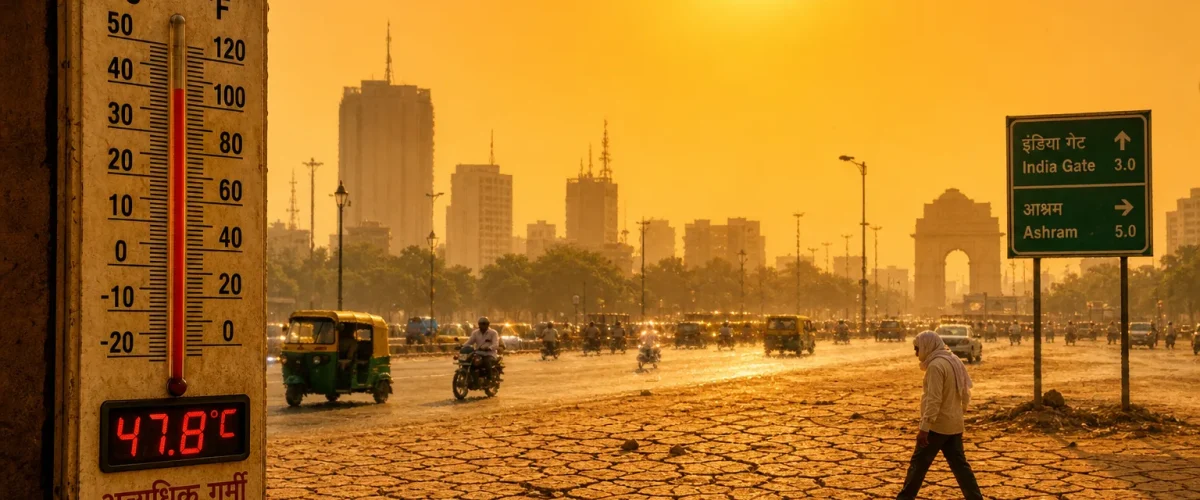
A severe heatwave has gripped large parts of India in early May 2026, with temperatures crossing 47 degrees Celsius in Maharashtra’s Vidarbha region and multiple Indian cities ranking among the hottest places on the planet. The India Meteorological Department has issued orange and yellow alerts for several districts while also forecasting a below-normal southwest monsoon for 2026, the first such outlook in three years, compounding concerns about water availability, agriculture, and public health.
Vidarbha Burns: Akola Leads Global Temperature Charts
Akola in Maharashtra recorded a blistering 46.9 degrees Celsius, the highest temperature in the country and the third highest globally for the day. The searing heat was not confined to one city. Amravati followed closely at 46.8 degrees, Wardha touched 46.4 degrees, and Yavatmal reached 46.0 degrees. Nagpur, the largest city in Vidarbha, recorded 45.4 degrees, its highest of the 2026 season so far.
In a striking illustration of the heatwave’s intensity, five Indian cities featured in the global top 10 hottest places on a single day — Akola at third, Amravati at fourth, Wardha at sixth, Yavatmal at eighth, and Nagpur at tenth. This clustering of extreme temperatures in a relatively small geographic area underscores the localised but devastating nature of the heatwave affecting central India.
The IMD has issued an orange alert for Akola, Amravati, and Wardha, warning of severe heatwave conditions that pose a serious risk to vulnerable populations including the elderly, children, and outdoor workers. A yellow alert remains in place for Nagpur, Chandrapur, and Buldhana districts.
Early Onset and Unusual Intensity
What makes the 2026 heatwave particularly concerning is its early onset and unusual intensity. Heatwave conditions typically peak in May and June across northern and central India, but this year, large parts of the country were already experiencing dangerous temperatures in April. The transition from winter to summer has been abrupt, with limited rainfall during the pre-monsoon period providing no meaningful respite.
Appreciably above normal temperatures, defined as 3.1 to 5.0 degrees above average, are being recorded across parts of Rajasthan and Gujarat. Above normal temperatures of 1.6 to 3.0 degrees above average are affecting the West Coast, the East Coast, and southern parts of Uttar Pradesh and adjoining northern Madhya Pradesh.
The prolonged heat has pushed electricity demand to record levels across multiple states. Power grids in Maharashtra, Gujarat, and Rajasthan have been operating at near-maximum capacity, with sporadic outages reported in smaller towns and rural areas where infrastructure is less robust. The brief spell of Delhi rains and hailstorms in early May provided temporary relief in the north, but the cooler conditions did not extend to central and western India.
IMD Forecasts Below-Normal Monsoon
Adding to the anxiety is the IMD’s forecast of a below-normal southwest monsoon for 2026, with rainfall likely to reach only about 92 per cent of the long period average. This is the first below-normal monsoon prediction in three years and comes at a time when reservoir levels in many states are already lower than usual due to reduced rainfall in the preceding months.
The World Meteorological Organisation has flagged the possibility of an El Niño event developing by mid-2026, which would further suppress monsoon rainfall. El Niño, a warming of sea surface temperatures in the central and eastern Pacific Ocean, has historically been associated with weaker Indian monsoons and drought conditions in parts of the subcontinent.
If the below-normal monsoon forecast holds, the agricultural sector could face significant challenges. India’s kharif season, which depends almost entirely on monsoon rainfall, accounts for roughly half of the country’s annual food grain production. Any shortfall in rainfall would directly impact rice, maize, soybean, and cotton output, potentially driving up food prices and affecting rural incomes.
Public Health Emergency
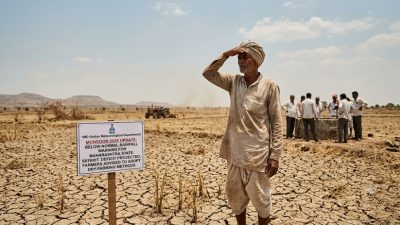
Health authorities across affected states have activated heatwave response protocols. Hospitals in Vidarbha have reported a spike in heat-related admissions, including cases of heat exhaustion, heatstroke, and severe dehydration. Outdoor workers, including agricultural labourers, construction workers, and street vendors, are the most vulnerable.
The National Disaster Management Authority has reiterated its advisory for people to avoid outdoor exposure between 12 noon and 3 pm, stay hydrated, wear light-coloured and loose-fitting clothing, and seek immediate medical attention for symptoms of heatstroke such as confusion, rapid heartbeat, and cessation of sweating.
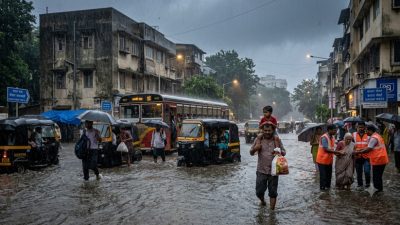
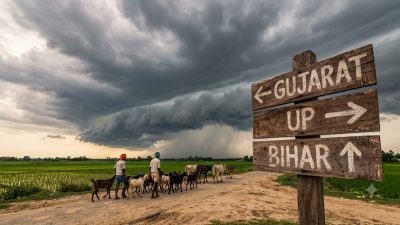
The deadly storms that killed 32 people across UP, Bihar, and Karnataka in late April highlighted the dual threat of extreme weather events — severe heat interrupted by violent thunderstorms that cause flash flooding and infrastructure damage.
Water Crisis Deepens
The heatwave has accelerated water scarcity in multiple districts. In Maharashtra, several dams and reservoirs are at critically low levels, with water supply rationing already in effect in parts of Marathwada and Vidarbha. Tanker water supply has been activated in over 200 villages in Aurangabad, Beed, and Osmanabad districts.
Groundwater levels are also declining as borewells and tube wells are pumped to compensate for the lack of surface water. Hydrogeologists warn that unchecked groundwater extraction during prolonged heat periods can lead to long-term aquifer depletion, particularly in hard-rock geological formations common in central India.
Urban areas are not immune. Cities like Nagpur and Aurangabad have implemented rotational water supply schedules, with residents in some localities receiving piped water only every alternate day. The strain on public health infrastructure is compounded by the water crisis, as hospitals and healthcare facilities require uninterrupted water supply for basic operations.
Looking Ahead: Limited Relief in Sight
The IMD’s extended forecast for the first week of May through 14 May indicates that heatwave conditions are likely to persist across Vidarbha and parts of Rajasthan, with no significant rainfall expected in the affected regions. A western disturbance may bring isolated showers to parts of northwest India by mid-May, but this is unlikely to provide sustained relief from the heat.
Climate scientists note that the increasing frequency and intensity of heatwaves in India is consistent with global warming trends. Data from the IMD shows that the number of heatwave days per year in India has increased significantly over the past three decades, with the most pronounced increases observed in central and northwestern states.
For the millions of Indians enduring temperatures that push the limits of human tolerance, the coming weeks will be a test of resilience, infrastructure, and the effectiveness of government response systems that have been built over years of increasingly severe summers.
Read more about climate and weather at Environment and Science & Space on Daily Tips.

- Fentanyl Vaccine Breakthrough: Scripps Research Develops Shot That Blocks Deadly Overdoses Before They Reach the Brain - June 13, 2026
- Nipah Virus Returns to Kerala — First Case of 2026 Confirmed, State Declares High Alert - June 12, 2026
- Jill Biden Reveals She Wanted to Keep PM Modi’s 7.5-Carat Diamond Gift but Returned It After State Department Valued It at $20,000 - June 8, 2026