Deadly Storms Kill 32 Across Uttar Pradesh, Bihar, and Karnataka in 48 Hours as Delhi Records Highest April Rainfall in 18 Years

Severe Weather Claims 32 Lives Across Three States in Two Days
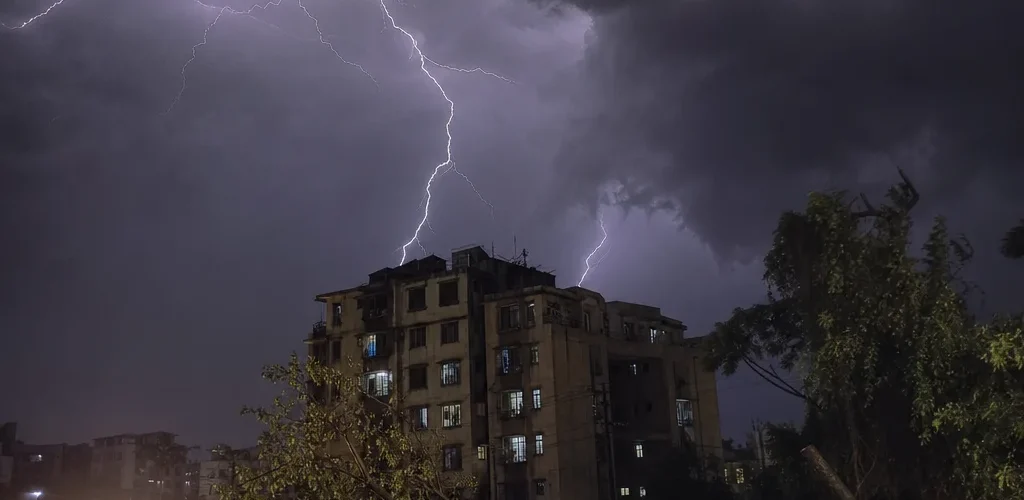
At least 32 people have been killed across Uttar Pradesh, Bihar, and Karnataka over the past 48 hours as severe storms, heavy rainfall, and lightning strikes battered large parts of India. The deaths — caused primarily by falling trees, building collapses, lightning, and drowning in flash floods — come at a time when the country is experiencing an unusual weather pattern that has brought destructive storms to northern and southern India while simultaneously pushing temperatures above 44 degrees Celsius in Rajasthan and Maharashtra.
The Indian Meteorological Department (IMD) has issued red alerts for 62 districts across multiple states, warning of continued strong winds and lightning in the coming 24 to 48 hours. The storms are part of a larger weather disturbance that has also brought unseasonable rainfall to Delhi, where the capital recorded its highest April rainfall in 18 years.
State-by-State Breakdown of Deaths and Damage
Uttar Pradesh has been the worst-affected state, accounting for approximately half of the fatalities. Thunderstorms accompanied by winds exceeding 60 kilometres per hour struck multiple districts in the state, uprooting trees, damaging power lines, and destroying temporary structures. Districts in the eastern UP belt, including Varanasi, Prayagraj, and Gorakhpur, reported the highest concentration of casualties. Several deaths were caused by lightning strikes in open fields, where farmers and labourers were working when the storms hit without warning.
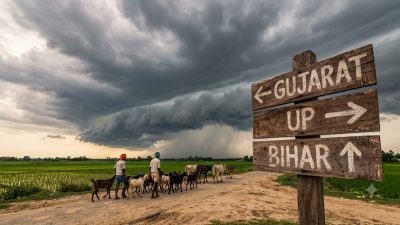
Bihar reported multiple deaths from what locals described as nor’wester storms — known as Kal Baisakhi in the region — that swept through several districts with devastating force. These storms, which are common during the pre-monsoon season, packed wind speeds of approximately 65 kilometres per hour and caused widespread destruction of huts, standing crops, and rural infrastructure. Thousands of hectares of wheat and maize crops have reportedly been damaged, adding to the economic distress of farmers who are already dealing with the impact of a prolonged dry spell earlier in the year.
Karnataka recorded several deaths in its northern and southern interior regions, where thunderstorms accompanied by hail battered districts including Mandya, Mysuru, Hassan, Chamarajanagara, and Ramanagara. The IMD’s Bengaluru office issued specific warnings for these districts, forecasting heavy rain with hail and gusty winds of 40 to 60 kilometres per hour. Bidar in North Interior Karnataka recorded a maximum temperature of 43.8 degrees Celsius even as the storms raged, illustrating the extreme weather variability across the state.
Delhi Records Highest April Rainfall in 18 Years
While not reporting fatalities on the same scale as the three worst-affected states, Delhi experienced its most significant April rainfall event since 2008. The heatwave conditions that had gripped the capital for much of April were temporarily broken by heavy showers accompanied by strong winds, leading to a sharp drop in temperatures. The Safdarjung weather station, which provides Delhi’s official readings, recorded rainfall that exceeded the April average by a significant margin.
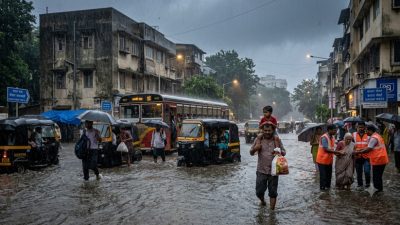
The unseasonal rain caused waterlogging in several parts of the capital, disrupted traffic on major arterial roads, and brought down trees in multiple neighbourhoods. Delhi’s drainage infrastructure, which is designed primarily for monsoon-season rainfall, was overwhelmed by the intensity of the downpour. The IMD has attributed the unusual weather pattern to the interaction of a western disturbance with moisture-laden winds from the Arabian Sea.
Heatwave Persists in Rajasthan and Maharashtra
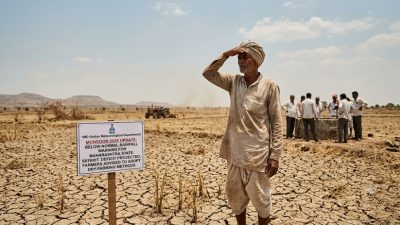
In stark contrast to the storm-ravaged northern and southern states, Rajasthan and Maharashtra continued to experience scorching heatwave conditions, with temperatures crossing 44 degrees Celsius in multiple locations. Cities in western Rajasthan, including Barmer, Jaisalmer, and Bikaner, have been recording temperatures well above normal for this time of year, and the IMD has maintained heat warnings for these regions.
Maharashtra’s Vidarbha region, which is traditionally one of the hottest parts of India during the pre-monsoon period, has seen several stations record temperatures above 43 degrees. The juxtaposition of extreme heat in the west and destructive storms in the north and south has been described by meteorologists as a manifestation of the increasing weather variability that has become a hallmark of India’s pre-monsoon season in recent years.
The forest fires in Uttarakhand, which have been burning since November with over 160 incidents recorded, are another dimension of the extreme weather conditions. Hot, dry conditions have fuelled the fires, while the storms in neighbouring states have brought no relief to the fire-affected regions.
Early Monsoon Signals and the Weather Outlook
The severe weather events of the past 48 hours are occurring against the backdrop of forecasts suggesting an early onset of the southwest monsoon this year. The European Centre for Medium-Range Weather Forecasts (ECMWF) has projected that the monsoon could reach the Andaman and Nicobar Islands by 18 to 25 May, earlier than the normal date of around 20 May, and could advance to the Kerala coast ahead of the usual 1 June onset.
Strong winds from the southwest are already building over the southern Bay of Bengal, and models show rainfall 30 to 60 millimetres above normal for the Andaman Islands in the coming weeks. There is also a moderate 20 to 40 per cent chance of a tropical system forming north of the Andamans, which could act as a catalyst to accelerate the monsoon’s progression toward the Indian mainland.
For the immediate term, the IMD has warned that the stormy conditions will persist across northern and central India over the weekend, with further thunderstorms expected in Uttar Pradesh, Bihar, Jharkhand, West Bengal, and Madhya Pradesh. Farmers have been advised not to keep harvested crops in the open, and residents in affected areas have been urged to stay indoors during storms and avoid sheltering under trees or near power lines.
Government Response and Relief Measures
State governments in all three affected states have announced ex-gratia compensation for the families of those killed. The National Disaster Response Force (NDRF) has deployed teams in the worst-affected districts, and the State Disaster Response Forces (SDRF) are conducting relief operations in areas where infrastructure damage has disrupted normal life.
Power restoration efforts are ongoing in districts where electricity supply was knocked out by fallen trees and damaged lines. Uttar Pradesh and Bihar have reported that power supply has been restored to most affected areas, though isolated pockets remain without electricity. Crop damage assessments are being conducted by agricultural officers, and insurance claims under the Pradhan Mantri Fasal Bima Yojana are expected to be processed in the coming weeks.
As India enters what promises to be a volatile pre-monsoon season, the tragic loss of 32 lives is a reminder of the country’s vulnerability to extreme weather events and the urgent need for improved early warning systems, disaster-resilient infrastructure, and public awareness about storm safety protocols.