Twisha Sharma Death Case Sparks National Outrage as CCTV Footage Surfaces and Husband Samarth Singh Remains Absconding After Dowry Harassment Allegations

A Young Woman’s Death Triggers National Controversy
The death of 31-year-old Noida resident Twisha Sharma at her matrimonial home in Bhopal’s Katara Hills area on the night of 12 May 2026 has triggered a major national controversy that shows no signs of abating. What was initially reported as an apparent suicide has evolved into a complex criminal investigation involving allegations of dowry harassment, physical and mental abuse, CCTV evidence, political connections and an absconding husband. The case has galvanised women’s rights activists across India and raised uncomfortable questions about the persistence of dowry-related violence in the country.
Twisha, who was approximately two months pregnant at the time of her death, was found hanging at her home. According to her family, she had been under severe distress for months, subjected to what they describe as prolonged mental and physical abuse by her husband Samarth Singh, a lawyer from Bhopal, and his family. A dowry death case has been registered against Samarth Singh and his mother, and a Special Investigation Team has been formed to probe the matter.
CCTV Footage Adds New Dimensions to the Case
The investigation took a dramatic turn when CCTV footage from the matrimonial home was obtained by news channels. The video, first reported by NDTV, shows Twisha climbing the stairs toward the terrace of the house in the hours before her death. Crucially, the footage also shows three men bringing her body down the staircase afterwards, with what appears to be failed CPR attempts visible in the recording.
The existence and content of the CCTV footage have become central to the investigation. Twisha’s family alleges that the footage raises serious questions about the timeline and circumstances of her death that are inconsistent with a straightforward suicide. They have demanded a thorough forensic analysis of the video, including examination for any gaps or edits that might indicate tampering.
The Madhya Pradesh police’s Special Investigation Team has confirmed that the CCTV footage is a key piece of evidence in their investigation. However, investigators have not yet commented publicly on whether the footage supports or contradicts the initial findings, citing the ongoing nature of the probe.
Husband Samarth Singh Remains on the Run
Perhaps the most alarming development in the case is that Samarth Singh, Twisha’s husband and the primary accused, has been absconding since shortly after her death. Despite a lookout notice being issued and teams deployed across multiple states, law enforcement has been unable to locate him. His continued absence has fuelled suspicion and public anger, with many questioning how a named accused in such a high-profile case could evade the police for over a week.
Samarth Singh’s legal background has added another layer of complexity. As a practising lawyer in Bhopal, he is reportedly well-connected within the local legal and political establishment. Twisha’s family has alleged that these connections have been used to influence the investigation and facilitate his escape. They have specifically accused certain local officials of providing a “protective shield” to the accused, allegations that the authorities have denied.
The bail proceedings related to Samarth Singh’s mother, who is also named in the case, have been equally contentious. Twisha’s family has opposed bail, arguing that the mother-in-law was complicit in the alleged harassment and that granting her freedom could compromise the investigation. The matter is currently before the courts, with the next hearing scheduled for later this month.
Chat Records and Family Allegations
Twisha’s family has made available what they describe as chat records and messages exchanged between Twisha and her family members in the months before her death. These messages, if authenticated, paint a disturbing picture of a young woman trapped in an abusive marriage and increasingly desperate for help. Some messages allegedly reference specific incidents of physical violence, demands for additional dowry and threats made by the husband and his family.
The family has also alleged that Twisha was deliberately isolated from her parents and friends, with her access to her phone restricted at times. They claim she was forced to leave her job and was financially dependent on her husband’s family, creating conditions that made it extremely difficult for her to seek help or leave the marriage.
These allegations, while serious, remain to be verified by the investigating authorities. The defence is expected to challenge the authenticity and context of any chat records presented as evidence, and the legal process will ultimately determine their admissibility and relevance.
Broader Implications for Dowry Deaths in India
The Twisha Sharma case has reignited the national conversation about dowry-related deaths and violence in India. Despite decades of legislation, including the Dowry Prohibition Act of 1961 and various amendments to the Indian Penal Code, dowry deaths remain disturbingly common. According to the National Crime Records Bureau, India records thousands of dowry-related deaths annually, with the actual number believed to be significantly higher due to underreporting.
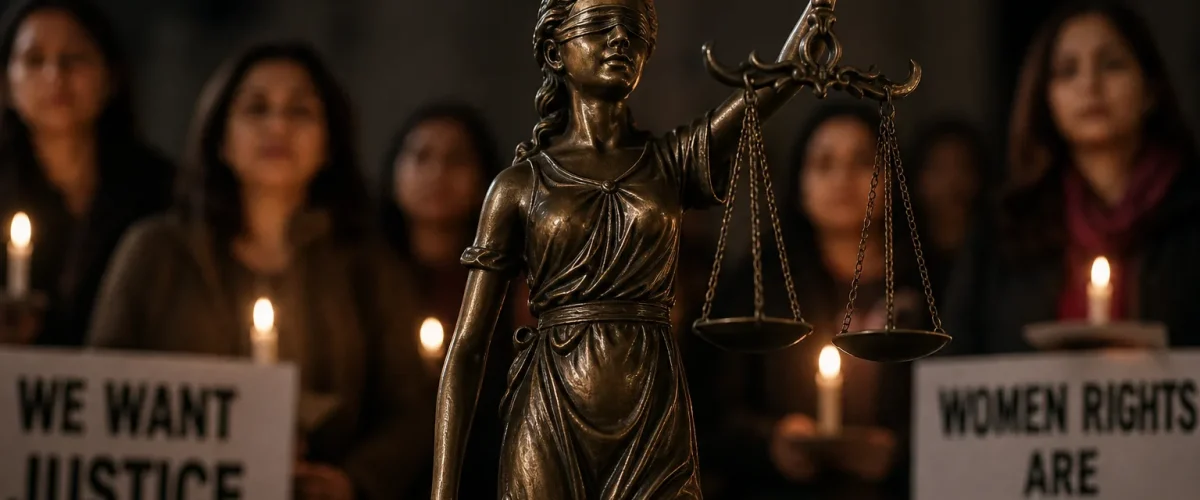
Women’s rights organisations have seized on the case to highlight systemic failures in protecting women within marriages. Several advocacy groups have called for more robust enforcement of existing laws, faster investigation timelines and greater accountability for police officials who fail to act on complaints of domestic violence and dowry harassment.
The case has also drawn attention to the specific vulnerabilities faced by women who move to their husband’s city after marriage, away from their own family and support networks. This geographical displacement, combined with social pressure to preserve the marriage, can create conditions where abuse goes unreported for extended periods. Twisha’s situation — a woman from Noida living in Bhopal, away from her parents and friends — exemplifies this pattern.
Political Fallout and Demands for Justice
The case has acquired political dimensions, with opposition parties in Madhya Pradesh demanding a transparent investigation and accountability. Several political figures have visited Twisha’s family in Noida to express solidarity, and there have been calls for the case to be transferred to a central investigating agency to ensure impartiality. The ruling party has maintained that the SIT is conducting a thorough and unbiased investigation.
Social media campaigns demanding justice for Twisha have gained significant traction, with hashtags related to the case trending repeatedly over the past week. The case has drawn comparisons to other high-profile dowry death cases in recent Indian history, and the public pressure is likely to ensure continued media and political attention as the investigation progresses.
As the nation grapples with multiple social issues, the Twisha Sharma case serves as a painful reminder that the fight against dowry violence in India remains far from over. The outcome of this case, and the speed and thoroughness of the investigation, will be closely watched as a barometer of the justice system’s ability to protect women and hold perpetrators accountable.
Explore more: Social Trends | Culture & Lifestyle