India Heatwave Alert: IMD Warns of Severe Heat in 10 States as Temperatures Cross 45 Degrees Across Northwest and Central India

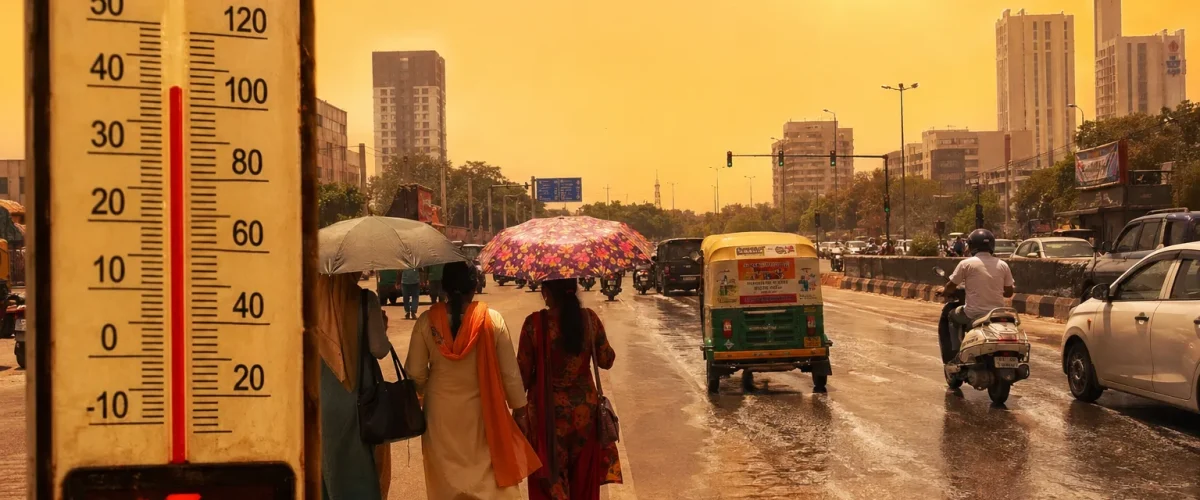
The India Meteorological Department (IMD) issued a severe heatwave alert on 27 April 2026, warning that scorching temperatures are expected to persist across northwest and central India for at least three more days. Temperatures have already crossed 45 degrees Celsius in several cities across Rajasthan, Madhya Pradesh, and Vidarbha, while Delhi recorded a maximum of 44.2 degrees Celsius at the Ridge station — nearly 6 degrees above the seasonal average for late April.
The IMD bulletin identifies 10 states and union territories under active heatwave warning: Jammu and Kashmir, Punjab, Haryana, Chandigarh, Delhi, Uttar Pradesh, Rajasthan, western Madhya Pradesh, Vidarbha (Maharashtra), Bihar, and Gujarat.
Which States Face the Worst Heatwave Conditions?
According to IMD’s latest extended-range outlook, the most severe conditions are concentrated in the arid and semi-arid zones of Rajasthan, western UP, and Haryana, where maximum temperatures are running 5 to 7 degrees above normal. Churu in Rajasthan recorded 47.1 degrees on 26 April, the highest temperature recorded anywhere in India this season. Bikaner, Jaisalmer, and Barmer have all crossed the 46-degree mark repeatedly over the past week.
In Delhi, the Ridge weather station hit 44.2 degrees on Sunday, while Mungeshpur in outer Delhi recorded 44.8 degrees. Lodi Road clocked 42.3 degrees, and even typically cooler stations such as Mayur Vihar in east Delhi registered 40.1 degrees. The IMD has issued a yellow alert for all districts of Delhi and the entire NCR belt, with temperatures forecast to remain between 42 and 45 degrees through at least 30 April.
Bihar, which is experiencing heatwave conditions unusually early this year, has recorded temperatures above 42 degrees in Gaya, Aurangabad, and Nawada. Gangetic West Bengal is also on the heatwave map, with Asansol touching 43.5 degrees. Earlier, Kerala’s CM Pinarayi Vijayan urged a Covid-like self-lockdown between 11 AM and 3 PM as the heatwave spread across southern India.
IMD’s Advisory: Precautions and Safety Measures
The IMD has issued a comprehensive advisory urging citizens to take protective measures against the extreme heat. Key recommendations include avoiding prolonged outdoor exposure between 11 am and 4 pm, wearing lightweight, light-coloured, and loose cotton clothing, covering the head with a hat, cloth, or umbrella when outdoors, and drinking water at regular intervals even when not feeling thirsty.
“Mainly clear sky becoming partly cloudy sky. Heat wave conditions at isolated places over Delhi. Possibility of thundery development with a spell of very light rain towards afternoon and evening on April 27,” the IMD bulletin stated. However, forecasters noted that any brief evening thunderstorms are unlikely to provide sustained relief from the heat.
The advisory specifically warns vulnerable populations — the elderly, young children, pregnant women, and outdoor workers — to take extra precautions. Construction labourers, delivery workers, street vendors, and agricultural workers are at the highest risk of heat-related illnesses, including heat exhaustion, heat stroke, and dehydration.
Impact on Agriculture and Water Resources
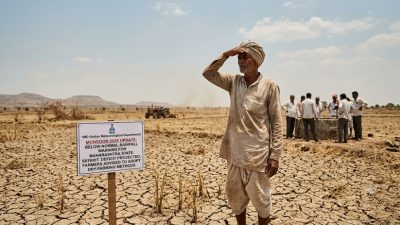
The prolonged heatwave is taking a toll on India’s agricultural sector, particularly the rabi crop harvest and early kharif planting preparations. Wheat procurement in UP, Punjab, and Haryana has been affected as the extreme heat accelerates grain drying, reducing kernel weight and potentially lowering yields by 5 to 8 per cent compared to normal years, according to agricultural scientists at the Indian Council of Agricultural Research.
Water resources are under severe strain. The Central Water Commission’s latest data shows that India’s major reservoir levels are approximately 22 per cent below normal for this time of year, with several reservoirs in Rajasthan, Gujarat, and Maharashtra at critically low levels. The earlier CWC data had already flagged a water emergency across 20 river basins, and the situation has worsened with the continued absence of pre-monsoon showers.
Electricity demand has surged to near-record levels, with peak power consumption crossing 240 GW nationally on 26 April — driven primarily by air conditioning and cooling demand in northern and western India. Grid operators have activated contingency plans to prevent blackouts, including importing power from surplus southern states and ramping up gas-based generation.
Urban Heat Islands Amplify the Problem
India’s rapidly urbanising cities are experiencing the heatwave with even greater intensity due to the urban heat island effect, where concrete structures, asphalt roads, and reduced green cover trap and re-radiate heat. Research published by IIT Delhi’s Centre for Atmospheric Sciences shows that Delhi’s urban core is typically 3 to 5 degrees hotter than surrounding rural areas during peak summer, with nighttime temperatures also elevated due to heat retained by buildings.
Cities such as Ahmedabad, Nagpur, Jaipur, and Varanasi — all of which have implemented Heat Action Plans — are deploying cooling centres, distributing water, and adjusting school and work timings to reduce heat exposure. Ahmedabad, which pioneered India’s first Heat Action Plan in 2013 after a deadly heatwave, has credited the programme with reducing heat-related mortality by over 30 per cent.
When Will the Heatwave End?
The IMD’s medium-range forecast suggests that heat wave conditions are likely to continue across northwest and central India through 30 April, with a possible brief moderation around 1 to 2 May as a western disturbance passes over the region. However, any relief is expected to be temporary, with temperatures likely to climb again in the first week of May.
The southwest monsoon onset over Kerala is expected around its normal date of 1 June, with a plus or minus error of four days. The IMD has predicted a normal monsoon for 2026 (96 to 104 per cent of the long-period average), which should eventually bring widespread relief from the heat by mid-June across most of India.
Also Read: India’s climate action on Earth Day 2026: 900 million trees and green energy push
Also Read: India adds record 51 GW renewable energy in FY26 as solar capacity crosses 150 GW
Also Read: Indian Railways rolls out 908 summer special trains to handle election and holiday rush