India’s Reservoir Levels Crash Below 45 Per Cent as CWC Data Reveals Water Emergency Across 20 River Basins Before Peak Summer

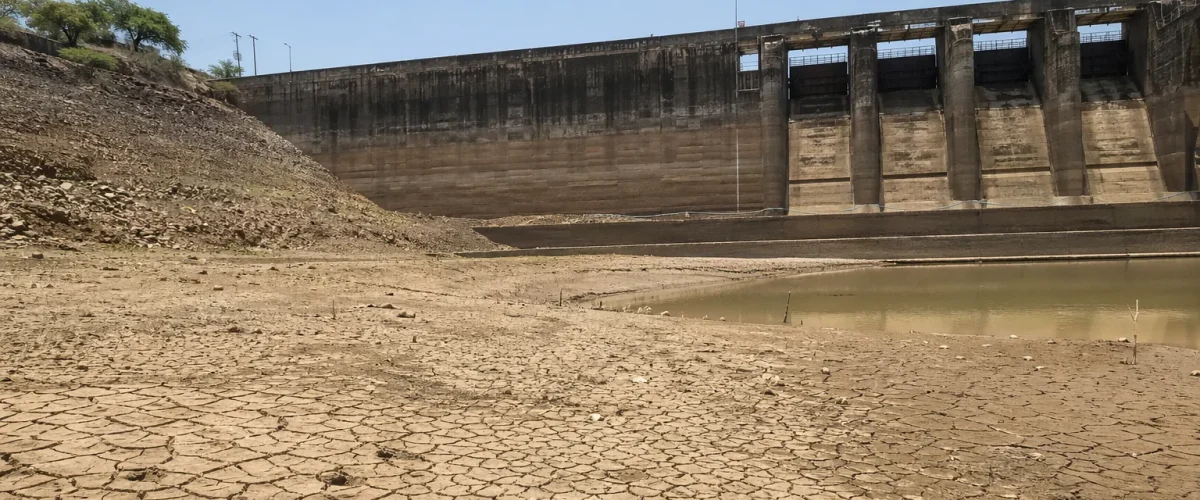
India is staring at a potentially severe water crisis as the country enters peak summer. Data released by the Central Water Commission, which monitors 166 major reservoirs across 20 river basins, reveals that total water storage has fallen to just 44.71 per cent of capacity — significantly below normal levels for this time of year and a sharp decline from 66.63 per cent recorded in early February 2026. Several reservoirs, including the Chandan dam in Bihar, have run completely dry. Southern India has seen the steepest drops, and water rationing measures are already in effect in parts of Karnataka, Tamil Nadu, and Telangana. For anyone following scientific research and data on India’s environment, the CWC data paints a troubling picture of a country where water demand is outpacing supply at an accelerating rate.
The Numbers: 82 BCM Out of 183 BCM Capacity
As of 9 April 2026, available water storage across India’s 166 CWC-monitored reservoirs stood at 82.07 billion cubic metres, out of a total live storage capacity of 183.565 BCM. These 166 reservoirs account for approximately 71.2 per cent of India’s estimated total reservoir capacity of 257.812 BCM, making them a reliable indicator of the country’s overall water situation. The current storage level is not only below the ten-year average for this period but is also lower than the same week in 2025, suggesting a structural decline rather than a one-off seasonal variation.
The decline from February to April has been particularly steep. In the first week of February 2026, total storage stood at 122.313 BCM — meaning India lost approximately 40 BCM of water in just two months. This drawdown is driven by a combination of irrigation demand for the rabi crop season, drinking water supply to urban and rural areas, industrial consumption, and evaporation losses that accelerate sharply as temperatures rise. With the India Meteorological Department forecasting above-normal temperatures through May and June, evaporation losses alone could account for significant additional depletion.
Southern India Worst Hit: Karnataka, Tamil Nadu, Telangana
The crisis is most acute in southern India. River basins in Karnataka, Tamil Nadu, Andhra Pradesh, and Telangana are operating at some of the lowest levels recorded in recent years. The Kaveri basin, which serves as the lifeline for agriculture in Karnataka and Tamil Nadu, has seen particularly sharp declines. The Tungabhadra reservoir in Karnataka was at just 28 per cent capacity in the latest data, while the Mettur dam on the Kaveri — critical for the delta rice-growing districts of Tamil Nadu — was at approximately 35 per cent.
Urban water supply is already affected. Bengaluru, India’s technology capital, has been experiencing water rationing since March, with many neighbourhoods receiving piped water only on alternate days. Chennai, which suffered a catastrophic water crisis in 2019, has activated contingency measures including additional desalination plant operations and water tanker deployments. Hyderabad’s water supply from the Krishna and Godavari systems remains under pressure, with officials publicly urging residents to conserve. The situation echoes concerns raised by scientists studying India’s ongoing heatwave conditions, which compound water stress by increasing demand while reducing supply through evaporation.
Northern and Central India: Rivers Running Low
While southern India faces the most immediate crisis, northern and central Indian river basins are also under stress. The Narmada basin is at approximately 40 per cent capacity, and the Sabarmati basin in Gujarat has seen reservoir levels drop below 30 per cent in several locations. The Ganga basin, India’s largest, is at approximately 48 per cent — above the southern basins but below historical averages. In Bihar, the Chandan dam running completely dry is a stark warning: even regions historically associated with flooding are now vulnerable to water scarcity during pre-monsoon months.
The Indus basin in the northwest is in relatively better condition, benefiting from snowmelt from the Himalayas, but even here, the late arrival of significant meltwater and a below-average snowpack in some regions are raising concerns for the coming kharif irrigation season. The Brahmaputra and Barak basins in the northeast remain the healthiest, but their surpluses cannot easily be transferred to deficit regions due to geographic and infrastructure limitations.
Why This Is Happening: Structural Issues Beyond Seasonal Variation
The water crisis reflects structural problems that go beyond a single dry season. India uses approximately 80 per cent of its water for agriculture, much of it through flood irrigation methods that are highly inefficient compared to drip and sprinkler systems. Groundwater, which supplies approximately 85 per cent of rural drinking water and 60 per cent of irrigated agriculture, is being extracted at unsustainable rates — the World Bank has identified India as one of the most water-stressed countries globally.
Climate change is making things worse. Rising temperatures increase evaporation from reservoirs and transpiration from crops, effectively reducing the water available from a given amount of rainfall. Erratic monsoon patterns — with more intense but shorter rainfall events — reduce the amount of water that percolates into groundwater aquifers and increases surface runoff that flows quickly to the sea. India’s climate adaptation efforts are progressing but have not yet kept pace with the accelerating impacts.
What Can Be Done: Solutions and Policy Responses
Addressing India’s water crisis requires action on multiple fronts. In the immediate term, states need to activate drought response plans, prioritise drinking water over irrigation, and enforce restrictions on non-essential water use. The National Water Mission has guidelines for crisis management, but implementation remains uneven across states.
In the medium term, India needs to dramatically improve water use efficiency in agriculture through the adoption of micro-irrigation (drip and sprinkler systems), which can reduce water consumption by 30 to 60 per cent compared to flood irrigation. The Pradhan Mantri Krishi Sinchayee Yojana provides subsidies for micro-irrigation but adoption rates remain below potential. Reviving traditional water harvesting structures — tanks, step wells, and check dams — can help recharge groundwater. The Jal Shakti Abhiyan has made progress in this area but scale remains insufficient. The reservoir data is a wake-up call: India must treat water security with the same urgency it gives to energy security, because without water, no amount of economic growth is sustainable.