Jury Rules Against Elon Musk in Landmark OpenAI Lawsuit Finding He Waited Too Long to Sue as Sam Altman and Company Cleared of All Claims

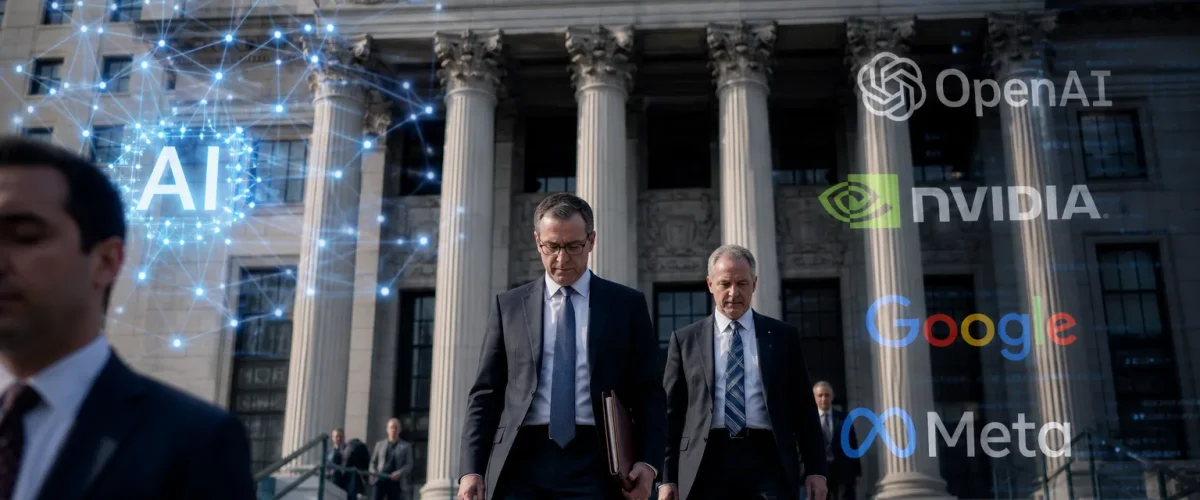
A federal jury in Oakland, California, ruled unanimously on Monday, May 18, against Elon Musk in his blockbuster lawsuit against OpenAI, CEO Sam Altman and other top executives, finding that Musk waited too long to file his claims and missed the deadline for the statute of limitations. The nine-person jury delivered its verdict after less than two hours of deliberation, bringing a decisive end to one of the most closely watched legal battles in the history of the artificial intelligence industry.
What Was Musk’s Case Against OpenAI?
Musk, who was one of the co-founders of OpenAI and provided early funding of approximately $50 million to the organisation, accused Altman, president Greg Brockman, and OpenAI of betraying their shared vision for the company to remain a nonprofit dedicated to guiding artificial intelligence’s development for the good of humanity. Musk alleged that Altman and the leadership team had engineered a pivot from OpenAI’s original nonprofit mission to a for-profit structure, enriching themselves in the process while abandoning the commitment to open-source, safety-focused AI development.
The lawsuit, which Musk filed in 2024, sought billions of dollars in damages and an injunction to prevent OpenAI from operating as a for-profit entity. Musk’s legal team argued that he had been “scammed” out of his early investment when OpenAI — which he helped create in 2015 as a nonprofit research lab — transformed itself into a partial for-profit company in 2019 and subsequently raised tens of billions of dollars from Microsoft and other investors, making Altman one of the most powerful figures in technology.
The Jury’s Verdict: Too Late to Sue
However, the jury never reached the merits of Musk’s allegations. Instead, OpenAI’s defence team successfully argued that Musk had known about the for-profit transition as early as 2019 but did not file his lawsuit until 2024 — well past the applicable statute of limitations. The defence presented evidence that Musk had been aware of OpenAI’s structural changes, had been offered a board seat in the restructured company, and had publicly commented on the transition before choosing to file suit years later.
US District Judge Yvonne Gonzalez Rogers, who oversaw the seven-week trial, accepted the jury’s advisory verdict as the court’s own and dismissed all of Musk’s claims. The speed of the jury’s deliberation — under two hours — suggested that the statute of limitations defence was persuasive and that the jurors found Musk’s delay in filing the lawsuit to be the decisive factor.
Musk Vows to Appeal
Musk responded to the verdict within hours, posting on X (the social media platform he owns): “Regarding the OpenAI case, the judge & jury never actually ruled on the merits of the case, just on a calendar technicality.” He confirmed that he would be appealing the decision to the Ninth Circuit Court of Appeals, calling it “a matter of principle” and insisting that “there’s no question” Altman had enriched himself at the expense of the nonprofit’s mission.
Legal experts say an appeal on statute of limitations grounds faces an uphill battle, as such defences are typically questions of fact that appellate courts are reluctant to overturn when a jury has spoken unanimously. However, Musk’s legal team is expected to argue that the trial court applied the wrong legal standard in determining when the statute of limitations began to run — a question of law that the Ninth Circuit could review more closely.
Implications for OpenAI and the AI Industry
The verdict represents a major victory for OpenAI and Altman at a critical moment for the company. OpenAI has been navigating a complex restructuring that would convert it fully from a nonprofit to a for-profit entity — the very transformation that Musk’s lawsuit sought to block. With the legal challenge dismissed, OpenAI now has a clearer path to complete its restructuring, which is necessary to attract the massive capital investments needed to compete in the increasingly expensive AI arms race.
OpenAI, which recently signed a landmark national deal with Malta to provide free ChatGPT Plus access to all citizens, has been aggressively expanding its partnerships and deployments worldwide. The company’s valuation has soared to over $300 billion, making it one of the most valuable private companies in history.
For the broader AI industry, the verdict removes a significant source of legal uncertainty. Other AI companies that have transitioned from research-focused nonprofits to commercial entities have been watching the case closely, as a ruling in Musk’s favour could have established a precedent that would have exposed them to similar lawsuits from early donors and supporters.
The Musk-Altman Rivalry Continues
The courtroom loss is unlikely to end the rivalry between Musk and Altman, which has become one of the defining feuds of the AI era. Musk has his own AI company, xAI, which operates the Grok chatbot and competes directly with OpenAI’s ChatGPT. The two men have exchanged increasingly sharp public barbs over the past two years, with Musk accusing Altman of prioritising profits over safety and Altman responding that Musk’s attacks are motivated by competitive jealousy rather than genuine concern for AI safety.
The case also raised broader questions about the governance of AI development — specifically, whether the current model of venture capital-funded, profit-driven AI companies is compatible with the safe and responsible development of increasingly powerful artificial intelligence systems. These questions will continue to be debated in legislatures, boardrooms and research labs around the world, regardless of the jury’s verdict.
What Happens Next?
For OpenAI, the immediate priority is completing its for-profit restructuring and securing additional funding to support the development of its next-generation AI models. The company is reportedly in discussions to raise another $40 billion, which would bring its total funding to well over $100 billion — a staggering sum that reflects both the opportunity and the capital intensity of the AI industry.
For Musk, the appeal process will play out over the coming months, but his primary focus is expected to remain on building xAI into a formidable competitor to OpenAI. His Grok chatbot has been gaining users, and xAI has been investing heavily in the compute infrastructure needed to train ever-larger models.
For the rest of the technology industry and the public, the Musk v. OpenAI case serves as a reminder that the development of artificial intelligence — potentially the most transformative technology in human history — is being shaped as much by corporate rivalries, legal battles and financial incentives as it is by scientific research and ethical considerations. The jury in Oakland has spoken, but the broader debate about who controls AI and for whose benefit is far from settled.