Bharat Gen AI: India Launches Its First Government-Funded Multilingual Large Language Model — Supports 22 Indian Languages

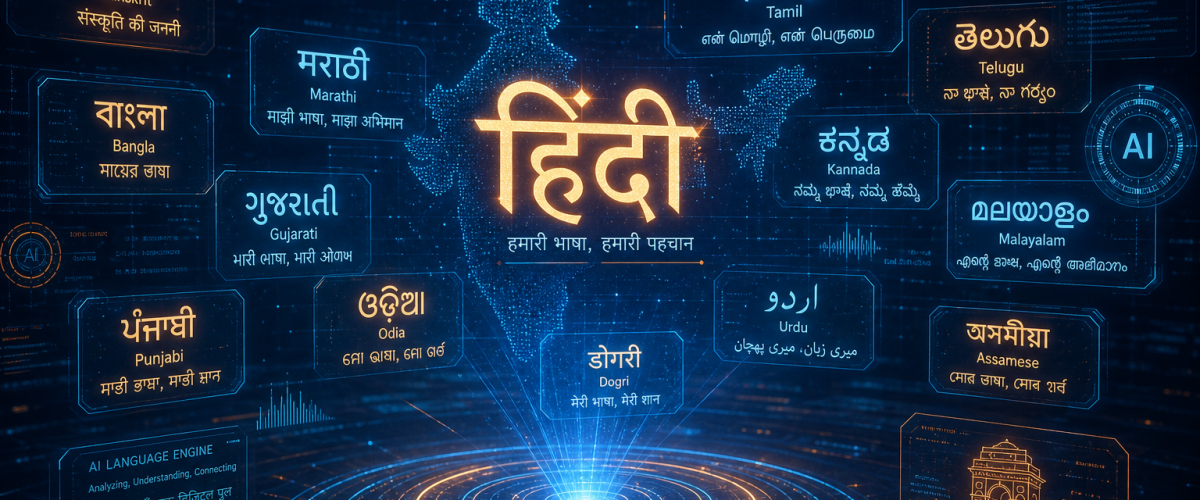
India has taken a giant leap in the global artificial intelligence race with the launch of Bharat Gen AI — the country’s first government-funded, multi-modal Large Language Model (LLM) that supports all 22 official Indian languages. Developed by IIT Bombay in collaboration with the Ministry of Electronics and Information Technology (MeitY), the model represents India’s most ambitious effort to build “Sovereign AI” — AI infrastructure designed, trained, and controlled within the country’s borders.
The announcement, which has been making waves in technology circles throughout June 2026, positions India alongside the United States, China, the European Union, and a handful of other nations that have invested in developing indigenous AI models. Unlike commercially available models like OpenAI’s GPT, Google’s Gemini, or Meta’s Llama, Bharat Gen AI is designed specifically for Indian languages, contexts, and use cases — addressing a gap that global models have struggled to fill.
What Makes Bharat Gen AI Different
The model’s most distinctive feature is its deep multilingual capability. While global LLMs support Indian languages to varying degrees, they often struggle with accuracy, idiom, and cultural context — particularly in less-resourced languages like Bodo, Dogri, Maithili, and Santali. Bharat Gen AI has been trained on curated datasets in all 22 languages listed in the Eighth Schedule of the Indian Constitution, with a focus on quality over quantity.
“The challenge with existing models is that they treat Indian languages as an afterthought,” said Professor Pushpak Bhattacharyya, who leads the project at IIT Bombay. “Bharat Gen AI was designed from the ground up to understand the linguistic diversity of India — the scripts, the grammar, the cultural nuances, the code-switching between English and regional languages that is a reality of how Indians communicate.”
The model is multi-modal, meaning it can process and generate text, images, and audio. This makes it suitable for a wide range of applications, from government services and education to healthcare and agriculture. Two domain-specific versions have already been developed: Aayurparam for health and medical applications, and Agriparam for agriculture — sectors where AI can have transformative impact in India but where English-only models are of limited use.
The Sovereign AI Imperative
The concept of “Sovereign AI” — the idea that nations should develop and control their own AI capabilities rather than depending entirely on foreign technology companies — has gained significant traction globally in 2025-26. France has invested in Mistral AI, the UAE has developed Falcon, and China has multiple state-backed LLM initiatives. India’s Bharat Gen AI is its answer to this global trend.
The strategic rationale is clear. AI models trained on Western datasets can carry biases, lack cultural context, and raise data sovereignty concerns when Indian citizens’ data is processed on foreign servers. A domestically developed model allows India to control the data pipeline, ensure cultural appropriateness, and build AI applications that serve the country’s specific needs.
“This is not just about technology — it’s about digital sovereignty,” said MeitY Secretary S. Krishnan. “As AI becomes the backbone of economic growth, governance, and national security, India cannot afford to be dependent on foreign AI models. Bharat Gen AI is our declaration of AI independence.”
Applications and Use Cases
The government has outlined an ambitious deployment plan for Bharat Gen AI across multiple sectors. In governance, the model will power multilingual chatbots for government services, enabling citizens to interact with schemes and portals in their native language. The model is already being piloted on the UMANG app for answering queries about schemes like PM-KISAN, Ayushman Bharat, and Ujjwala Yojana in regional languages.
In education, Bharat Gen AI will enable personalised learning content in all 22 languages, addressing one of the biggest barriers to quality education in India — the lack of content in mother tongues. The model can generate lesson plans, answer student queries, and even create assessment materials in languages like Assamese, Kannada, or Odia, where quality digital educational content is scarce.
The healthcare application, Aayurparam, is designed to assist rural health workers in diagnosing common conditions, interpreting test results, and providing treatment guidance in local languages. Given that India faces a severe shortage of doctors in rural areas, an AI assistant that speaks the patient’s language could be a lifesaver — literally.
The agricultural version, Agriparam, provides crop advisory, weather-based farming recommendations, and market price information in the farmer’s own language. With over 55% of India’s population dependent on agriculture, this application has the potential to reach hundreds of millions of users.
Challenges and the Road Ahead
Despite the excitement, experts caution that building a world-class indigenous AI model is a marathon, not a sprint. The quality of training data in many Indian languages remains a challenge, and the model’s performance in languages with smaller digital footprints will need continuous improvement. Computing infrastructure is another bottleneck — training large AI models requires enormous GPU clusters, and India’s data centre capacity, while growing, still lags behind the US and China.
There are also questions about how Bharat Gen AI will interact with — or compete against — commercial AI models. Indian businesses and developers currently rely heavily on GPT, Gemini, and Claude for their AI needs. The government will need to demonstrate that Bharat Gen AI offers genuine advantages in Indian language tasks to drive adoption.
Also Read
- Lakmé Fashion Week 2026: Designers Push Boundaries with Sustainability, Technology, and Bold New Aesthetics
- Wix CEO Cuts 20% of Workforce Citing ‘AI Revolution’ — 1,000 Jobs Axed as Tech Industry Reshapes Around Artificial Intelligence
- Meta to Lay Off 8000 Employees Starting May 20 in Massive AI Driven Restructuring as Zuckerberg Bets 135 Billion Dollars on Artificial Intelligence
- Meta Partners With Reliance to Build First AI Data Centre in India
Nevertheless, the launch represents a watershed moment for India’s AI ambitions. In a world where AI leadership is increasingly seen as a marker of national power, Bharat Gen AI is India’s statement of intent: the world’s most linguistically diverse democracy will not be a passive consumer of AI — it will be a creator.