Meta Partners With Reliance to Build First AI Data Centre in India — 168 MW Facility in Jamnagar, Gujarat

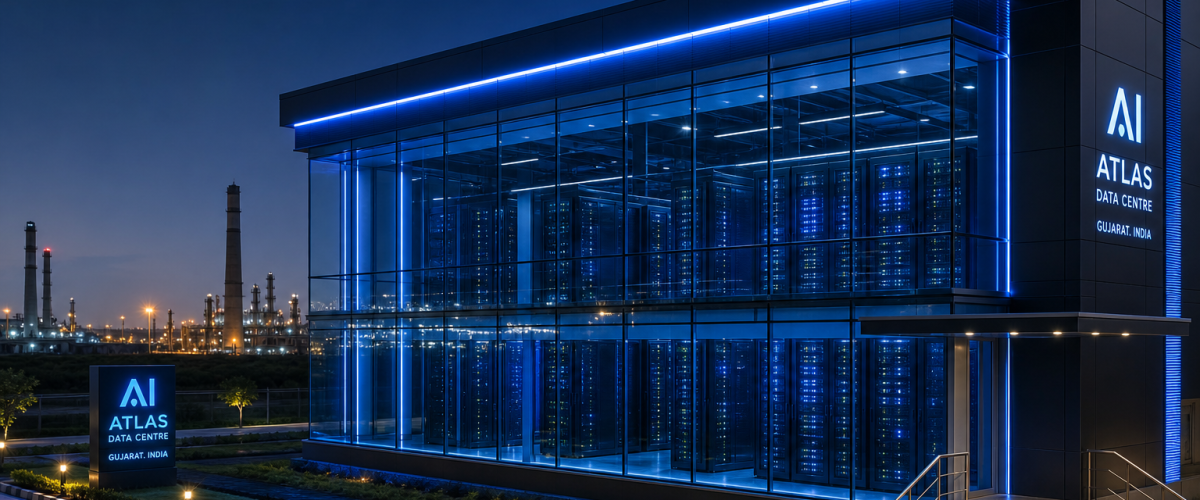
In a landmark deal that signals the growing convergence of Big Tech ambitions and Indian industrial might, Meta — the parent company of Facebook, Instagram, and WhatsApp — has partnered with Mukesh Ambani’s Reliance Industries to build its first artificial intelligence data centre in India. The 168 MW facility will be located in Jamnagar, Gujarat, and represents one of the largest AI infrastructure investments in the country to date.
The announcement, made on June 10, 2026, comes as global technology giants race to secure data centre capacity to power the enormous computational demands of AI training and inference. For Meta, the Jamnagar facility will serve as a critical hub for running its Llama AI models and delivering AI-powered services to its massive Indian user base — the largest for any Meta platform globally.
Inside the Partnership
Under the deal, Reliance will design, construct, and operate the data centre, which Meta will lease with the option to expand capacity in the future. The facility will be powered by a mix of renewable energy sources — including solar and wind — aligning with both companies’ sustainability commitments. Jamnagar, already home to Reliance’s massive oil refinery complex and growing digital infrastructure, was chosen for its land availability, power supply, and connectivity.
This partnership builds on the two companies’ deepening relationship. In August 2025, Meta and Reliance formed a joint venture with an initial investment of Rs 855 crore (approximately $100 million), with Reliance holding a 70% stake and Meta 30%. That venture focused on developing AI platforms and enterprise tools for Indian businesses using Meta’s open-source Llama models.
The data centre deal takes the collaboration to an entirely new level. “This is not just about infrastructure — it’s about building the AI backbone for India’s digital future,” said a senior Reliance executive who declined to be named. “The combination of Meta’s AI expertise and Reliance’s infrastructure and distribution capabilities creates a formidable partnership.”
Why India, Why Now
India has emerged as a priority market for global AI infrastructure investment for several reasons. The country has over 800 million internet users, a rapidly growing digital economy, and a government that is actively promoting AI adoption through initiatives like the Bharat Gen AI model and the IndiaAI Mission. The demand for AI compute in India is expected to grow 10x over the next five years, driven by enterprise adoption, government services, and consumer applications.
For Meta specifically, India is its single largest market by users. WhatsApp alone has over 500 million users in the country, and the integration of AI features — including Meta AI chatbot, business automation tools, and content recommendation systems — requires low-latency, locally hosted computing infrastructure. Running these models on Indian soil also helps with data localisation compliance and reduces dependency on overseas data centres.
The timing is also driven by global competition. Google, Amazon, and Microsoft have all announced or expanded data centre operations in India in 2025-26. Meta’s Jamnagar facility ensures it remains competitive in the race to dominate the Indian AI market.
The Jamnagar Advantage
Jamnagar, a city in Gujarat’s Saurashtra region, may seem like an unusual choice for a cutting-edge AI facility. But the location offers several strategic advantages. Reliance already has extensive land holdings and industrial infrastructure in the area, reducing setup time and costs. Gujarat’s proactive industrial policy and robust power grid — including growing renewable energy capacity — make it an attractive destination for energy-intensive data centre operations.
The 168 MW capacity of the facility is significant — for context, the average Indian data centre is 10-30 MW. This makes the Jamnagar facility one of the largest single-site data centres in India, comparable to hyperscale facilities operated by global cloud providers in Hyderabad and Mumbai. The scale reflects the enormous computational requirements of modern AI, where training a single large language model can consume megawatts of power for weeks.
Implications for India’s AI Ecosystem
The Meta-Reliance deal is expected to have ripple effects across India’s technology ecosystem. It will create thousands of direct and indirect jobs — from construction and operations to AI engineering and data management. It will also attract ancillary investments in networking, cooling systems, and renewable energy infrastructure.
For Indian startups and enterprises, the availability of local AI compute at scale could be transformative. Instead of relying on overseas cloud services with high latency and costs, businesses will have access to powerful AI infrastructure within the country. This could accelerate AI adoption across sectors from healthcare and agriculture to education and financial services.
Also Read
- Meta Launches Paid ‘Plus’ Subscription Plans for Instagram, WhatsApp and Facebook — Premium Features Behind Paywall in India
- TRAI Orders Reliance Jio to End Discriminatory Tariff Plans and Ensure Uniform Pricing by 14 April 2026
- Meta Launches AI Business Agent for WhatsApp, Instagram and Messenger — Can Book Appointments, Process Payments and Close Sales
- Bharat Gen AI: India Launches Its First Government-Funded Multilingual LLM
As India positions itself as a global AI powerhouse, partnerships like Meta-Reliance signal that the country is not just a consumer of AI technology but increasingly a hub for its creation and deployment. The Jamnagar data centre is a concrete step in that direction.