FWICE Withdraws Non-Cooperation Directive Against Ranveer Singh Over Don 3 — How the Bollywood Industry Row Was Resolved

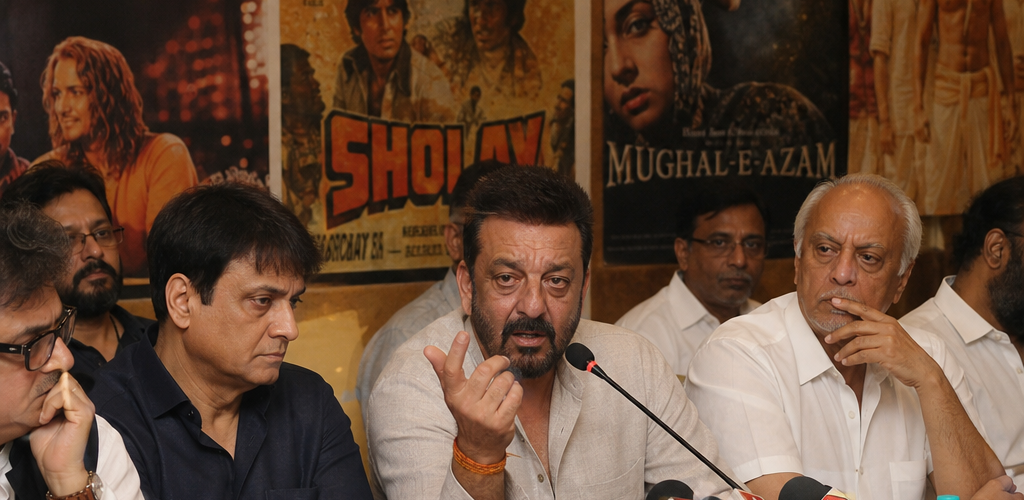
The Federation of Western India Cine Employees (FWICE) on Wednesday announced the withdrawal of its non-cooperation directive against actor Ranveer Singh with immediate effect, bringing a dramatic end to one of Bollywood’s most contentious disputes in recent years. The reversal came after Ranveer served a legal notice on the federation and multiple industry bodies stepped in to mediate.
How the Don 3 Dispute Escalated
The controversy traces back to Ranveer Singh’s decision to exit Don 3, the long-awaited franchise reboot being produced by Farhan Akhtar and Ritesh Sidhwani’s Excel Entertainment. When the project was announced in August 2023 with Ranveer replacing Shah Rukh Khan in the titular role, it was positioned as one of Bollywood’s biggest upcoming productions.
But the collaboration collapsed months before principal photography was scheduled to begin. Ranveer’s camp maintained that the film never reached a stage of creative readiness — that no locked script existed even after years of development, and multiple narrative elements remained unresolved. Excel Entertainment disputed this version, with Farhan Akhtar stating that the script was developed and shared in stages, and that Ranveer had approved each draft without objection.
The financial fallout was severe. Excel Entertainment claimed losses of approximately Rs 400 million (Rs 40 crore) from pre-production work, planning, and commitments made around the actor’s schedule. The matter was escalated to the Producers Guild of India, which held two closed-door meetings with senior producers and studio heads present.
FWICE’s Non-Cooperation Order and the Legal Backlash
Last week, FWICE — which represents over 500,000 workers across 32 craft unions in the western Indian film industry — issued a non-cooperation directive against Ranveer Singh. The order effectively barred any FWICE member from working with the actor, a move that could have paralyzed his upcoming projects.
The directive was unusual in its severity. While FWICE has historically intervened in payment disputes involving technicians and junior artists, issuing a non-cooperation order against a top-tier star over a creative disagreement with a producer was seen by many as overreach. Legal experts pointed out that the federation’s constitution gives it authority over worker welfare issues, not commercial disputes between stars and production houses.
Ranveer’s legal team responded swiftly with a formal notice to FWICE, challenging the legality of the directive and threatening litigation. The notice reportedly argued that the non-cooperation order constituted tortious interference with the actor’s contractual relationships and violated his fundamental right to practice his profession.
How Industry Mediation Resolved the Crisis
The withdrawal came after intensive intervention by three major industry bodies: the Indian Motion Picture Producers’ Association (IMPPA), the Producers Guild of India, and the Cine and TV Artistes’ Association (CINTAA). Sources familiar with the discussions said the mediation lasted several rounds over two days.
CINTAA, which represents actors, reportedly argued that FWICE had no jurisdiction to penalize an actor over a commercial dispute. IMPPA raised concerns that the directive set a dangerous precedent — if a workers’ federation could unilaterally ban a star for exiting a project, it would create a chilling effect on actors’ ability to exercise creative and professional judgment.
In its withdrawal statement, FWICE called for a “joint roundtable meeting” of all stakeholders to develop clearer guidelines for handling production disputes in the film industry. The federation stopped short of apologizing but acknowledged that the matter was “being resolved through appropriate channels.”
Producers Guild Takes a Firm Stance on Walkouts
Even as the immediate crisis with Ranveer cooled, the Producers Guild of India issued a pointed statement addressing a broader pattern. Without naming any specific film or actor, the Guild raised “growing concern” over “instances of talent, directors, and technicians reneging on their commitments to producers, often at the eleventh hour.”
The statement disclosed that the Guild had received formal complaints from Excel Entertainment and Panorama Studios International Limited regarding walkouts that occurred “just days before the commencement of principal photography.” It warned that “such actions by any industry member have serious and far-reaching consequences and undermine the spirit of trust, professionalism, and mutual respect on which the film industry is built.”
Industry analysts see the statement as a call for institutional reform. Bollywood has historically operated on informal agreements and personal relationships rather than ironclad contracts with clear termination clauses. As production budgets scale into hundreds of crores, the industry is grappling with the need for more structured contractual frameworks.
Ranveer’s Perspective: Dhurandhar’s Box Office Validates the Decision
Ranveer has remained largely silent during the public dispute, but his career decisions tell their own story. Dhurandhar, the film he prioritized over Don 3, has become a monstrous commercial success — crossing Rs 3,000 crore worldwide to become one of Indian cinema’s highest-grossing films ever. The blockbuster validated Ranveer’s creative instincts and arguably weakened Excel Entertainment’s position in the public discourse.
In a widely reported comment, Ranveer admitted that he “wouldn’t have quit Don 3 if Dhurandhar had flopped” — a candid acknowledgment that the business of filmmaking ultimately rests on results. Director Ram Gopal Varma weighed in from the other side, prompting FWICE to claim he owed over Rs 1 crore to federation members.
What This Means for Bollywood
The Don 3 saga has exposed fault lines in Bollywood’s informal power structures. With budgets rising and global distribution deals adding complexity, the industry needs clearer rules of engagement between talent and producers. The Producers Guild roundtable, whenever it happens, will likely push for standardized contract templates with explicit walkout penalties and dispute resolution mechanisms.
For now, the immediate crisis is over. Ranveer can resume work without FWICE complications, and the broader industry conversation about accountability and professionalism continues. But as one senior producer told industry reporters this week, “This won’t be the last time this happens. We just need to make sure next time, there’s a rulebook everyone agrees on.”

- Fentanyl Vaccine Breakthrough: Scripps Research Develops Shot That Blocks Deadly Overdoses Before They Reach the Brain - June 13, 2026
- Nipah Virus Returns to Kerala — First Case of 2026 Confirmed, State Declares High Alert - June 12, 2026
- Jill Biden Reveals She Wanted to Keep PM Modi’s 7.5-Carat Diamond Gift but Returned It After State Department Valued It at $20,000 - June 8, 2026