NEET UG 2026 Paper Leak — Supreme Court Slams NTA, Says ‘Lessons Not Learnt’ as Re-Exam Set for June 21

Supreme Court Takes Strong View on Recurring NEET Scandals
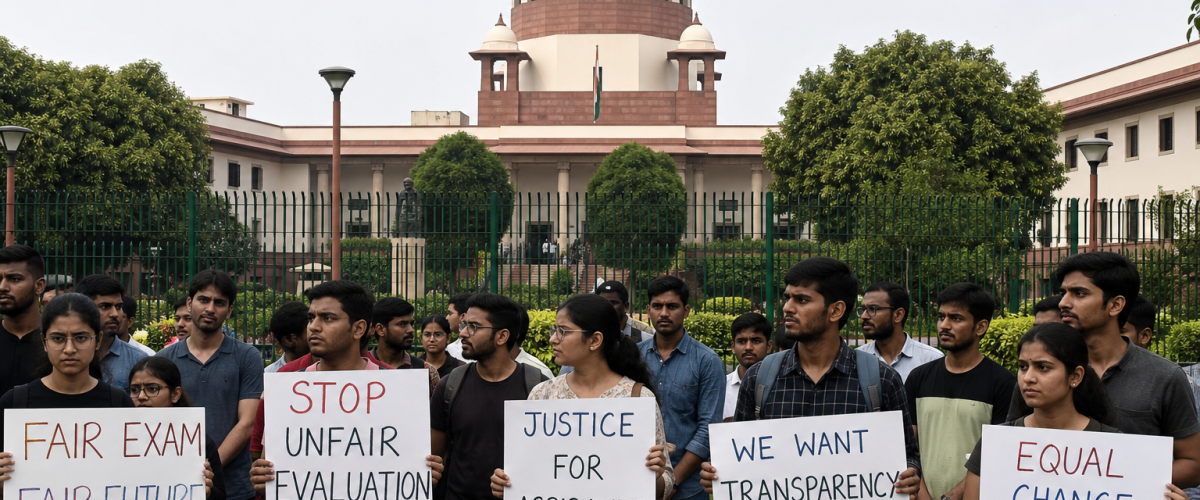
The Supreme Court of India has come down heavily on the National Testing Agency (NTA) in the ongoing NEET UG 2026 paper leak case, expressing “strong displeasure” and stating that the agency “has not learnt its lessons” despite previous directives from the court and widespread public criticism following the 2024 NEET scandal.
During a hearing on Monday, the bench — headed by the Chief Justice of India — issued notices to the Centre, NTA, and the Central Bureau of Investigation (CBI), seeking their responses on a batch of petitions demanding systemic reforms to India’s examination infrastructure. The court also confirmed that a re-examination for affected candidates has been scheduled for 21 June 2026.
“The nation’s youth put their trust in these examinations as fair pathways to their careers. When that trust is breached repeatedly, the institution itself becomes meaningless,” the Chief Justice observed during the hearing. “The NTA was supposed to be the solution to examination malpractice. Instead, it has become part of the problem.”
What Happened: The 2026 Paper Leak
The NEET UG 2026 examination, conducted on 4 May, was marred by allegations that question papers were leaked and circulated before the examination began at several centres. Initial complaints emerged from centres in Bihar and Rajasthan, but subsequent investigations revealed that the breach may have been more widespread.
The CBI, which was handed the investigation after initial police probes in multiple states yielded contradictory results, has confirmed that the question paper was leaked through a network involving examination centre coordinators, middlemen, and a distribution chain that used encrypted messaging apps to share photographs of the question paper with paying candidates.
According to CBI sources, at least 35 individuals have been arrested across five states in connection with the leak. The investigation has revealed that candidates paid between Rs 30 lakh and Rs 50 lakh for advance access to the question paper — sums that reflect both the desperation of medical aspirants and the enormous financial stakes involved in NEET, which determines admission to over 1.1 lakh MBBS and BDS seats across India.
A Déjà Vu of 2024
The 2026 scandal is disturbingly similar to the NEET 2024 controversy, which triggered a national outcry and eventually led to Supreme Court intervention. In 2024, allegations of paper leaks, inflated scores, and examination centre irregularities led to months of student protests and political acrimony. The court ordered a thorough investigation but stopped short of cancelling the examination.
The NTA subsequently promised comprehensive reforms, including biometric verification of candidates, AI-powered surveillance at examination centres, encrypted paper distribution, and randomised question paper sets. The 2026 leak has raised serious questions about whether any of these reforms were effectively implemented.
“We are hearing the same promises we heard in 2024. The same ‘we will fix it’ assurances from the same agency that failed to fix it,” said advocate Mathews Nedumpara, who represents a group of affected students before the Supreme Court. “At what point do we acknowledge that the NTA in its current form is simply not capable of conducting secure examinations?”
The Re-Examination Conundrum
The re-examination scheduled for 21 June presents its own challenges. Over 24 lakh candidates registered for NEET UG 2026, making it one of the largest single-day examinations in the world. Re-conducting such an examination is a massive logistical undertaking involving thousands of centres, millions of question papers, and an army of invigilators.
Students and parents have raised concerns about the re-examination. Those who performed well in the original exam without any malpractice face the burden of re-appearing, with no guarantee of replicating their results. The psychological toll of preparing for and appearing in a high-stakes examination twice within two months is significant.
“My daughter has been studying for NEET for three years. She gave a good exam on May 4. Now she has to go through that stress again because the system failed, not because she failed,” said a parent from Kota, Rajasthan — the city famous as India’s coaching capital — who asked not to be identified to protect his daughter’s privacy.
The Supreme Court has directed that the re-examination be conducted under enhanced security protocols, including real-time CCTV monitoring at all centres, mandatory biometric verification, and the presence of observers appointed by the court at randomly selected centres.
Political Pressure Mounts
The NEET 2026 scandal has become a major political issue. Opposition parties have demanded the dissolution of the NTA and the resignation of Education Minister Dharmendra Pradhan. The Cockroach Janta Party, a student-led protest movement, has announced a demonstration at Jantar Mantar on 6 June specifically targeting examination reforms.
Congress leader Rahul Gandhi has framed the issue as one of systemic injustice: “The children of the powerful don’t need to cheat on NEET. They have connections, donations, and management quotas. It’s the children of ordinary families who suffer when the system is corrupt.” The comment drew sharp responses from BJP, which accused Gandhi of “politicising students’ anxiety.”
Within the government, there are reportedly discussions about either restructuring the NTA significantly or creating a new, independent examination authority with greater autonomy and accountability. However, any such reform would take time to implement — cold comfort for the 24 lakh students facing the June 21 re-examination.
What the CBI Investigation Has Revealed So Far
The CBI’s investigation has uncovered a sophisticated network that operated across state lines. The chain typically began with insiders at examination centres — usually coordinators or administrative staff with access to sealed question paper packets — who photographed the papers hours before the exam.
These photographs were then transmitted through encrypted channels to middlemen, who distributed them to pre-arranged groups of candidates at “safe houses” near examination centres. In some cases, candidates were provided with answer keys prepared by coaching centre teachers who had been recruited into the racket.
The financial trail has led investigators to hawala networks and cryptocurrency transactions, suggesting a level of operational sophistication that goes beyond opportunistic cheating. “This is organised crime operating in the education space,” a CBI official told reporters. “The profit margins rival drug trafficking.”
Systemic Reform: The Only Path Forward
Education experts argue that the recurring NEET scandals point to the need for fundamental rather than incremental reform. Dr. Krishnaswamy Kasturirangan, who chaired the committee that drafted the National Education Policy 2020, has called for a “complete reimagining” of how competitive examinations are conducted in India.
Proposed reforms include transitioning to computer-based testing (which is harder to leak than paper-based exams), implementing adaptive testing algorithms that generate unique question sets for each candidate, and creating a decentralised examination architecture that eliminates single points of failure.
International comparisons are also instructive. The United States’ MCAT, the UK’s UCAT, and Australia’s GAMSAT — all medical entrance examinations — use computer-based formats with question banks containing thousands of items, making paper leaks virtually impossible. India’s reluctance to adopt similar technology, despite having a world-class IT sector, remains a puzzling gap.
For now, 24 lakh students are counting down to 21 June with a mixture of anxiety and determination. As one NEET aspirant from Chennai put it on social media: “They leaked the paper. They scheduled a re-exam. They’ll probably mess that up too. But we’ll keep showing up, because we have no other option. This is our future, and we won’t let them take it from us.”