Bihar Hospital Fire in Muzaffarpur Kills Multiple Patients as ICU Blaze Sparks Overnight Rescue Operation

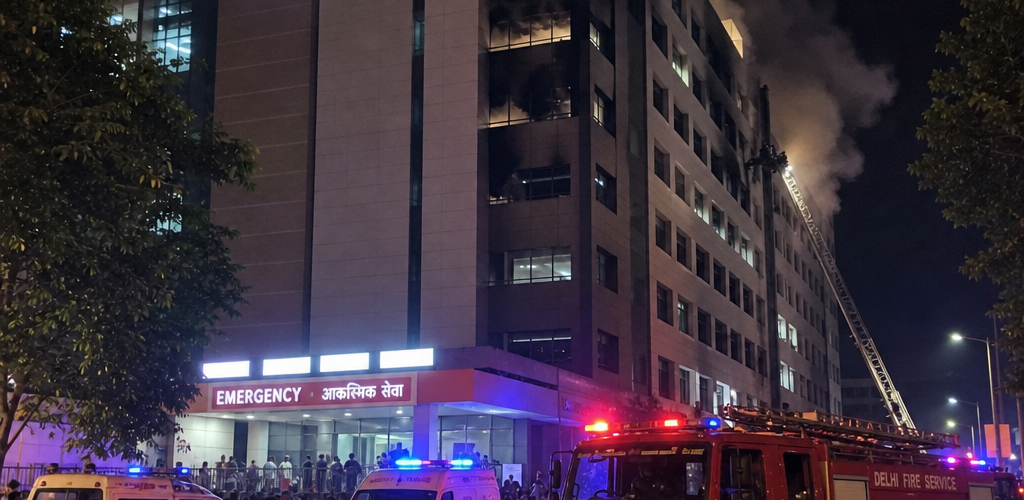
A devastating fire broke out in the Intensive Care Unit of Prasad Hospital in Muzaffarpur, Bihar, during the early hours of Thursday morning, killing multiple patients and triggering a large-scale overnight rescue operation. The blaze, suspected to have been caused by a short circuit on the fifth floor, started around 3:00 a.m. when most patients and reduced night-shift staff were in the ward.
What Happened at Prasad Hospital
Prasad Hospital, a multi-speciality private facility located on Juran Chhapra Road No. 3 in Muzaffarpur, was treating several critically ill patients in its ICU when the fire broke out. Initial reports from the Muzaffarpur District Magistrate confirmed at least three fatalities, with India Today subsequently reporting the toll at 10 based on hospital and administrative sources. Over 20 patients were rescued from the affected ward and adjacent floors.
The fire is believed to have originated from an electrical short circuit in the ICU’s ceiling wiring, which quickly spread to oxygen supply equipment and medical monitors — creating a particularly dangerous environment where flammable gases and electrical equipment compounded the blaze. The ICU’s sealed design, necessary for infection control, also trapped smoke inside the ward and delayed the escape of patients who were largely immobile.
Firefighters from three fire stations responded to the call and reached the hospital within 15 minutes. However, the fire’s location on the fifth floor of the building and the presence of oxygen cylinders complicated the response. Rescue teams had to evacuate patients floor by floor using stretchers and wheelchairs while simultaneously fighting to contain the fire and prevent it from reaching oxygen storage areas.
Victims Were Among the Most Vulnerable
The human toll is especially tragic because ICU patients are by definition unable to evacuate themselves. Many were on ventilators, connected to IV drips, or in medically induced sedation. The hospital’s night-shift nursing staff — typically a skeleton crew between midnight and 6 a.m. — had to make impossible triage decisions about which patients to move first.
Several critically ill patients were shifted to nearby government hospitals and other private facilities in Muzaffarpur. The Civil Surgeon reached the hospital to oversee the situation and coordinate medical assistance for transferred patients. Families gathered outside the hospital through the night, desperately seeking information about their relatives.
The District Magistrate of Muzaffarpur ordered an immediate inquiry into the fire and directed the hospital administration to cooperate fully with investigators. An initial assessment suggests the hospital had a fire safety plan on paper but its execution during the actual emergency fell short — a recurring theme in Indian hospital fires.
India’s Hospital Fire Safety Crisis
The Muzaffarpur fire is the latest in a disturbingly long list of hospital fires across India that have claimed patient lives. In 2021, a fire at a COVID-19 ICU in Gujarat’s Rajkot killed five patients. In 2020, 10 COVID patients died in a fire at the ICU of Shrey Hospital in Ahmedabad. The Kamla Nehru Hospital fire in Bhopal in 2023 killed four newborns in the neonatal unit.
Each incident prompts the same cycle: outrage, investigation, promises of stricter enforcement, and eventual return to the status quo. The pattern persists because of a fundamental gap between regulations and their implementation.
Indian hospital fire safety is governed by the National Building Code (NBC) 2016, which mandates fire detection systems, automatic sprinklers, fire-resistant construction materials, and dedicated fire escape routes for all healthcare facilities. State health departments are supposed to conduct annual fire safety audits as a condition of hospital licensing. In practice, many private hospitals — particularly in smaller cities like Muzaffarpur — operate with expired or absent fire safety certificates.
ICU wards pose unique fire risks. They contain high concentrations of oxygen (an accelerant), electrical equipment that runs continuously, and flammable materials including plastic tubing, bedding, and surgical drapes. International hospital fire safety standards require ICU-specific fire suppression systems, including gas-based extinguishing agents that can smother electrical fires without damaging sensitive medical equipment. Few Indian hospitals, especially outside major metropolitan centres, invest in these systems.
Regulatory Gaps and Enforcement Failures
Bihar has a particularly challenging record on hospital safety regulation. The state’s private hospital licensing framework was updated in 2020, but compliance verification remains resource-constrained. The state health department has fewer than 100 inspectors covering thousands of registered healthcare facilities — a ratio that makes meaningful regular inspections virtually impossible.
Fire safety experts have long argued that hospital fire certification should be separated from general building fire compliance and handled by a specialized agency with healthcare-specific expertise. The presence of pressurized oxygen systems, anaesthetic gases, and electrically sensitive medical devices creates risks that general fire safety inspectors may not fully appreciate.
“A hospital ICU is essentially a fuel-rich, spark-prone environment where the occupants cannot move,” said Dr. Arun Sharma, a healthcare infrastructure consultant based in Patna. “The margin for error is zero. You need systems that detect and suppress fire in seconds, not minutes. Most Indian hospital ICUs do not meet this standard.”
Investigation and Accountability
The investigation into the Prasad Hospital fire will examine several critical questions: whether the hospital’s electrical wiring met safety standards, whether the ICU had functional fire detection and suppression systems, whether staff were trained in fire evacuation procedures for immobile patients, and whether the hospital’s fire safety certificate was current.
Coming just a day after the devastating hotel fire in Delhi’s Malviya Nagar that killed 21 people, the Muzaffarpur incident has added to national outrage over fire safety failures. Opposition parties in Bihar have demanded accountability from the state government and called for a statewide audit of private hospital safety compliance.
The Bihar government has ordered the formation of a committee to investigate the fire and report within 30 days. Whether this report leads to structural reforms or joins the pile of previous inquiry reports that gathered dust remains to be seen. For the families of those who died in an ICU that was supposed to save their lives, the investigation cannot come soon enough.
Emergency helplines have been set up for families seeking information about patients at Prasad Hospital. The state health department has directed all Muzaffarpur hospitals to submit updated fire safety documentation within 72 hours.