World Environment Day 2026 — India Faces Climate Action Reckoning as Baku Hosts Global Observance Under ‘Inspired by Nature’ Theme

Every year on 5 June, the world pauses — however briefly — to acknowledge the environmental challenges facing the planet. World Environment Day 2026, hosted by the Republic of Azerbaijan in its capital Baku, carries the theme “Inspired by Nature. For Climate. For Our Future.” The focus this year is squarely on climate action, and for India — the world’s most populous nation and third-largest carbon emitter — the day arrives at a moment of both progress and contradiction.
India’s Climate Commitments in 2026
India’s climate action landscape in 2026 looks significantly different from where it stood just five years ago. The country has made substantial progress on renewable energy deployment, with installed solar capacity exceeding 160 GW and total renewable energy capacity crossing 250 GW — well ahead of the trajectory needed to meet the government’s 500 GW target by 2030.
The electric vehicle transition is also gathering pace. India registered 2.64 lakh EVs in May 2026 alone, representing 35 per cent year-on-year growth. The penetration of electric two-wheelers — the backbone of India’s personal mobility — has reached 9.2 per cent, up from barely 2 per cent three years ago.
But the picture is not uniformly positive. India’s overall carbon emissions continue to rise in absolute terms, driven by economic growth that still depends heavily on coal for electricity generation and industrial production. The tension between development and decarbonisation is the defining challenge of India’s climate policy.
The Iran War’s Environmental Fallout
One of the less discussed aspects of the ongoing Middle East conflict is its environmental impact. The disruption to oil markets has paradoxically created both challenges and opportunities for India’s climate agenda. Higher oil prices strengthen the economic case for EV adoption and renewable energy, but they also increase the cost of India’s energy imports and put pressure on household budgets — making it politically harder to implement additional green policies.
The government’s recent approval of a Rs 10,000 crore ATF Price Stabilisation Fund to shield airlines from fuel price volatility illustrates this tension. While the fund addresses an immediate economic concern, critics argue that subsidising fossil fuel consumption sends the wrong signal on climate action.
Air Quality: The Persistent Crisis
For ordinary Indians, environmental concerns are most immediately felt through air quality. Despite years of policy interventions, including the National Clean Air Programme (NCAP), several Indian cities continue to record dangerously high pollution levels, particularly during winter months.
According to IQAir’s World Air Quality Report, India was home to 10 of the world’s 15 most polluted cities in 2025. While there have been marginal improvements in some metros — Delhi’s annual average PM2.5 levels dropped from 99.7 µg/m³ in 2019 to approximately 82 µg/m³ in 2025 — these numbers remain roughly eight times the WHO recommended limit of 10 µg/m³.
What experts find particularly frustrating is that many of the solutions are well-understood: stricter enforcement of emission standards, faster transition to clean cooking fuels, better waste management, and reduced crop residue burning. The challenge is implementation at scale in a country as large and diverse as India.
Water Stress and Climate Vulnerability
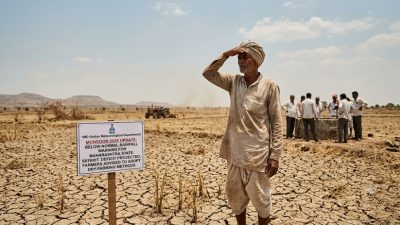
India’s water crisis, which often takes a backseat to air pollution discussions, is arguably a more existential environmental threat. The country is home to 18 per cent of the world’s population but has access to only 4 per cent of global freshwater resources. Climate change is making this worse through erratic monsoon patterns, glacial melt in the Himalayas, and increasing frequency of extreme weather events.
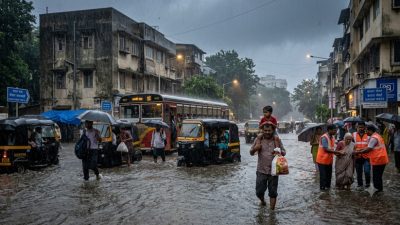
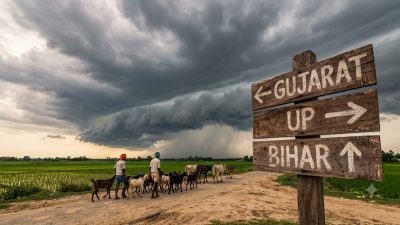
The India Meteorological Department has already noted that the 2026 monsoon onset is largely on track — with Kerala receiving its first monsoon rains around 4 June — but the distribution of rainfall is becoming increasingly unpredictable, with some regions experiencing intense bursts while others face deficits.
Biodiversity: A Quieter Crisis
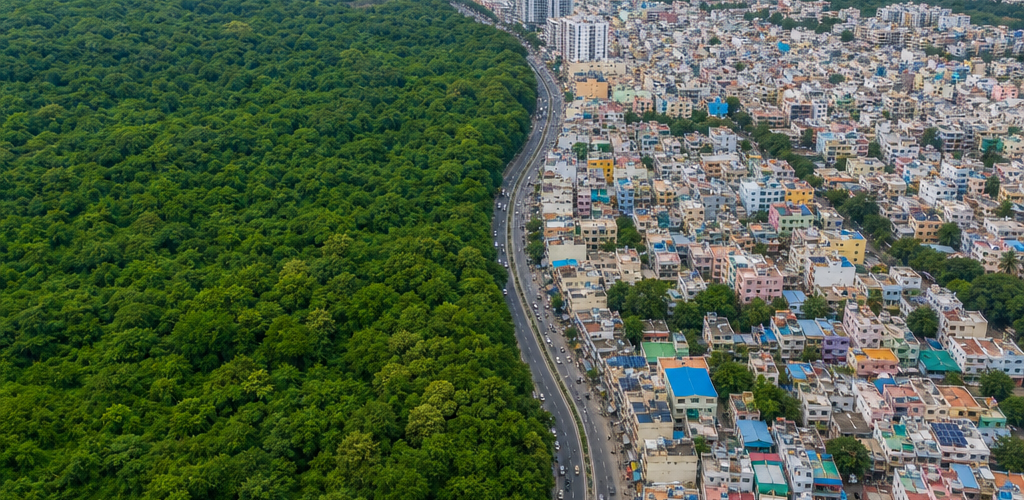
While climate change dominates headlines, India’s biodiversity crisis deserves attention on World Environment Day. The country, one of the world’s 17 megadiverse nations, has seen significant habitat loss due to infrastructure development, urbanisation, and agricultural expansion.
The Wildlife Institute of India estimates that India has lost approximately 30 per cent of its natural habitat since 1990. While tiger conservation has been a notable success story — with the population rebounding from approximately 1,411 in 2006 to over 3,682 in the 2025 census — many less charismatic species continue to decline without attracting the same attention or resources.
What India Is Doing Right
Credit where it is due: India has taken several meaningful steps on environmental protection in recent years. The International Solar Alliance, co-founded by India and France, has become a genuinely impactful multilateral body. The National Green Hydrogen Mission has attracted significant investment. The Namami Gange programme has shown measurable improvements in Ganges river water quality at several monitoring points.
India’s leadership in the global South on climate finance negotiations has also been important. The country has consistently argued that developed nations must honour their financial commitments to developing countries for climate adaptation and mitigation — a position that has gained broader support at successive COP conferences.
Looking Ahead
World Environment Day is, by design, a moment for reflection rather than action. But for India, the gap between reflection and action has concrete consequences. The decisions made today — on energy policy, urban planning, industrial regulation, and agricultural practices — will determine whether India’s remarkable economic growth story can coexist with a liveable environment for its 1.4 billion citizens.
As events unfold in Baku and across the world today, the message from scientists, activists, and policymakers remains consistent: the window for meaningful climate action is narrowing, and every year of delay makes the eventual adjustment more painful and costly.