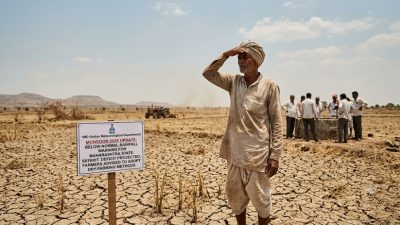
535 Rajasthan Farmers Dead From Pesticide Exposure in Two Years — Assembly Data Reveals Shocking Scale of Safety Failures

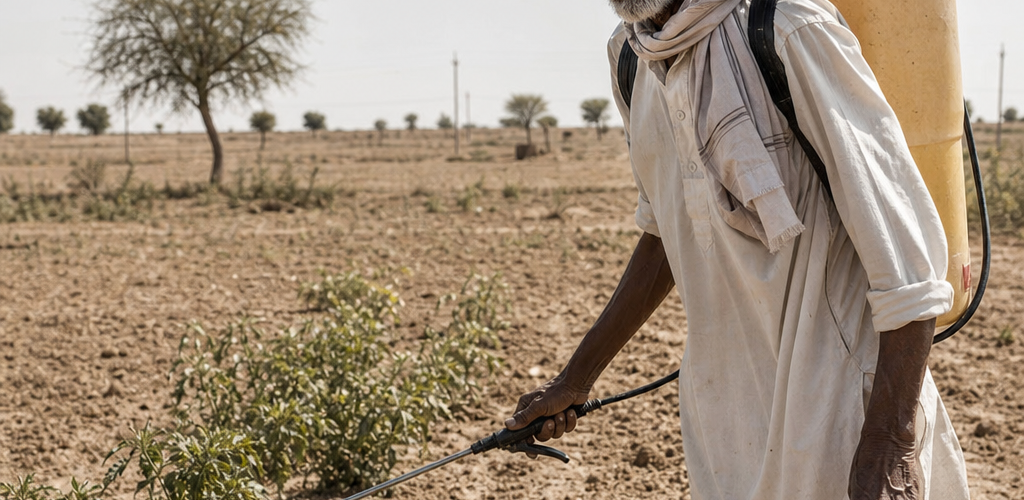
Data tabled in the Rajasthan state assembly has revealed that 535 farmers died from pesticide exposure while working in the fields between January 2024 and January 2026. The agriculture department figures, accompanied by records of 189 substandard pesticide samples and Rs 5.1 crore in compensation payments, paint a grim picture of safety failures across the state’s agricultural sector.
District-Wise Death Toll
The casualties are concentrated in Rajasthan’s western and northern agricultural belts. Bikaner recorded the highest toll at 57 deaths, followed by Churu with 56, Hanumangarh with 42, and Jhalawar with 42. Jodhpur reported 38 deaths, while Sriganganagar and Beawar each recorded 31 fatalities.
These are not anonymous statistics. Each number represents a farmer — overwhelmingly male, overwhelmingly from small and marginal landholding families — who died while doing the basic work of protecting crops from pests. The geographic concentration in the Bikaner-Churu-Hanumangarh corridor points to specific agricultural practices in these arid regions where pesticide application is particularly intense due to pest pressure in canal-irrigated areas.
The Compensation Gap
Of the Rs 5.1 crore paid as compensation, the distribution across districts reveals sharp disparities that raise uncomfortable questions about the claims process. Bikaner received Rs 92 lakh, Churu Rs 72 lakh, Jodhpur Rs 58 lakh, and Hanumangarh Rs 48 lakh. So far, the numbers roughly track the death toll.
But then the anomalies emerge. Sriganganagar, with 31 deaths, received only Rs 18 lakh. Jhalawar, despite recording 42 deaths — the joint third-highest toll — also received just Rs 18 lakh. Most strikingly, Deeg reported eight deaths but zero compensation, while Kota reported 11 deaths and received merely Rs 2 lakh. Officials attributed these disparities to “claim verification and approval processes,” but such bureaucratic language obscures the reality that dozens of bereaved families have received nothing.
The Substandard Pesticide Problem
Running alongside the mortality data is another disturbing figure: 189 pesticide samples out of 5,521 tested failed quality standards during the same period. That is a failure rate of 3.4 per cent. While 5,332 samples met prescribed standards, the substandard products that reached the market may have contributed to the death toll in two ways — through direct toxicity from poorly formulated chemicals, and indirectly by requiring farmers to apply higher doses of ineffective products, increasing their exposure.
India’s pesticide regulation framework is fragmented across the Insecticides Act of 1968, state agricultural departments, and the Central Insecticides Board. Enforcement is chronically under-resourced. The 5,521 samples tested over two years across an entire state as large as Rajasthan represent a tiny fraction of the pesticides actually sold and used — an estimated market worth hundreds of crores annually.
Why This Keeps Happening
Any agricultural safety professional can identify the immediate causes: farmers spraying without masks, gloves, or protective clothing; using hand-pump sprayers that expose the operator to drift; mixing and decanting concentrated chemicals with bare hands; spraying in the direction of the wind; and working in extreme heat that accelerates dermal absorption of toxic compounds.
But the systemic causes run deeper. Extension services that should train farmers in safe pesticide application have been hollowed out by decades of budget cuts. The shift toward more toxic chemical combinations — driven by pest resistance developed through years of indiscriminate spraying — has raised the lethality of exposure incidents. And the economics of small-scale farming leave little margin for investing in protective equipment that costs money but does not directly increase yield.
“We need accountability, stricter regulation of pesticides, and a comprehensive safety programme for farmers across Rajasthan,” Kishanpole MLA Amin Kagzi said in the assembly. That demand is both correct and familiar — similar calls have followed similar revelations in multiple states over many years. Whether this particular set of numbers prompts action will depend on whether the political cost of inaction finally exceeds the administrative cost of reform.
The Broader National Picture
Rajasthan is not alone. Pesticide-related deaths among farmers are reported across India’s agricultural states — Punjab, Haryana, Maharashtra, Andhra Pradesh, and Karnataka have all recorded significant casualties. But the data is fragmented because there is no national database that systematically tracks farmer deaths from pesticide exposure as a distinct category. Deaths are recorded under various headings — accidental poisoning, occupational hazard, unknown cause — making it impossible to aggregate a reliable national figure.
The World Health Organisation estimates that approximately 300,000 people die globally each year from pesticide self-poisoning, and millions more suffer acute occupational exposure. India, as one of the world’s largest consumers of agricultural pesticides, accounts for a disproportionate share of these casualties. The country’s pesticide market is valued at over Rs 25,000 crore annually, yet the regulatory infrastructure governing product quality, application safety, and environmental impact remains inadequate relative to the scale of use.
What Effective Intervention Looks Like
Countries that have successfully reduced pesticide mortality have deployed a combination of interventions. Banning the most toxic formulations — particularly WHO Class I and II pesticides — has had the most immediate impact. Sri Lanka’s ban on certain organophosphates reduced pesticide deaths by over 50 per cent within a decade. South Korea’s ban on paraquat had similar results.
India has been slower to act. While the government has banned or restricted over 60 pesticide formulations, many of the most commonly used products in states like Rajasthan remain highly toxic. The proposed Pesticide Management Bill, which has been pending in various forms since 2020, would strengthen the regulatory framework if enacted — but parliamentary progress has been slow, and the agrochemical industry has lobbied effectively against provisions it considers overly restrictive.
For the 535 families in Rajasthan who have lost a breadwinner to pesticide exposure, the policy debate is academic. Their immediate need is timely, adequate compensation — and the assembly data showing zero compensation for some districts suggests that even this basic obligation is not being met consistently. The state government’s response to the assembly disclosure will test whether these numbers prompt systemic reform or become another set of statistics absorbed by the archive of legislative records.