Axiom Mission 4: Indian Astronaut Subhanshu Shukla Completes Historic 14-Day Stay on International Space Station

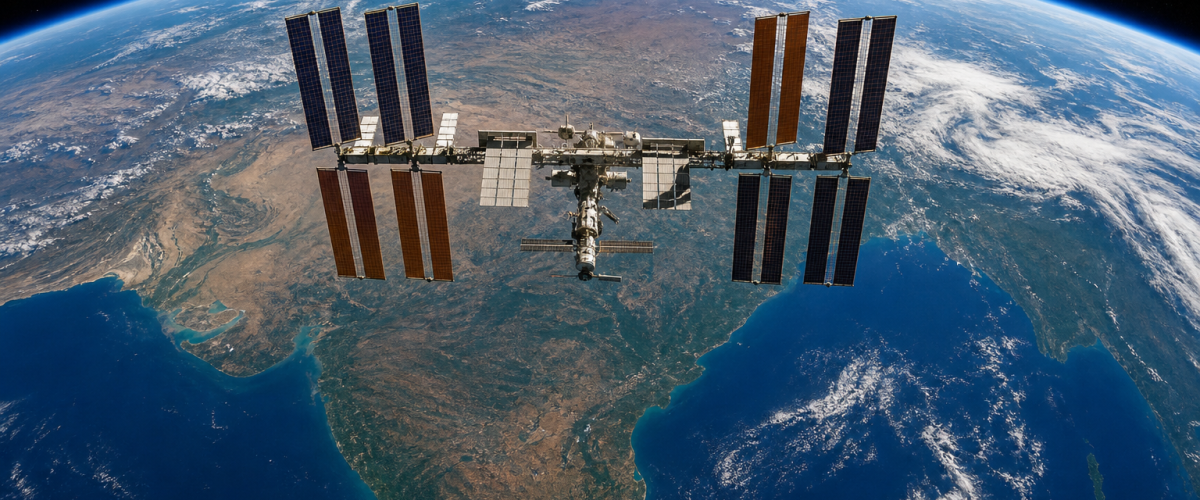
Group Captain Subhanshu Shukla of the Indian Air Force has created history by becoming the first Indian astronaut to spend 14 consecutive days aboard the International Space Station (ISS), as part of the landmark Axiom Mission 4 (Ax-4). The mission, a collaboration between NASA, ISRO, SpaceX, and Axiom Space, marks a critical milestone in India’s human spaceflight ambitions and serves as a rehearsal for the country’s indigenous Gaganyaan mission.
Shukla, who was selected as India’s Axiom astronaut from a pool of four Gaganyaan candidates, launched aboard a SpaceX Dragon spacecraft from NASA’s Kennedy Space Center and docked with the ISS for an extended mission that included scientific experiments, technology demonstrations, and training activities. His 14-day stay — the longest by any Indian national in orbit — surpasses Rakesh Sharma’s pioneering 1984 mission aboard the Soviet Salyut 7 station, which lasted approximately 8 days.
The Mission Profile
Axiom Mission 4, the fourth private astronaut mission to the ISS organised by Houston-based Axiom Space, carried a crew of four — including Shukla as a mission specialist representing India. The mission objectives were dual-purpose: advancing Axiom’s commercial space station programme while providing ISRO with invaluable experience in human spaceflight operations.
During his 14 days aboard the ISS, Shukla conducted a packed schedule of activities. He performed over 20 scientific experiments across disciplines including fluid physics in microgravity, plant growth in space, and the effects of radiation on biological samples. Several experiments were designed specifically by Indian research institutions, including IIT Madras and the Physical Research Laboratory in Ahmedabad, focusing on areas relevant to India’s future space missions.
Shukla also underwent extensive training in EVA (Extra-Vehicular Activity) procedures, life support system management, and emergency protocols — skills that will be directly transferable to the Gaganyaan programme. ISRO Chairman S. Somanath said the mission provided “irreplaceable hands-on experience that no amount of ground simulation can replicate.”
India’s Space Ambitions
The Axiom-4 mission is intimately linked to India’s broader space ambitions. The Gaganyaan programme, India’s first indigenous human spaceflight mission, aims to send Indian astronauts into low Earth orbit aboard an Indian-made spacecraft launched by an Indian rocket. The programme, which has faced several delays since its announcement by Prime Minister Modi in 2018, is now targeted for its first crewed flight in 2027.
Shukla’s experience aboard the ISS provides critical inputs for Gaganyaan’s mission design. Every aspect of his stay — from the physiological effects of microgravity to the psychological challenges of living in a confined space for two weeks — will inform ISRO’s planning for its own crewed missions. The data collected during the mission will help Indian engineers design better life support systems, exercise regimes, and food protocols for Gaganyaan astronauts.
“Subhanshu is not just an astronaut — he is a bridge between international experience and Indian capability,” said ISRO Chairman Somanath. “What he brings back from the ISS will be instrumental in making Gaganyaan safe and successful.”
Scientific Achievements
Among the scientific highlights of Shukla’s ISS stay were experiments in protein crystallisation in microgravity — which could lead to advances in drug design for diseases prevalent in India — and the testing of an ISRO-developed water purification system designed for use in the Gaganyaan capsule. The water purification experiment, which uses a novel membrane technology developed at IIT Delhi, successfully demonstrated that the system can recycle water with over 95% efficiency in microgravity conditions.
Shukla also participated in Earth observation activities, capturing high-resolution images of the Indian subcontinent from the ISS’s Cupola observation module. The images, which included views of the Himalayas, the Ganges delta, and India’s coastline, were shared on ISRO’s social media platforms and generated widespread public engagement. In a nod to Rakesh Sharma’s famous “Saare jahan se achha” response when asked how India looked from space, Shukla described the view as “humbling and magnificent — our planet knows no borders.”
The ISRO-NASA Partnership
The Ax-4 mission underscores the deepening space cooperation between India and the United States. The two countries signed the Artemis Accords in 2023, and India has expressed interest in contributing to NASA’s lunar exploration programme. The ISS mission provides a practical foundation for future collaboration, including potential Indian participation in the Lunar Gateway station and joint Mars exploration initiatives.
For ISRO, which has earned global recognition through cost-effective missions like Chandrayaan and Mangalyaan, the human spaceflight domain represents the next frontier. The Axiom-4 mission demonstrates that India is not just a player in robotic space exploration but is building the capability for sustained human presence in space.
A National Moment
Back on Earth, Shukla’s mission has captured the imagination of the Indian public. Schools, colleges, and science institutions organised live viewing events for his launch and docking. Prime Minister Modi spoke with Shukla via video link during the mission, congratulating him and the ISRO team. The Prime Minister described the mission as “a proud moment for 140 crore Indians and a stepping stone toward India’s destiny among the stars.”
Also Read
- ISRO Announces 27 Space Missions for 2026-27 Including First Uncrewed Gaganyaan Flight in Ambitious Annual Plan
- ISRO and AIIMS Sign Space Medicine Research MoU Ahead of Gaganyaan Mission
- NISAR Satellite Delivers Stunning Cloud-Piercing Radar Images as NASA-ISRO Earth Observation Mission Enters Science Phase
- Solar Eclipse Today: Surya Grahan June 11, 2026
- Starlink Gets Conditional Permission in India
As Shukla prepares for his return to Earth aboard the SpaceX Dragon capsule, the mission’s success has reinforced India’s credentials as a spacefaring nation. From Rakesh Sharma’s 8 days in 1984 to Subhanshu Shukla’s 14 days in 2026, the journey has been long — but the destination, India’s own crewed missions, is now closer than ever.