Uttarakhand’s Kedarkantha and Brahmatal Treks See Surge in Bookings for Spring 2026

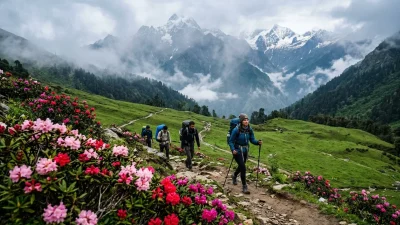
As the winter snows begin their slow retreat from the Garhwal Himalayas and the first rhododendrons burst into flame-coloured bloom, Uttarakhand is witnessing an extraordinary surge in trekking bookings for the spring 2026 season. Two routes in particular — the Kedarkantha summit trek and the Brahmatal ridge traverse — have emerged as the most sought-after mountain experiences in India this year, with operators reporting waiting lists and sold-out departures across the March-to-May window. The phenomenon reflects a broader revolution in Indian adventure travel, as a new generation of fitness-conscious, experience-hungry travellers discovers the transformative power of Himalayan trekking.
Kedarkantha: India’s Favourite Winter-to-Spring Trek
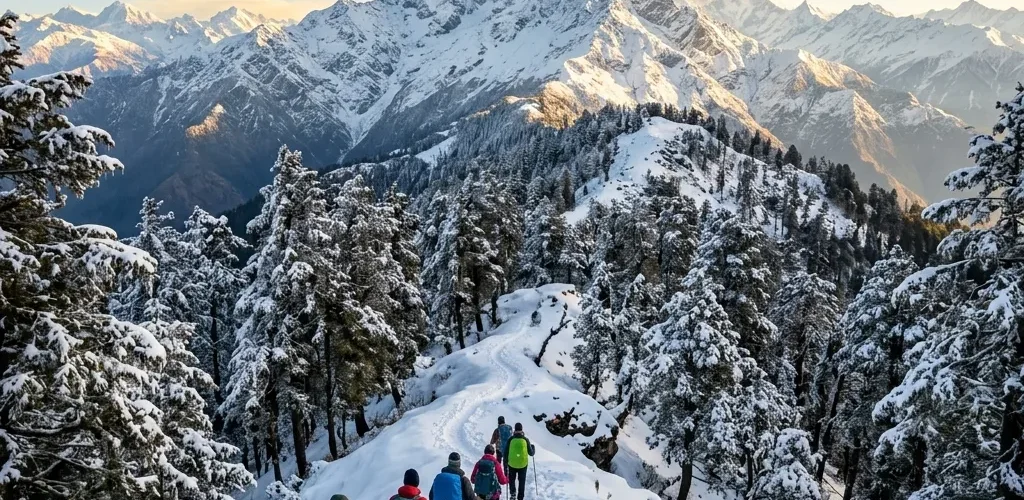
Kedarkantha, a 3,800-metre peak in the Govind Wildlife Sanctuary near the village of Sankri in Uttarkashi district, has established itself as India’s most popular winter trek — and in 2026, its spring season is proving equally magnetic. The six-day route, covering approximately 20 kilometres through dense oak and pine forests, snow-covered meadows, and alpine clearings, culminates in a sunrise summit that offers a 360-degree panorama of some of the most famous peaks in the Garhwal Himalayas, including Swargarohini, Bandarpoonch, Black Peak, and Kedarnath.
Major trekking operators report that spring 2026 departures for Kedarkantha are running at 85-90 per cent capacity as of early March, with the March 15-April 15 window — when snow cover at higher altitudes combines with increasingly pleasant daytime temperatures — being the most competitive booking period. The trek’s appeal lies in its accessibility: classified as easy-to-moderate, it is suitable for first-time trekkers with reasonable fitness, yet offers sufficiently dramatic scenery and a genuine summit experience to satisfy more seasoned mountain enthusiasts.
Brahmatal: The Panoramic Ridge Walk
Brahmatal, a 3,734-metre ridge in the Chamoli district, is the other star of Uttarakhand’s 2026 spring trekking calendar. The six-day, 24-kilometre route is renowned for its consistently spectacular views of the Greater Himalayan peaks — Mount Trishul, Mount Nanda Ghunti, Chaukhamba, Neelkanth, and the Hathi Ghoda massif are all visible from the trail — as well as its enchanting passage through frozen alpine lakes, rhododendron forests, and vast snowfields that glow pink and gold under the spring sun.
Brahmatal has historically been positioned as a winter trek, with the December-February period offering fully snow-covered conditions. However, 2026 has seen a significant expansion of the season into March and April, driven by operators who have recognised that the transitional period — when snow begins to melt, waterfalls reappear, and the forests transition from white to green — offers a uniquely beautiful experience. Booking data from leading operators indicates a 40 per cent year-on-year increase in Brahmatal registrations for the March-April window, with particularly strong demand from Bengaluru, Pune, and Hyderabad-based trekkers.
What Is Driving the Trek Boom?
The surging popularity of Kedarkantha and Brahmatal is part of a larger transformation in Indian travel preferences. Industry analysts point to several converging factors. First, the fitness and wellness movement that has swept urban India over the past decade has created a large pool of physically active young professionals for whom a Himalayan trek is the natural progression from marathon running, cycling, and gym-based training. Second, social media — particularly Instagram and YouTube — has dramatically increased the visibility of Indian trekking destinations, with Kedarkantha’s snow-capped summit and Brahmatal’s frozen lake becoming viral visual icons.
Third, the professionalisation of the Indian trekking industry has lowered barriers to entry. Operators such as Indiahikes, Trek the Himalayas, and YHAI offer all-inclusive packages — covering transport from base towns, camping equipment, meals, guide services, and safety protocols — that allow first-time trekkers to attempt high-altitude routes without prior mountaineering experience. Package costs typically range from Rs 8,000 to Rs 15,000 per person for a six-day trek, making it remarkably affordable compared to international trekking destinations.
Safety and Sustainability on the Trail
The growth in trekking numbers has brought safety and environmental sustainability into sharper focus. The Uttarakhand Forest Department, which administers the Govind Wildlife Sanctuary containing the Kedarkantha trail, has implemented new regulations for 2026 including mandatory registration of all trekking groups, a cap of 100 trekkers per day on the Kedarkantha summit trail, and a requirement for all operators to carry out all waste — including biodegradable waste that was previously buried at campsites.
Leading operators have gone further, adopting “green trail” policies that include the use of portable toilet systems, solar-powered charging stations at base camps, and community-sourced meals that reduce reliance on packaged food. Indiahikes, which pioneered the “Green Trails” initiative, reports collecting over 40 tonnes of non-biodegradable waste from Himalayan trails in the 2025-26 season — a sobering statistic that underscores both the scale of the challenge and the industry’s commitment to addressing it.
The Local Economy: From Farming to Hosting
The trekking boom is transforming the economies of villages along both routes. Sankri, the base camp for Kedarkantha, has evolved from a remote agricultural settlement to a thriving trekking hub, with over 50 homestays, several equipment rental shops, and a growing cohort of certified local guides. The village’s annual tourism income has increased five-fold over the past five years, providing an alternative livelihood that has helped slow the outmigration of young residents to cities.
Similarly, Lohajung — the starting point for Brahmatal — has seen a proliferation of guesthouses, camping grounds, and local eateries catering to trekkers. The Chamoli district administration has launched a Rural Tourism Enterprise programme that provides micro-loans and training to village residents seeking to establish tourism-related businesses, creating a sustainable economic model that links adventure travel with rural development. This integration of tourism and community development mirrors broader national trends, including the emphasis on sustainable economic transformation highlighted at major Indian policy forums in 2026.
Planning Your Spring 2026 Trek
For those considering a Kedarkantha or Brahmatal trek in spring 2026, early booking is essential given the current demand. Both treks depart from the town of Dehradun, which is well connected by rail and air to Delhi, Mumbai, and other major cities. From Dehradun, shared taxis and operator-arranged transport reach Sankri (approximately 9 hours) and Lohajung (approximately 10 hours) via scenic mountain roads.
Physical preparation should begin at least six to eight weeks before the trek, with a focus on cardiovascular fitness, leg strength, and stamina. Operators typically provide detailed fitness guidelines and preparatory workout plans upon booking. Essential personal gear includes layered clothing for temperatures ranging from -10°C at summit camps to +15°C during daytime trail walking, waterproof hiking boots, a quality daypack, and sun protection. Those planning a broader mountain holiday might consider combining an Uttarakhand trek with Ladakh’s newly opened trekking corridors for a multi-week Himalayan adventure spanning contrasting landscapes and cultures.
The Mountains Are Calling — and India Is Answering
The extraordinary demand for Kedarkantha and Brahmatal in spring 2026 is more than a commercial trend — it is a cultural moment. For a nation that has historically oriented its leisure travel towards pilgrimage, beach holidays, and family gatherings, the embrace of Himalayan trekking represents a profound expansion of what it means to travel. In the forests and snowfields of Uttarakhand, thousands of Indians are discovering that the most rewarding journeys are often the most demanding, that the finest views are earned through effort, and that the mountains have stories to tell that no five-star resort can whisper. As India’s cultural landscape evolves with fresh creative energy in 2026, its adventure landscape is evolving with equal vigour — one summit at a time.