Oil tankers are moving through the Strait of Hormuz again — but the ceasefire is on a knife-edge

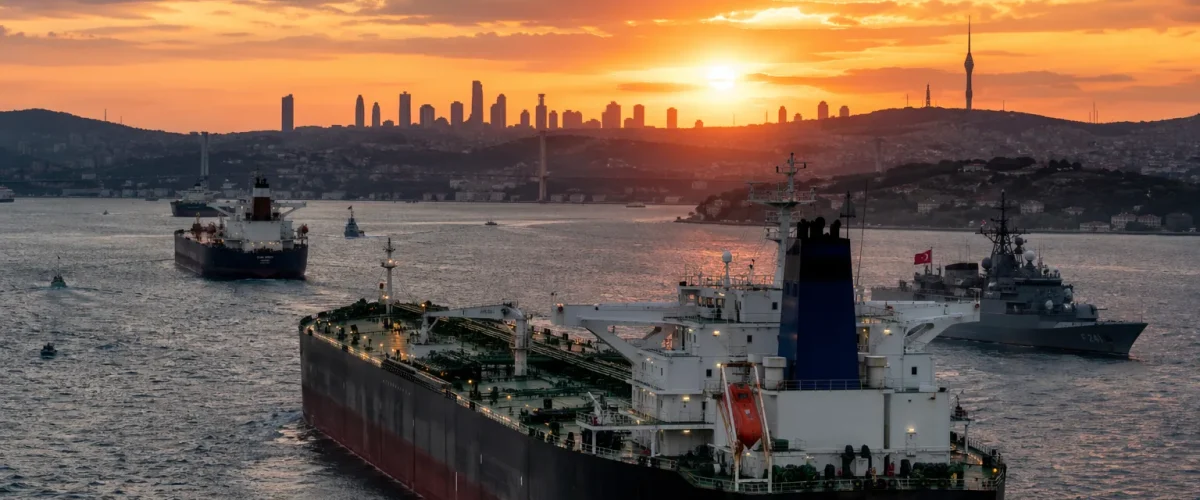
On Sunday, Iran’s military declared the Strait of Hormuz closed. On Monday, Iran’s own foreign ministry said shipping was operating normally. On Tuesday, US Vice President JD Vance stood in front of cameras in Switzerland and announced that 16 million barrels of oil had moved through the strait the previous day — a single-day record, he said, surpassing even pre-war volumes.
All three statements were, in their own way, accurate. That is the condition the world’s most important oil shipping lane currently exists in: physically open, diplomatically contested, and commercially precarious.
The Strait of Hormuz connects the Persian Gulf to the Gulf of Oman. At its narrowest point it is just 29 nautical miles wide, with two-mile channels for inbound and outbound traffic. Before 28 February 2026, it carried approximately 20 million barrels of oil per day — roughly 25% of the world’s entire seaborne oil trade — and around 20% of global liquefied natural gas. Every barrel exported by Iran, Iraq, Kuwait, Qatar, Bahrain, and most of the UAE’s production moved through it. China relied on the strait for roughly 40% of its crude imports. Japan sent 70% of its Middle Eastern crude through Hormuz.
The US and Israel launched coordinated strikes on Iran on 28 February, killing Supreme Leader Ali Khamenei. Within days, Iran’s Revolutionary Guard Corps declared the strait closed, boarded and attacked commercial vessels, and began laying sea mines. Shipping companies — Maersk, MSC, CMA CGM, Hapag-Lloyd — suspended transits immediately. Over 150 tankers anchored outside the strait rather than risk attack. Tanker traffic dropped by roughly 70% almost immediately, and within weeks had fallen to near zero for commercial operators. By June, according to the World Trade Organization’s shipping tracker, crude oil flows through Hormuz were down 95% from pre-war levels, LNG down 99%.
The broader consequences spread quickly. Asian economies that depend on Gulf oil faced shortages. Europe’s LNG supply — around 12-14% of which flows from Qatar through the strait — was disrupted. Goldman Sachs reduced its Brent crude price forecast to $80 per barrel for Q4 2026 after the peace deal was announced, down from $90, anticipating a gradual supply recovery. Roughly 54 supertankers, each carrying an average of more than 1.5 million barrels, had been sitting stranded inside the Persian Gulf waiting for the strait to reopen.
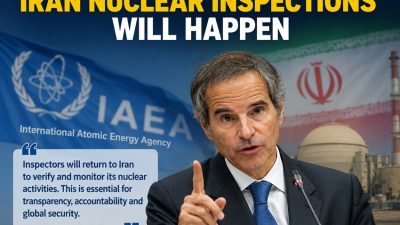
The memorandum of understanding signed by Trump and Iranian President Masoud Pezeshkian in Islamabad on 17 June was supposed to fix this. The 14-point ceasefire framework commits both sides to reopening the strait toll-free for at least 60 days, lifting the US naval blockade of Iranian ports, and returning International Atomic Energy Agency inspectors to Iranian nuclear sites. Three Saudi supertankers successfully transited the strait on 19 June, reactivating their tracking systems in the Gulf of Oman after more than two months running dark. Trade intelligence firm Kpler recorded at least 20 tanker transits on the same day — the highest figure since early June.
But the framework is already under strain. Iran’s military declared the strait closed again on 20 June, citing continued Israeli strikes on Hezbollah in southern Lebanon as a violation of the ceasefire agreement. Iran’s foreign ministry contradicted that statement within hours. US Central Command confirmed that commercial traffic continued moving regardless. Vance told Fox News: “The straits really are open — we are not seeing any evidence that the Iranians are still closing down the Strait of Hormuz.” A separate analysis from maritime specialists Lloyd’s List found that commercial traffic did continue over the weekend, defying Iran’s military declarations.
The technical talks currently under way in Bürgenstock, Switzerland — between Vance and Jared Kushner for the US and Mohammad Bagher Ghalibaf and Abbas Araghchi for Iran — are dealing with precisely this gap between rhetoric and reality. This week the two delegations agreed to set up a dedicated telephone hotline specifically to “prevent and resolve misunderstandings” about the waterway’s status. The International Maritime Organization confirmed the deal has cleared the way to evacuate more than 11,000 stranded seafarers from the Persian Gulf.
What “normal” actually looks like from here remains unclear. Before the war, around 90 to 110 vessels transited the strait daily in both directions. War risk insurance premiums remain sharply elevated. Many shipping operators are waiting for others to prove safe passage before committing their own vessels. The UAE’s state oil company has estimated that full flows through the strait will not return until 2027 even in an optimistic scenario. Goldman Sachs warned that a return to normal throughput could take longer still if insurance premiums stay high, naval checks are slow, or operators remain cautious.
The MoU does not resolve the underlying disputes: Iran’s nuclear enrichment programme, its ballistic missile arsenal, and its network of regional militias including Hezbollah. Iran’s president stated publicly this week that the country “will never back down from the right to enrich uranium.” Whether the 60-day ceasefire window produces a durable framework on those questions — or collapses under the weight of unresolved Lebanon fighting — will determine whether the strait’s tentative reopening becomes permanent, or the start of another cycle.

- Indian Army Gets New Chief as General Dwivedi Hands Over Command Amid Push for Indigenous Defence Tech - July 1, 2026
- Ayodhya Ram Temple Donation Scandal Deepens as Trustees Resign and SIT Arrests Eight - June 29, 2026
- Bengal Seven Weeks On: Modi’s Historic Win and the Questions That Won’t Go Away - June 28, 2026