IAEA Chief Insists Iran Nuclear Inspections Will Happen — Tehran Disagrees

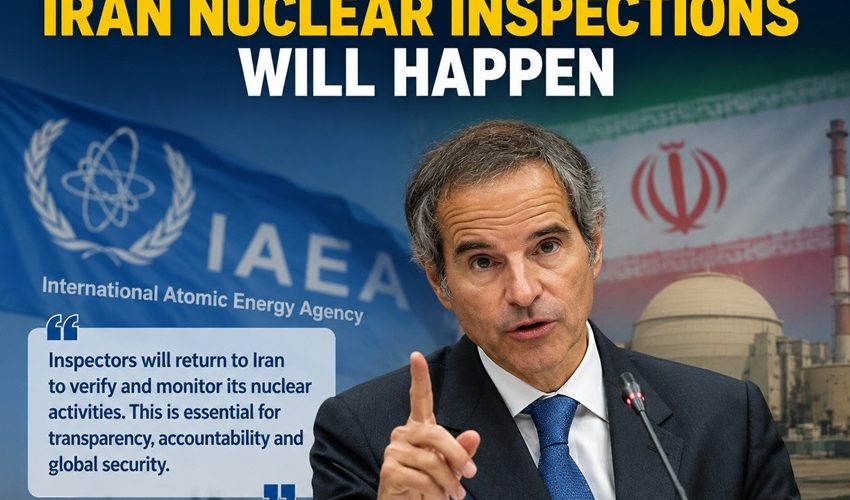
The head of the United Nations’ nuclear watchdog said Wednesday that inspectors will gain access to Iran’s uranium enrichment sites — a commitment the US-Iran memorandum of understanding makes explicit — but an Iranian diplomat immediately pushed back, insisting any such visits are contingent on a final peace agreement being reached first.
The exchange marked the latest in a series of public contradictions between Washington and Tehran over what last week’s framework deal actually requires, and it underscored the fragility of a diplomatic process that has drawn significant international attention since the US-Iran ceasefire was announced in April.
What Grossi Said
International Atomic Energy Agency Director General Rafael Grossi made the remarks at a press conference at Japan’s Fukushima Daiichi nuclear power plant on Wednesday. Citing the text of the memorandum of understanding signed by both the US and Iranian presidents, Grossi said the document states explicitly that nuclear activities “will be supervised by the IAEA — in all letters.” He added that access dates and locations were being worked out with Iranian authorities, and that some flexibility on timing was acceptable. “Whether this happens the day after tomorrow or in one week or in 10 days, it’s important, but not essential,” he said. “This is going to happen.”
Iran’s Deputy Foreign Minister Kazem Gharibabadi rejected that reading directly after Grossi spoke, posting on X that inspections “will be reviewed and decided only within the framework of a final agreement and as a result of practical action by the other side to end all sanctions.” He also noted that Iranian officials declined to meet with Grossi during the recent Switzerland talks.
Why Inspections Are So Contentious
Since Israel launched a 12-day military campaign against Iran in June 2025, the IAEA has been blocked from accessing Iran’s uranium enrichment sites. Those facilities are believed to hold enough highly enriched uranium to potentially construct as many as 10 nuclear weapons, should Iran choose to pursue them — an assertion Tehran disputes, maintaining its programme is entirely peaceful. Iran remains the only country in the world to have enriched uranium to 60% purity without a declared weapons programme. Weapons-grade uranium requires enrichment to 90% or above, though nuclear devices can theoretically be assembled with material enriched to 20% or more.
The IAEA has noted unusual vehicle movement in satellite imagery around an underground tunnel complex at Isfahan, where uranium enriched to 20% and 60% is believed to be stored, and has repeatedly called for urgent access. Without verification, non-proliferation experts warn that Iran’s stockpile could be relocated to undeclared sites.
Grossi had previously warned that IAEA involvement is non-negotiable in any meaningful agreement. “You will not have an agreement, you will have an illusion of an agreement,” he said at an April press conference in Seoul.
Where Talks Stand
The memorandum of understanding signed 18 June initiated a 60-day window for follow-on negotiations covering Iran’s nuclear programme, sanctions relief, and the framework for Strait of Hormuz navigation. The deal requires Iran to “downblend” its stockpile of highly enriched uranium to lower purity levels. US Secretary of State Marco Rubio confirmed Wednesday, during a stop in Kuwait, that he expects technical talks to resume in Switzerland on 29 or 30 June.
The ceasefire has been under strain, however. Fighting between Israel and Iranian-backed Hezbollah in southern Lebanon has continued, Iran has temporarily closed the Strait of Hormuz again over the ongoing Lebanese conflict, and Iran’s chief negotiator publicly described the MOU as “a declaration of America’s defeat.” The Senate in Washington also voted on Wednesday to reject a measure that would have restricted President Trump’s war powers regarding Iran, giving the administration a freer hand in any resumption of hostilities should talks collapse.

- Indian Army Gets New Chief as General Dwivedi Hands Over Command Amid Push for Indigenous Defence Tech - July 1, 2026
- Ayodhya Ram Temple Donation Scandal Deepens as Trustees Resign and SIT Arrests Eight - June 29, 2026
- Bengal Seven Weeks On: Modi’s Historic Win and the Questions That Won’t Go Away - June 28, 2026