Southwest Monsoon on Track to Cover All of India by Mid-July, But a Below-Normal Season Looms

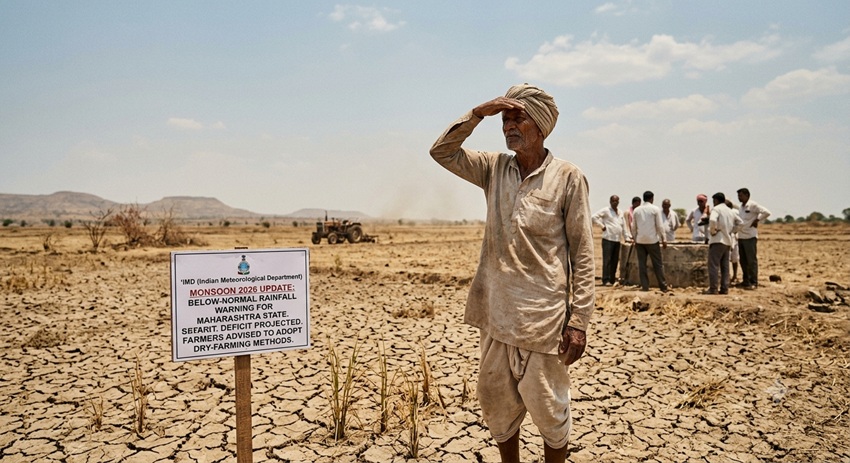
The IMD’s extended forecast warns of rainfall deficits across large parts of the country — with consequences for agriculture, hydropower, and water security.
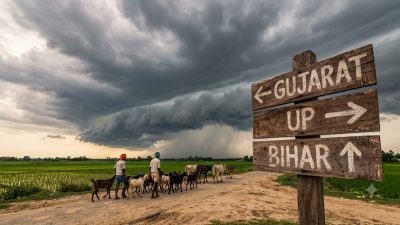
The southwest monsoon is advancing, but the news it brings with it is mixed. As of 29 June 2026, the India Meteorological Department (IMD) has confirmed that favourable conditions are in place for the monsoon to push further into Gujarat, Madhya Pradesh, the remaining parts of Chhattisgarh, Jharkhand and Bihar, and some parts of Uttar Pradesh and Uttarakhand over the next three to four days. By mid-July, it is widely expected to cover the entire country.
That is the good news. The rest of the story is more complicated — and for the millions of Indian farmers who depend on the four-month June-to-September rainy season, considerably more worrying.
A Below-Normal Season
The IMD’s updated long-range forecast, issued in late May 2026, indicates that this year’s seasonal rainfall is most likely to be below normal — estimated at between 90 and 95 per cent of the Long Period Average (LPA). While that may sound like a modest shortfall, the geographic distribution matters as much as the headline number: below-normal rainfall is projected across most parts of the country, with only Northwest and Northeast India, the eastern fringes of peninsular India, and isolated pockets of east-central India expected to receive normal to above-normal precipitation.
The monsoon core zone — the agricultural heartland encompassing the rain-fed farmlands of central and peninsular India — falls squarely within the at-risk area for deficits. Crops like kharif rice, soybean, groundnut, and pulses are planted and nurtured entirely through monsoon rainfall, making the coming weeks critical for sowing decisions across millions of small and marginal farms.
The Climate Signal Behind It
The IMD has flagged the potential development of El Niño conditions during the southwest monsoon season as a key risk factor. El Niño, the warming of sea surface temperatures in the central and eastern Pacific Ocean, historically suppresses Indian monsoon rainfall by disrupting the large-scale atmospheric circulation that draws moisture inland from the Indian Ocean. The IMD’s Monsoon Mission Climate Forecast System is currently tracking weak La Niña-like conditions in the Pacific — but models suggest El Niño-like conditions could develop before the season ends.
Adding to the uncertainty is the Indian Ocean Dipole (IOD), a separate but influential climate pattern. The IMD has reported neutral IOD conditions at present, with forecasts suggesting a shift towards positive IOD towards the tail end of the monsoon season — a development that, if it materialises, could partially offset the El Niño suppression and provide some rainfall boost to southern and eastern India in September.
What It Means for Farmers, Cities, and Power
The consequences of a below-normal monsoon ripple well beyond rainfall records. Reservoir levels — which feed both irrigation networks and hydroelectric plants — are determined over the course of the season, and below-normal inflows risk carrying deficits into the dry season of 2027. Several states including Maharashtra, Madhya Pradesh, and Rajasthan have already activated contingency protocols for drought-prone districts, directing agricultural extension workers to promote shorter-duration, drought-tolerant crop varieties as an insurance measure.
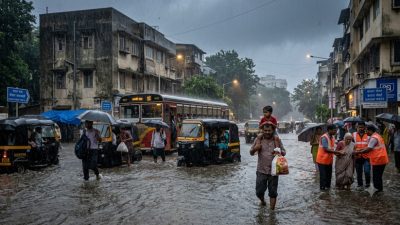
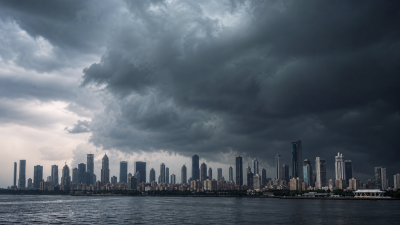
For urban India, the concern is somewhat different. Heat wave conditions persisted across parts of central and east India through late June, with the Vidarbha region recording temperatures 3 to 5 degrees above normal on multiple days. The IMD’s week-two forecast (2 to 8 July 2026) anticipates widespread rainfall with heavy to very heavy falls along the western coast — Gujarat, Konkan, Goa, coastal Karnataka, and Kerala — as well as normal to above-normal rainfall across the country overall in the short term.
That near-term forecast is encouraging. But meteorologists are quick to caution that a good July does not guarantee a good season, and that the true test of the 2026 monsoon’s character will arrive in August, historically the month most sensitive to El Niño disruption.
The IMD’s Recommendation
The department has urged the agricultural sector to avoid transplanting rice during episodes of heavy rainfall and to use its early warning advisories for sowing decisions. Given the projected seasonal deficit, water resource authorities have been advised to prioritise conservation and downstream planning well ahead of the withdrawal of the monsoon, typically expected in October.