Indian Passport Gets Stronger in 2026: New Visa-Free Destinations and Travel Trends for Indian Tourists

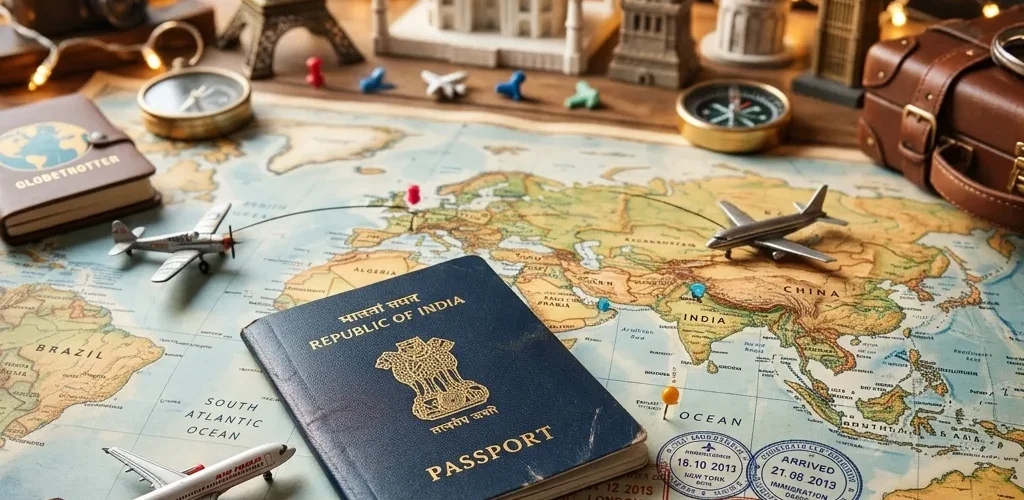
The Indian passport, once considered one of the more restrictive travel documents in Asia, is experiencing a quiet but significant transformation in 2026. A series of bilateral agreements, e-visa expansions, and diplomatic negotiations have expanded the number of destinations accessible to Indian citizens without the burden of traditional visa applications. For India’s rapidly growing outbound travel market — which crossed 27 million departures in 2025 and is projected to reach 32 million in 2026 — these developments are reshaping how the nation’s travellers plan, book, and experience international journeys.
New Visa-Free and Visa-on-Arrival Destinations in 2026
As of March 2026, Indian passport holders enjoy visa-free or visa-on-arrival access to approximately 62 countries and territories — a notable improvement from 57 destinations at the start of 2025. Key additions in the past twelve months include Malaysia, which reintroduced its visa-free transit facility for Indian nationals in late 2025 and expanded it to a full 30-day visa exemption in January 2026; Kenya, which abolished visa requirements for all nationalities as part of its open-door tourism policy; and Sri Lanka, which extended its free Electronic Travel Authorisation programme for Indian citizens through December 2026.
Thailand, already the most popular international destination for Indian travellers, has continued its visa exemption programme that allows stays of up to 60 days without a visa. The Maldives, Mauritius, Bhutan, Nepal, and several Caribbean and Pacific island nations remain on the visa-free list, providing Indian travellers with a diverse range of beach, cultural, and adventure options without visa paperwork.
The E-Visa Revolution: Speed Over Bureaucracy
Beyond visa-free access, the expansion of e-visa programmes has transformed the travel planning experience for Indian citizens. In 2026, over 80 countries offer electronic visa facilities to Indian passport holders, with processing times typically ranging from 24 to 72 hours. Notable e-visa additions include Saudi Arabia, which launched a streamlined tourism e-visa in late 2025 as part of its Vision 2030 diversification strategy; Azerbaijan, which offers a fast-track three-hour e-visa for Indian nationals; and Georgia, which has emerged as a surprise hit destination thanks to its affordable e-visa and direct flights from Delhi.
Japan, long considered one of the most challenging visa processes for Indian applicants, introduced a simplified five-year multiple-entry e-visa for Indian professionals and frequent travellers in February 2026, significantly reducing processing times and documentation requirements. The United Kingdom has similarly streamlined its Electronic Travel Authorisation system, making short-term visa applications more efficient for Indian business and leisure travellers.
The Henley Passport Index: India’s Steady Climb
India’s improving passport strength is reflected in its performance on the Henley Passport Index, the global benchmark for travel freedom. In early 2026, India ranks 82nd on the index — an improvement of three positions from the previous year. While this still places India in the lower half of the global ranking, the trajectory is positive, and diplomatic observers suggest that ongoing negotiations with the European Union on a mobility partnership agreement could yield significant visa liberalisation for Indian citizens within the next two to three years.
The government’s diplomatic push for improved visa access is closely linked to India’s growing economic and geopolitical influence. As the world’s fifth-largest economy and most populous nation, India’s outbound tourism market represents an enormous economic opportunity for destination countries. This leverage has been instrumental in securing visa concessions, particularly from nations in Southeast Asia, Africa, and the Middle East that are actively courting Indian tourist spending. This strategic approach to international engagement parallels India’s broader ambitions for global influence in technology and diplomacy.
Travel Trends Among Indian Outbound Tourists in 2026
The expanding access landscape is intersecting with evolving travel preferences among Indian tourists. Data from leading outbound travel aggregators reveals several notable trends for 2026. Short-haul Southeast Asian destinations — particularly Thailand, Vietnam, Bali, and Malaysia — continue to dominate, accounting for approximately 45 per cent of Indian outbound leisure travel. These destinations benefit from proximity, affordability, and the visa-free or e-visa access that reduces planning friction.
However, the fastest-growing segments are long-haul experiential journeys and off-the-beaten-path destinations. Central Asian nations like Kazakhstan, Uzbekistan, and Georgia have seen Indian visitor numbers surge by over 60 per cent year-on-year, driven by affordable pricing, cultural curiosity, and excellent e-visa facilities. Japan, buoyed by its new simplified visa regime, has emerged as the aspirational destination of choice for Indian millennials and Gen Z travellers, with bookings increasing by 35 per cent in the first quarter of 2026.
Budget Travel: The Democratisation of International Holidays
Perhaps the most significant development in Indian outbound travel is its democratisation. International holidays, once the exclusive preserve of upper-income segments, are increasingly accessible to India’s expanding middle class. Budget airlines — including IndiGo, AirAsia India, and Scoot — offer competitive fares on Southeast Asian routes, with return tickets to Bangkok, Kuala Lumpur, and Bali frequently available below Rs 15,000 during promotional periods.
The rise of hostel culture, facilitated by platforms such as Hostelworld and Zostel International, has further reduced accommodation costs, making week-long international trips viable on budgets that would previously have funded only domestic holidays. Travel fintech innovations — including no-cost EMI options on flight and hotel bookings and multi-currency prepaid travel cards with zero markup on exchange rates — have removed financial barriers that historically deterred first-time international travellers from middle-tier Indian cities.
Safety, Insurance, and Practical Considerations
With the expansion of accessible destinations, travel safety and insurance have become increasingly important considerations for Indian travellers. The Ministry of External Affairs has enhanced its Madad portal — the official grievance and assistance platform for Indians abroad — with real-time travel advisories, emergency contact information for Indian embassies and consulates, and a one-touch SOS feature for travellers in distress. Travel insurance penetration among Indian outbound tourists has risen from approximately 20 per cent in 2023 to an estimated 45 per cent in 2026, driven by aggregator platforms that bundle insurance with flight bookings.
For those exploring international options in 2026, combining overseas trips with India’s rich domestic offerings can create compelling itineraries. Travellers returning from Southeast Asian adventures might extend their journey through Kerala’s world-class backwater experiences or explore Rajasthan’s newly expanded heritage circuit for a contrast between international cosmopolitanism and India’s deep cultural roots.
The Passport as a Symbol of National Ambition
The strengthening of the Indian passport in 2026 is more than a travel convenience — it is a symbol of India’s growing stature on the world stage. Each new visa-free agreement, each streamlined e-visa programme, reflects the nation’s increasing diplomatic weight, economic significance, and cultural soft power. For the millions of Indians who will cross international borders in 2026, the passport in their hands carries not just their identity but the story of a nation in confident, outward-looking ascent — ready to explore the world, and increasingly welcomed by it.