The Most Anticipated Books of 2026: Global Literary Stars and Indian Debuts to Watch


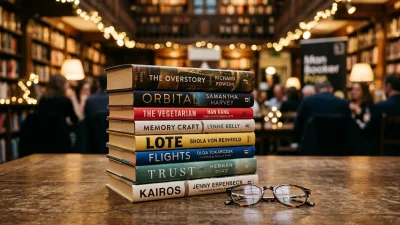
If 2025 was a year that rewarded attentive reading and passionate literary argument, 2026 is shaping up as a year of writers at the height of their powers — returning with books that feel both timely and unruly. From Mieko Kawakami’s gritty Tokyo narrative to Han Kang’s luminous meditation on connection, from Mohammed Hanif’s satirical brilliance to new Indian voices that demand attention, the global literary calendar offers a wealth of titles that promise friction between languages, nations, bodies, memory, and ambition. For Indian readers navigating this abundance, the challenge is one of joyful selection rather than scarcity.
Sister in Yellow by Mieko Kawakami
Mieko Kawakami, whose Breasts and Eggs established her as one of contemporary fiction’s most compelling voices, returns in March 2026 with Sister in Yellow (translated by Laurel Taylor and Hitomi Yoshio). Set in 1990s Tokyo, the novel follows 15-year-old Hana, who starts a bar with an older woman named Kimiko and discovers how fragile hope can be when survival is the only skill you possess. Kawakami has made a career of turning interiority into something volatile, and early reviews suggest this novel is intimate, unsettling, and quietly radical — a story of friendship, ambition, and betrayal that confirms her commanding voice in contemporary fiction.
For Indian readers, Kawakami’s work resonates through its exploration of precarious femininity and economic vulnerability — themes that transcend cultural specificity. The novel’s March release positions it perfectly for early-year reading groups and literary conversations.
Light and Thread by Han Kang
Han Kang, whose The Vegetarian won the International Booker Prize and whose subsequent works have cemented her reputation as one of literature’s most extraordinary voices, presents Light and Thread in 2026. A departure from pure fiction, this hybrid collection of essays, diary entries, poems, and images is Kang’s meditation on connection — between people, language, and the act of making art itself. Her fiction has always operated at the intersection of violence and grace; this collection promises something more personal, spare, and luminous.
Rebel English Academy by Mohammed Hanif
No one skewers power, hypocrisy, and linguistic colonialism quite like Mohammed Hanif, whose A Case of Exploding Mangoes remains one of the finest satirical novels in English. Rebel English Academy, released in February 2026, is set against the tumult of late-1970s Pakistan after the hanging of a political leader. When a woman on the run seeks refuge at an English tuition centre, her life intertwines with those of a disgraced intelligence officer and others in a portrait of dissent, language, power, and survival.
For Indian readers, Hanif’s work illuminates the shared cultural and political terrain of the subcontinent with a sardonic wit that few authors in any language can match. The novel’s exploration of how language — specifically the English language — functions as both an instrument of power and a tool of resistance has particular relevance in India, where similar debates about linguistic hierarchy continue to shape educational and cultural policy.
Indian Debuts and Emerging Voices
Beyond the established names, 2026’s most exciting literary energy comes from debuts and emerging voices. Indian publishing has become increasingly adept at identifying and nurturing new talent, with several first novels generating advance buzz among critics and booksellers. The themes animating these debuts — climate anxiety, digital alienation, caste consciousness, queer identity, and the tension between rural origins and urban aspiration — reflect the concerns of a generation navigating rapid social transformation.
The short story form, energised by Heart Lamp’s Booker triumph, is experiencing a renaissance in Indian publishing. Several collections are scheduled for 2026 release, exploring everything from small-town India to diaspora experience, from mythological reimagination to speculative fiction. The form’s brevity and intensity make it particularly suited to the reading habits of younger audiences, while its literary prestige has been restored by the international recognition of Indian short fiction.
The Reading Culture Conversation
India’s reading culture in 2026 is more diverse, more accessible, and more contested than ever. The rise of audiobooks and podcast-format literary content has expanded the definition of “reading” to include listening, while BookTok and Bookstagram communities have created vibrant digital spaces for literary discourse that exist outside traditional media gatekeeping. These platforms have been particularly effective in amplifying diverse voices and challenging the establishment biases that have historically shaped Indian literary culture.
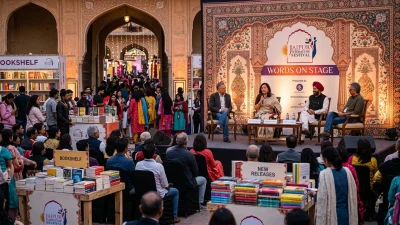
Literary festivals continue to proliferate, with the Jaipur Literature Festival, Mumbai LitFest, Kerala Literature Festival, and numerous regional events providing physical spaces for the conversations that digital platforms initiate. The festivals’ evolving formats — incorporating not just panel discussions but also performances, workshops, and immersive experiences — reflect a broader understanding of literature as a living cultural practice rather than an elite intellectual exercise.
As India’s art scene finds global recognition and the country’s cultural industries experience unprecedented growth, the literary sector occupies a distinctive position. It is at once the oldest and most intimate of cultural forms, requiring nothing more than language and imagination, and simultaneously one of the most dynamic, constantly adapting to new technologies, new audiences, and new ways of engaging with the written word. The books of 2026 testify to that vitality — and to the enduring human need for stories that make sense of an increasingly complex world.
With Indian fashion embracing comfort-first design, there has never been a more inviting moment to curl up with one of these extraordinary books and lose oneself in the world of words.