Holi 2026: India Celebrates the Festival of Colours with Eco-Friendly Revelry and Record Tourism

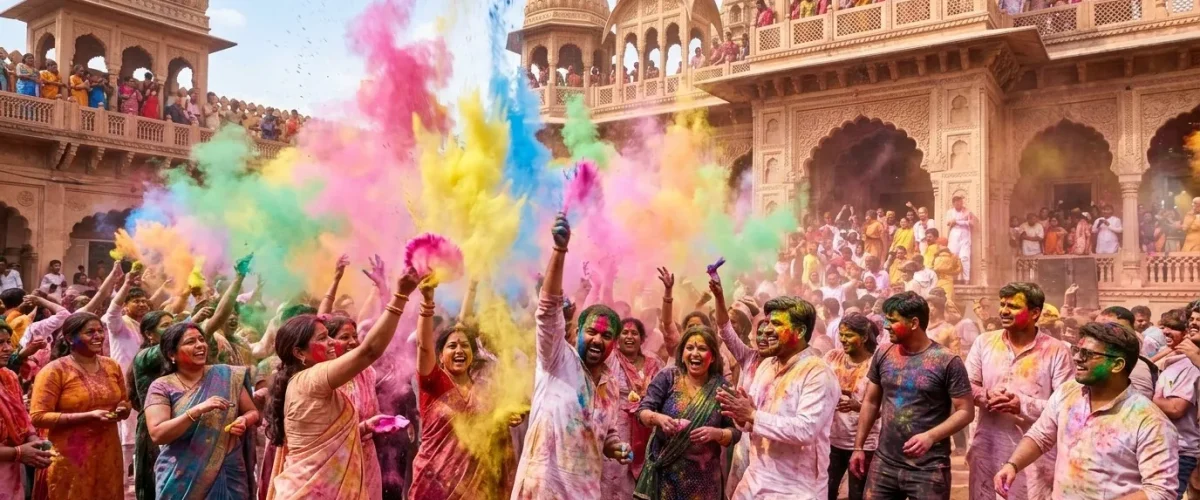
Holi 2026, celebrated across India on 4 March following Holika Dahan on the evening of 3 March, has once again demonstrated why the Festival of Colours remains one of the world’s most visually spectacular and emotionally resonant celebrations. This year’s festivities, however, carried a distinctly contemporary character: a nationwide embrace of eco-friendly colours, a significant surge in domestic and international festival tourism, and a heightened awareness of the celebration’s deeper cultural and spiritual significance. From the ancient ghats of Mathura and Vrindavan to the cosmopolitan rooftop parties of Mumbai and Delhi, Holi 2026 affirmed that tradition and modernity can coexist in vibrant harmony.
The Green Holi Movement Gains Momentum
The most significant shift in Holi celebrations over the past five years has been the widespread adoption of organic, plant-based colours. In 2026, this trend reached critical mass, with multiple state governments, municipal authorities, and civil society organisations launching campaigns promoting herbal gulaal and discouraging the use of synthetic colours containing heavy metals and industrial dyes. The movement, which began among urban environmentally conscious communities, has now permeated into semi-urban and rural areas, driven by awareness campaigns on social media and in schools.
Several Indian startups have capitalised on this shift, developing premium organic colour products derived from flowers, herbs, and food-grade ingredients. Companies like Gulaal by Nature, Holi Organics, and Rang De reported their highest sales figures ever for the 2026 season. The market for eco-friendly Holi colours, estimated at approximately ₹500 crore in 2026, has grown at a compound annual rate of 25 per cent over the past three years — a commercial success story that demonstrates the viability of sustainable consumer products in India.
Mathura-Vrindavan: The Epicentre of Celebration
As in every year, the most concentrated and culturally rich Holi celebrations took place in Mathura and Vrindavan, the twin cities in Uttar Pradesh associated with Lord Krishna’s childhood. The Lathmar Holi in Barsana and Nandgaon — where women playfully beat men with sticks in a centuries-old ritual — attracted record crowds this year, with local authorities estimating over five lakh visitors during the week-long festivities preceding the main celebration.
The Banke Bihari Temple in Vrindavan hosted its legendary celebrations with the temple’s characteristic exuberance: devotees drenched in colours singing bhajans while priests showered the congregation with flowers and coloured water from silver pichkaris. For many visitors, both domestic and international, the Vrindavan Holi experience represents the authentic heart of the festival — a communal expression of devotion, joy, and the eternal cycle of renewal that Holi symbolises.
Festival Tourism: A Growing Economic Force
Holi 2026 confirmed the festival’s emergence as a significant driver of domestic and international tourism. Hotel occupancy rates in Mathura, Vrindavan, Jaipur, and Udaipur reached near-total capacity during the festival week, while airlines reported a 35 per cent increase in bookings on routes serving these destinations compared to the same period in 2025. International tourist arrivals for Holi — particularly from Europe, North America, and East Asia — showed a notable uptick, with travellers seeking the immersive cultural experience that Holi offers.
Tour operators have responded by developing curated Holi experience packages that combine the festival celebration with broader cultural itineraries. A typical offering might include Holi celebrations in Jaipur’s City Palace, heritage walks through Rajasthan’s historic districts, and culinary experiences featuring the traditional Holi menu of gujiya, thandai, and malpua. As Rajasthan’s heritage tourism infrastructure expands, the synergy between festival tourism and cultural heritage tourism is creating new economic opportunities for local communities.
The Spiritual Significance
Amidst the colours and celebrations, Holi’s spiritual dimensions deserve acknowledgement. The festival marks the triumph of good over evil, commemorated through Holika Dahan — the ritualistic burning of bonfires on the eve of Holi, symbolising the destruction of the demoness Holika and the salvation of the devotee Prahlad. This narrative of faith’s triumph over tyranny carries perennial resonance, while the festival’s association with Krishna’s playful leela with Radha and the gopis of Vrindavan adds dimensions of divine love and cosmic play.
In 2026, the spiritual aspects of Holi received particular attention from religious leaders and cultural commentators who expressed concern that the festival’s deeper meanings were being overshadowed by its party-culture associations. Several ashrams and spiritual centres organised meditation and prayer sessions alongside the colour play, emphasising that Holi’s true significance lies in the dissolution of social barriers, the forgiveness of grievances, and the renewal of communal bonds — themes that are profoundly relevant in contemporary India.
Holi in the Digital Age
Social media transformed Holi 2026 into a global spectacle. Instagram and YouTube were flooded with content featuring slow-motion colour throws, drone footage of mass celebrations, and behind-the-scenes glimpses of preparation rituals. The hashtag #Holi2026 trended worldwide, accumulating over 2 billion impressions across platforms. For India’s soft power, this digital amplification is invaluable, presenting the country as a land of colour, community, and celebration to global audiences.
Bollywood played its customary role in amplifying the Holi spirit, with major film releases incorporating Holi-themed marketing and several celebrities posting vibrant celebration photos that garnered millions of engagements. The cultural symbiosis between Bollywood and Indian festivals remains one of the most effective mechanisms for sustaining traditional celebrations among younger, urban audiences who might otherwise view them as antiquated.
As the colours faded and the Vasanta Purnima moon rose over a nation celebrating the arrival of spring, Holi 2026 offered a familiar yet ever-renewed affirmation: that in a world of increasing complexity, the simple acts of throwing colour, sharing sweets, and embracing one another remain among the most powerful expressions of the human desire for connection, joy, and renewal.