India’s Millet Revolution: 10 Trending Recipes That Are Redefining Healthy Indian Cooking in 2026

From Ancient Grain to Modern Superfood
India’s millet revolution, which began gaining momentum after the United Nations declared 2023 the International Year of Millets at India’s urging, has entered a transformative new phase in 2026. No longer confined to rural diets or health food stores, millets have become the defining ingredient of India’s contemporary cooking movement. Social media platforms are awash with millet recipes — Instagram alone hosts over 15 million posts tagged with millet-related content — and recipe searches for ragi, bajra, jowar, and foxtail millet have grown by over 80 per cent year-on-year.
The shift is not merely about nutrition or nostalgia. It reflects a broader cultural reckoning with the consequences of India’s decades-long preference for rice and wheat, grains that require intensive irrigation and have contributed to depleting groundwater reserves across Punjab, Haryana, and parts of Uttar Pradesh. Millets, which require a fraction of the water and thrive in semi-arid conditions, offer a path toward a more sustainable food system — and Indian home cooks are discovering that sustainability need not come at the cost of flavour.
Ragi: The Southern Powerhouse Goes National
Ragi (finger millet) has long been a dietary staple in Karnataka, Tamil Nadu, and Andhra Pradesh, where it forms the base for traditional preparations such as ragi mudde (steamed balls), ragi dosa, and ragi malt. In 2026, ragi has broken free of its regional boundaries. Urban households in Delhi, Mumbai, and Kolkata are incorporating ragi flour into everything from breakfast pancakes to pizza bases, driven by its exceptional nutritional profile: high calcium content, slow-releasing carbohydrates, and a complete amino acid profile that few other grains can match.
The most viral ragi recipe of early 2026 is the “ragi cinnamon roll” — a fusion creation that replaces refined flour with ragi flour and adds a cardamom-infused cream cheese glaze. First posted by Bengaluru food creator Sneha Krishnan, the recipe has been recreated over 200,000 times on Instagram Reels and YouTube Shorts. Its success illustrates a key principle of the millet revolution: the recipes that gain traction are those that make millets exciting, not merely virtuous.
Bajra Khichdi: Comfort Food Reimagined
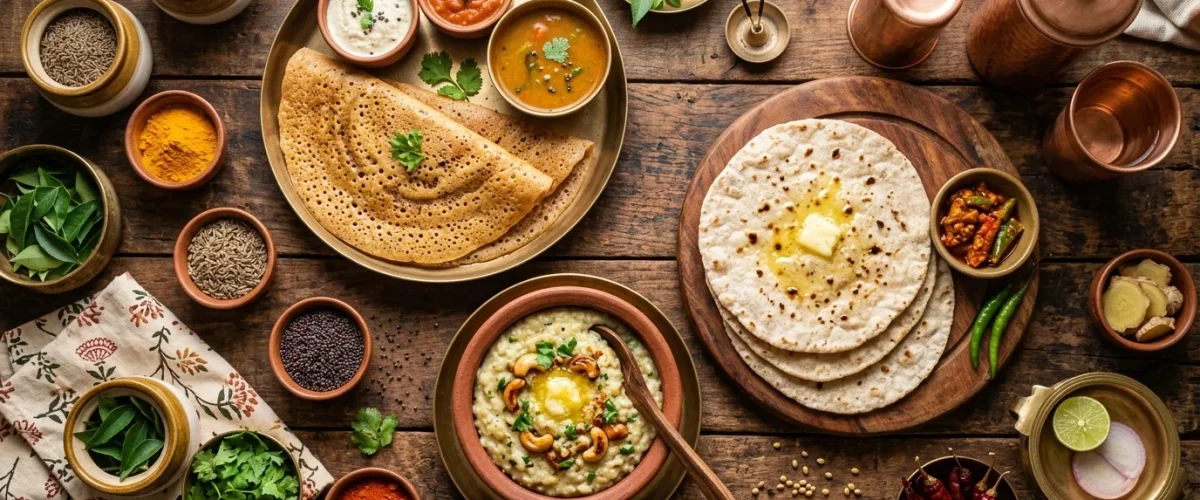
Bajra (pearl millet) khichdi has emerged as the quintessential millet comfort food. Traditional in Rajasthan and Gujarat, where bajra has been consumed for centuries, this one-pot dish combines bajra grains with moong dal, seasonal vegetables, and a tempered tadka of cumin, ghee, and dried red chillies. The dish is warming, filling, and remarkably nutritious — qualities that have made it a favourite of India’s growing wellness community.
Modern variations include a “masala bajra khichdi” that incorporates sambar powder and curry leaves for a South Indian twist, and a high-protein version that adds paneer cubes and sprouted lentils. The growing popularity of plant-based and flexitarian diets across India has made bajra khichdi especially appealing to consumers seeking whole-food protein sources that do not rely on meat or processed supplements.
Foxtail Millet Biryani: The Dish That Changed Perceptions
Perhaps no single recipe has done more to shift Indian attitudes toward millets than the foxtail millet biryani. Popularised by Hyderabad-based chef Chalapathi Rao, this dish replaces basmati rice with foxtail millet while retaining the aromatic spice layering, saffron, fried onions, and slow-cooking technique that define traditional Hyderabadi dum biryani.
The result is a biryani that is lighter, nuttier, and lower on the glycemic index than its rice-based counterpart — attributes that have resonated with health-conscious diners across India. Multiple restaurants in Hyderabad, Bengaluru, and Chennai now offer millet biryani as a permanent menu item, and packaged millet biryani kits have become bestsellers on quick commerce platforms such as Blinkit and Zepto.
Jowar Flatbreads: Daily Bread Gets a Millet Makeover
Jowar (sorghum) rotis are a traditional staple in Maharashtra, Karnataka, and parts of Madhya Pradesh. In 2026, jowar flatbreads have gained national popularity through innovative adaptations. The “jowar thepla” — a Gujarati-style flatbread incorporating jowar flour, fresh fenugreek leaves, and spices — has become a popular travel and lunch-box snack. Meanwhile, jowar pizza bases, pioneered by Mumbai cloud kitchen brand MilletBakes, are available for delivery across six Indian cities.
The appeal of jowar extends beyond nutrition. Jowar is naturally gluten-free, making it suitable for the growing number of Indians diagnosed with celiac disease or gluten sensitivity. The grain’s mild, slightly sweet flavour profile makes it one of the most versatile millets in the kitchen, adapting equally well to savoury and sweet preparations.
Little Millet Upma and Kodo Millet Pongal
The so-called “small millets” — little millet (samai), kodo millet (varagu), and barnyard millet (kuthiraivali) — are experiencing their own renaissance, particularly in South Indian breakfast recipes. Little millet upma, prepared identically to the traditional semolina version but with millet replacing rava, offers a lighter texture and superior nutritional value. Kodo millet pongal, flavoured with black pepper, cumin, and generous amounts of ghee, has become a staple at Bengaluru’s café culture scene.
These preparations are notable for their simplicity. They require no special equipment or techniques beyond those that Indian home cooks already possess. The barrier to adoption is not skill but awareness — and social media has comprehensively dismantled that barrier. The evolution of India’s street food scene toward premium ingredients has similarly embraced millets, with vendors in major cities now offering millet-based chaat, dosas, and snacks.
Beyond the Recipe: India’s Millet Economy
The culinary revival of millets has significant economic implications. India is the world’s largest producer of millets, accounting for approximately 40 per cent of global production. The government’s NITI Aayog has projected that the domestic millet market could grow from ₹12,000 crore in 2023 to ₹40,000 crore by 2028, driven by both household consumption and processed food manufacturing.
For the millions of small and marginal farmers who grow millets — predominantly in dryland regions of Rajasthan, Maharashtra, Karnataka, and Telangana — rising demand translates directly into improved livelihoods. The minimum support price for millets has been increased by 25 per cent over the past two years, and government procurement programmes now actively buy millet crops for distribution through the public distribution system.
The Future Is Multi-Grain
India’s millet revolution is not about replacing rice and wheat but about restoring diversity to the Indian plate. A century ago, Indian diets included dozens of grain varieties; the Green Revolution’s focus on high-yield rice and wheat varieties narrowed that diversity dramatically. The millet revival represents a course correction — one that is good for health, good for the environment, and, as these trending recipes demonstrate, genuinely good to eat.
The kitchen, it turns out, is where India’s most meaningful sustainability revolution is happening — one recipe at a time.

- Fentanyl Vaccine Breakthrough: Scripps Research Develops Shot That Blocks Deadly Overdoses Before They Reach the Brain - June 13, 2026
- Nipah Virus Returns to Kerala — First Case of 2026 Confirmed, State Declares High Alert - June 12, 2026
- Jill Biden Reveals She Wanted to Keep PM Modi’s 7.5-Carat Diamond Gift but Returned It After State Department Valued It at $20,000 - June 8, 2026