India’s Street Food Goes Premium: How Chaat Cafés and Michelin-Trained Vendors Are Reshaping the ₹50,000 Crore Market

The Great Upgrade of Indian Street Food
India’s street food market — estimated at over ₹50,000 crore annually and encompassing everything from Mumbai’s vada pav to Kolkata’s kathi rolls — is undergoing its most significant transformation in living memory. A new generation of entrepreneurs, many trained in professional culinary programmes and some with experience at Michelin-starred restaurants abroad, is reimagining India’s beloved street food through the lens of premium ingredients, modern food safety standards, and elevated presentation. The result is a dining category that occupies the space between traditional street stalls and formal restaurants — and Indian consumers are embracing it with enthusiasm.
The premiumisation of street food is not about gentrification or cultural appropriation. At its best, it honours the recipes, techniques, and flavour profiles that have made Indian street food one of the world’s great culinary traditions while addressing the hygiene concerns, inconsistency, and lack of access that have historically limited its audience. The chaat café — a clean, well-lit space serving precisely executed versions of familiar street food — has become the emblematic format of this movement.
The Chaat Café Revolution
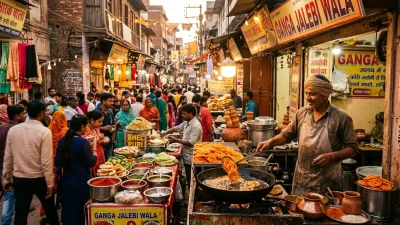
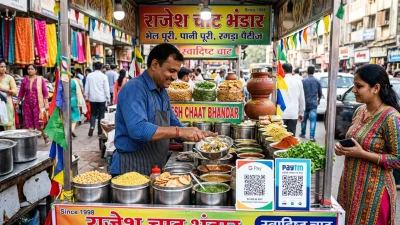
Chaat — the broad category of savoury snacks built around contrasts of sweet, sour, spicy, crunchy, and soft — is India’s most beloved street food genre. Pani puri, bhel puri, sev puri, dahi puri, papdi chaat, and aloo tikki are consumed daily by millions across the country. Traditionally, these dishes are prepared at roadside stalls where hygiene standards vary dramatically and pricing is measured in single-digit rupees.
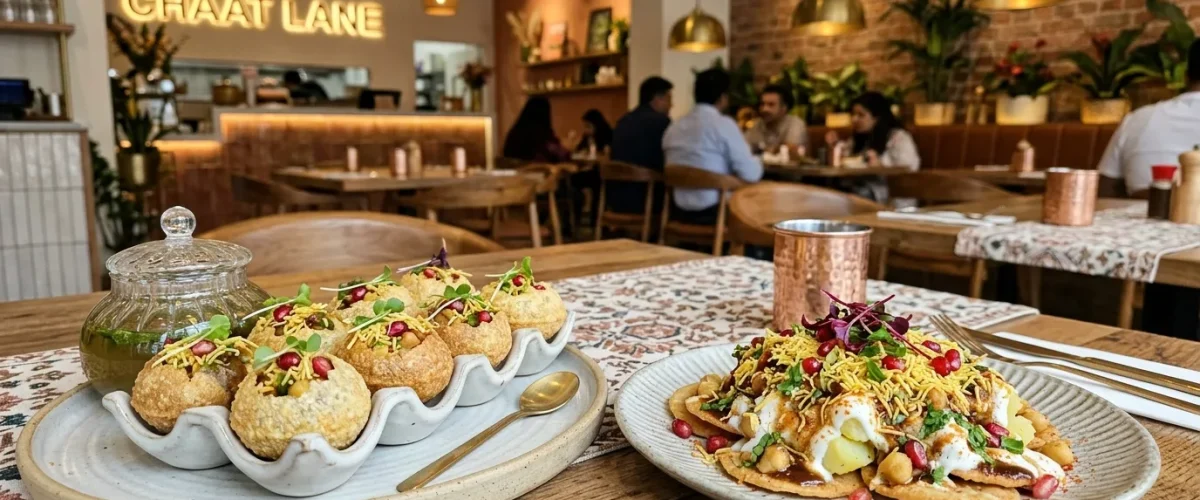
The chaat café reimagines this experience. Brands such as Chaayos Chaat (an extension of the popular tea chain), JEBI Chaat Company, and the Bengaluru-based Chaat Street have opened outlets that serve traditional chaat recipes in air-conditioned, Instagram-friendly environments with visible open kitchens, purified water for pani puri, and standardised portion sizes. Prices are higher than street stalls — ₹150 to ₹300 per plate compared to ₹20 to ₹50 — but remain accessible to India’s growing middle class.
The quality proposition is genuine. These establishments source sev and papdi from dedicated suppliers who use filtered oil and controlled frying temperatures, prepare chutneys with traceable ingredients, and train staff to assemble each plate with the precision that casual observers might not expect from a chaat counter. The best chaat cafés achieve something remarkable: they taste as good as the best street stalls while eliminating the Russian roulette of street food hygiene.
Michelin-Trained Vendors Return Home
A fascinating micro-trend within India’s premium street food movement involves Indian chefs who trained or worked abroad returning to India to operate elevated street food concepts. Ravi Bajaj, who spent three years in the kitchen at Gaggan Anand’s Bangkok restaurant before working at a two-star Michelin restaurant in London, now runs a 15-seat vada pav counter in Mumbai’s Dadar that serves four varieties of vada pav prepared with precision-temperature-controlled frying, house-made pav from a stone-ground flour blend, and chutneys fermented for three days before serving.
His vada pav costs ₹120 — roughly six times the price of a standard street vada pav — but consistently sells out by early afternoon. The premium is justified not by pretension but by measurable quality: the vada is crispier, the potato filling is seasoned more precisely, and the chutney has depth of flavour that instant versions cannot achieve. Word of mouth, amplified by food bloggers, has made the establishment a destination rather than merely a snack stop.
Similar concepts have appeared in Delhi (a kulfi shop run by a Le Cordon Bleu graduate), Kolkata (a phuchka counter operated by a chef who worked at Noma’s fermentation lab), and Chennai (a filter coffee and murukku stand with café-quality presentation). The broader explosion of ambitious restaurant openings across India has created an ecosystem where these premium street food concepts find a receptive audience.
Regional Street Food Gets Its Due
The premiumisation trend is also bringing attention to regional street food traditions that have historically been overshadowed by the nationally popular chaat and vada pav. Indore’s poha-jalebi, Lucknow’s basket chaat, Ahmedabad’s khaman-dhokla, and Kolkata’s telebhaja are being featured at food festivals, pop-up events, and dedicated restaurants across major Indian cities.
The National Street Food Festival, held annually in Delhi, has expanded in 2026 to include a “Masters Series” where veteran street food vendors from across India demonstrate their techniques to sold-out audiences. The event, organised by NASVI (National Association of Street Vendors of India), has become a platform for preserving street food heritage while connecting traditional vendors with modern hospitality infrastructure.
Food media has played a crucial role in this democratisation. YouTube channels such as Street Food of India and Instagram accounts documenting hyper-local food cultures have given visibility to street food traditions that existed in relative obscurity. When a Madurai-based creator films a 70-year-old vendor making kari dosa on a cast-iron pan, and the video accumulates 10 million views, it simultaneously preserves cultural knowledge and creates economic opportunity. The global revival of interest in Indian spices and traditional masala recipes has further amplified international attention toward India’s street food culture.
The Quick Commerce Factor
Quick commerce platforms — Blinkit, Zepto, Swiggy Instamart — have become unexpected enablers of the premium street food trend. Brands that once could only operate through physical outlets can now reach consumers across an entire city within 15 minutes. Frozen samosas from premium brands, vacuum-sealed chaat kits, and ready-to-eat street food packs have become among the fastest-growing categories on these platforms.
The data suggests that consumers are willing to pay premiums for convenience combined with quality. A pack of eight premium frozen samosas priced at ₹250 (roughly ₹31 per samosa compared to ₹10 to ₹15 at a street stall) sells briskly on quick commerce platforms because it eliminates the effort of locating a good vendor, travelling to the stall, and accepting the hygiene trade-offs of street-side preparation.
Challenges and Concerns
The premium street food movement is not without criticism. Advocates for traditional street food vendors argue that premiumisation risks pricing out the lower-income consumers who constitute street food’s core market. If clean, well-prepared chaat costs ₹200 a plate, what happens to the daily-wage worker who currently spends ₹30 on a satisfying meal from a roadside stall?
The concern is valid but perhaps misframes the dynamic. Premium street food is expanding the market rather than replacing the existing one. The roadside chaat stall serving ₹20 plates is not disappearing — it continues to serve its loyal clientele. The chaat café is serving a different consumer who would otherwise eat at a restaurant or order delivery. The two formats coexist and, in many cases, reinforce each other: the premium version introduces new consumers to the category, and some of those consumers eventually discover the joy of eating pani puri on a street corner.
A Tradition Worth Investing In
India’s street food is not merely a culinary tradition — it is an economic ecosystem that supports millions of livelihoods, a cultural expression of regional identity, and a source of daily sustenance for a significant portion of the population. The premium movement adds a new layer to this ecosystem without diminishing the layers that already exist. For India’s street food, the future is not either-or but both-and: the ₹20 pani puri and the ₹200 deconstructed chaat, the roadside stall and the chaat café, tradition and innovation, all sharing the same gloriously delicious DNA.

- Fentanyl Vaccine Breakthrough: Scripps Research Develops Shot That Blocks Deadly Overdoses Before They Reach the Brain - June 13, 2026
- Nipah Virus Returns to Kerala — First Case of 2026 Confirmed, State Declares High Alert - June 12, 2026
- Jill Biden Reveals She Wanted to Keep PM Modi’s 7.5-Carat Diamond Gift but Returned It After State Department Valued It at $20,000 - June 8, 2026