Lakshadweep 2026: Taj Resorts and Eco-Tourism Are Transforming India’s Island Paradise

For decades, Lakshadweep — India’s smallest Union Territory, a chain of 36 coral islands scattered across the Arabian Sea some 200 to 440 kilometres off the Kerala coast — existed as the country’s best-kept travel secret: geographically closer than the Maldives, equally beautiful, and practically unknown to mainstream tourism. That is changing rapidly in 2026. The Tata Group’s announcement of two Taj-branded luxury resorts, combined with expanded air and sea connectivity, new eco-tourism regulations, and a growing appreciation among Indian travellers for island destinations, is positioning Lakshadweep as a world-class tropical destination. But this transformation comes with questions about environmental sustainability, cultural sensitivity, and the carrying capacity of one of the world’s most fragile ecosystems.
The Taj Investment: Luxury Meets Ecology
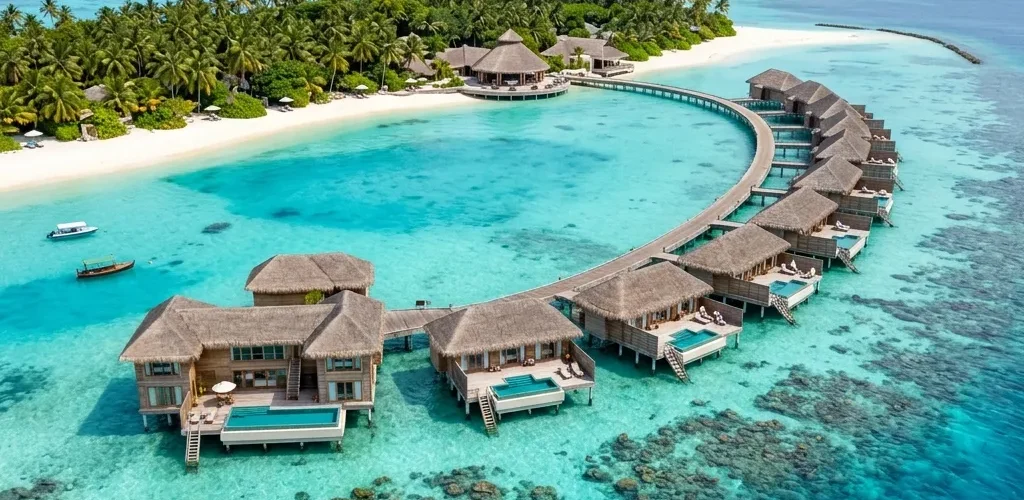
The Tata Group’s IHCL (Indian Hotels Company Limited), which operates the Taj brand, has confirmed the development of two resorts in Lakshadweep: Taj Suheli, featuring 110 rooms on Suheli Par atoll, and a second property on Kadmat Island. Both are targeted for phased opening beginning in 2026, with full operations expected by 2027. The properties represent IHCL’s bet that Lakshadweep can compete with the Maldives for upscale travellers — Indian and international — who seek pristine coral reef environments without the long-haul travel and premium pricing that the Maldives commands.
The resorts are being developed under strict environmental guidelines. Lakshadweep’s coral reefs, mangroves, and seagrass beds constitute one of India’s most biologically rich marine ecosystems, supporting hundreds of coral species, sea turtles, manta rays, and dolphins. Any development that degrades this environment would destroy the very asset the resorts are designed to showcase. Accordingly, the Taj properties will feature solar power generation, desalination for freshwater, advanced waste treatment, and construction techniques designed to minimise impact on the reef system.
The environmental approach reflects a broader industry trend towards what the hospitality sector calls “regenerative tourism” — tourism that does not merely minimise harm but actively contributes to environmental restoration. IHCL has committed to coral reef restoration programmes at both sites, in partnership with marine biologists, as a condition of its operating permits.
What Lakshadweep Offers
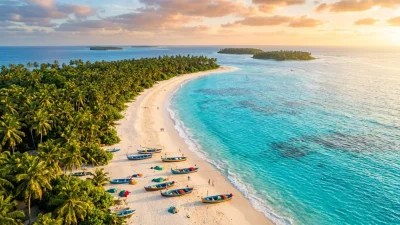
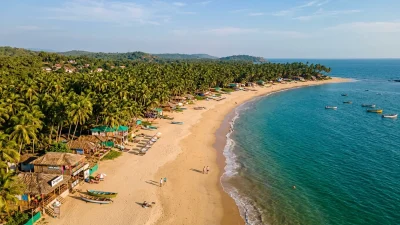
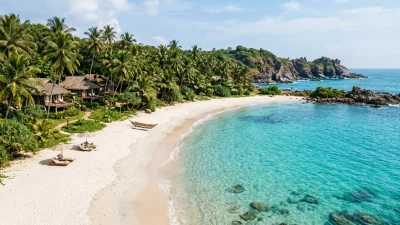
Lakshadweep’s appeal is elemental: crystal-clear turquoise lagoons enclosed by coral reefs, white sand beaches, and coconut palms under a vast tropical sky. The water visibility, which routinely exceeds 20 metres, makes Lakshadweep one of the finest snorkelling and diving destinations in the Indian Ocean. The reef systems support parrotfish, butterflyfish, groupers, moray eels, and pelagic species including tuna and barracuda, while the lagoons’ shallow, calm waters are ideal for kayaking, stand-up paddleboarding, and swimming.
Of the 36 islands, only 10 are inhabited, with a total population of approximately 70,000. The predominantly Muslim population has a distinctive culture shaped by centuries of maritime trade with the Arabian Peninsula, the Malabar Coast, and Southeast Asia. The architecture, cuisine, food culture, and social customs of Lakshadweep are unique to the islands and offer cultural experiences that complement the natural attractions.
For visitors, the accessible islands include Kavaratti (the capital), Agatti (which has the only airport), Kadmat, Bangaram, and Minicoy — each with a slightly different character. Bangaram, an uninhabited island that has hosted a small resort for years, offers the most secluded experience. Minicoy, the southernmost island, has a distinct Maldivian cultural influence and is home to one of the oldest lighthouses in the Indian Ocean. Unlike the crowded beaches of Goa, Lakshadweep’s shores offer solitude that is increasingly rare in Indian tourism.
Getting There: Improved but Still Limited
Accessibility has historically been Lakshadweep’s biggest limitation — and its most effective conservation tool. The only airport is on Agatti Island, served by a small number of flights from Kochi operated by Air India (formerly Alliance Air). Flight capacity is limited by the short runway and small aircraft, meaning that daily visitor numbers are naturally capped. Ship services from Kochi take 14-18 hours, offering a more affordable but less convenient alternative.
Plans to expand Agatti’s runway and potentially develop an airstrip on Minicoy are under discussion, along with the introduction of seaplane services that would connect multiple islands. These improvements would dramatically increase visitor capacity — a prospect that excites tourism promoters but concerns environmentalists who argue that the current natural limits on access are the most effective form of environmental protection.
The Sustainability Tightrope
Lakshadweep’s development trajectory presents a classic case study in the tension between economic development and environmental conservation. The islands’ economy, historically dependent on coconut farming, fishing, and coir (coconut fibre) production, has limited diversification options. Tourism offers the most promising avenue for economic growth, employment generation, and improved living standards for the island population.
Yet the environmental risks are genuine and well-documented. Coral reef systems, which take decades to develop and can be destroyed in weeks, are vulnerable to construction runoff, sewage pollution, anchor damage from boats, and the physical disturbance caused by snorkelling and diving. Climate change, through ocean warming and acidification, is already bleaching corals globally — adding a baseline stress that makes human impacts even more consequential.
The Lakshadweep Administration has established a regulatory framework that caps visitor numbers, requires environmental impact assessments for all development projects, and designates marine protected areas where commercial activities are prohibited. Whether these regulations will be enforced effectively as commercial pressures intensify is the critical question. The Maldives’ experience — where rapid tourism development generated enormous economic benefits but also significant coral degradation and waste management challenges — provides both a model and a cautionary tale.
India’s Answer to the Maldives
The comparison with the Maldives is inevitable and instructive. The Maldives, with a similar coral atoll geography, has built a tourism industry generating over $5 billion annually, accounting for nearly 30 per cent of GDP. It receives over 1.8 million visitors per year across more than 150 resort islands. The success has been transformative economically but has also brought environmental challenges that the Maldivian government is still grappling with.
Lakshadweep starts from a dramatically lower base — current annual visitor numbers are estimated at fewer than 50,000 — but has the advantage of learning from the Maldives’ experience. The emphasis on eco-friendly development, controlled access, and high-value, low-volume tourism suggests a more sustainable pathway, though it remains to be seen whether commercial pressures will permit this approach to endure.
For Indian travellers, the value proposition is compelling. A week at a Lakshadweep resort will cost significantly less than a comparable Maldives experience, with no passport, visa, or international travel logistics required. The domestic flight from Kochi to Agatti takes approximately 90 minutes — comparable to the time many Maldives resort transfers require by seaplane or speedboat.
Planning a Visit
Currently, all visitors to Lakshadweep require a permit, obtainable through the Lakshadweep Administration or through authorised tour operators. Indian nationals can obtain permits relatively easily; foreign nationals require additional clearances that take longer. The best time to visit is October to May, when sea conditions are calm and visibility is at its best. The monsoon months (June-September) bring rough seas that make travel difficult and can disrupt ferry services.
Accommodation options are expanding but remain limited compared to mainstream destinations. The government-run SPORTS (Society for Promotion of Recreational Tourism and Sports) resorts on several islands offer basic but clean rooms, while Bangaram Island Resort provides a more upscale experience. The upcoming Taj properties will add a luxury tier that has been entirely absent until now.
Lakshadweep in 2026 stands at a threshold. The decisions made in the coming years — about development density, environmental regulation, access management, and community engagement — will determine whether the islands achieve the rare goal of tourism that enriches both visitors and residents while preserving the natural environment that makes the destination extraordinary. It is a test that India, with its enormous tourism potential and its equally enormous environmental challenges, cannot afford to fail.