India’s Millet Revolution Deepens: From Government Policy to Mainstream Plates in 2026

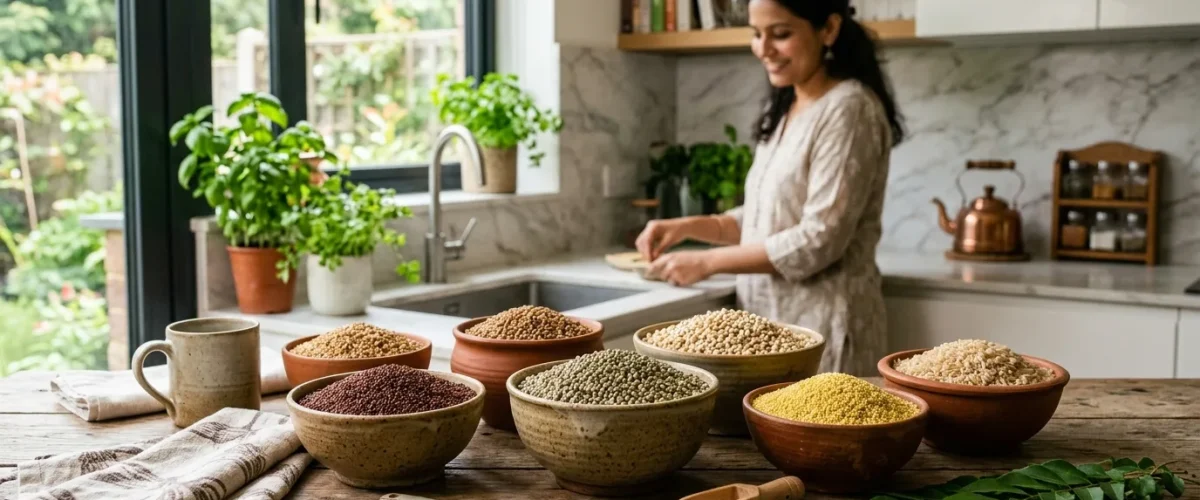
India’s dietary landscape is undergoing its most significant transformation in decades, driven by a convergence of government policy, scientific research, and shifting consumer preferences that have elevated millets from a marginalised subsistence crop to the centrepiece of the nation’s nutrition strategy. The momentum generated by the International Year of Millets in 2023 has not merely sustained but accelerated, with 2026 marking a year of measurable institutional and commercial progress.
The Policy Architecture Matures
The Indian government’s multi-pronged approach to millet promotion has evolved from awareness campaigns to structural integration. The inclusion of millets in the Public Distribution System, mid-day meal programmes, and Integrated Child Development Services has created guaranteed demand that gives farmers confidence to allocate land to these crops. In 2025-26, the area under millet cultivation in India increased by an estimated twelve percent compared to the previous year — the first sustained increase in decades after a long-term trend of decline.
The policy framework extends beyond agriculture. The Food Safety and Standards Authority of India has issued updated nutritional guidelines that explicitly recommend millet consumption, while the Indian Council of Medical Research’s revised dietary guidelines position millets alongside rice and wheat as primary cereal options rather than supplementary or alternative grains.
These regulatory shifts have created a supportive environment for commercial millet products, with clear labelling standards and quality benchmarks that give consumers confidence in a category that was previously characterised by inconsistent quality and limited standardisation.
The Science Behind the Resurgence
India’s research institutions have produced a substantial body of evidence supporting the health benefits of millet consumption. Studies conducted at the National Institute of Nutrition, Hyderabad, and published in international peer-reviewed journals have demonstrated that regular consumption of finger millet (ragi) is associated with improved glycaemic control in Type 2 diabetes patients — a finding of particular significance for India, which has the world’s second-largest diabetic population.
Research into the prebiotic properties of millets — their ability to support beneficial gut bacteria — has attracted attention from the global microbiome research community. Indian scientists have identified specific compounds in pearl millet (bajra) and foxtail millet (kangni) that appear to promote the growth of bacterial species associated with reduced inflammation and improved metabolic health.
This scientific validation has been crucial in shifting millets from the realm of traditional wisdom to evidence-based nutrition, providing healthcare professionals with the confidence to recommend millet consumption as part of therapeutic dietary interventions. The research echoes broader scientific developments being tracked across India’s research establishment.
Commercial Innovation Drives Accessibility
The millet product landscape in Indian retail has transformed beyond recognition from just three years ago. What was once a category dominated by whole grains sold in basic packaging now encompasses ready-to-eat meals, breakfast cereals, snack bars, pasta alternatives, bakery products, and beverages. Major FMCG companies including ITC, Tata Consumer Products, and several Amul divisions have launched dedicated millet product lines, bringing the scale of distribution and marketing capability that niche brands could not achieve independently.
The innovation has extended to food service, with quick-service restaurants and institutional caterers introducing millet-based menu options. School canteens in several states now offer ragi porridge and bajra rotis as standard options, normalising millet consumption among children who might otherwise never encounter these grains in urban settings.
This commercial mainstreaming reflects the broader strategies of Indian consumer companies seeking growth through health-positioned product categories.
The Farmer’s Perspective: Economics Meet Ecology
For India’s farming communities, the millet revival represents both economic opportunity and ecological resilience. Millets require significantly less water than rice or wheat, making them increasingly attractive as climate variability disrupts traditional cropping patterns. In drought-prone regions of Maharashtra, Karnataka, and Rajasthan, farmers who maintained millet cultivation through the decades of market neglect are now finding that their persistence has positioned them advantageously.
However, the transition is not uniformly smooth. Millet cultivation is more labour-intensive than mechanised rice or wheat farming, and the processing infrastructure required to convert raw millet grain into consumer-ready products remains underdeveloped in many regions. Addressing these supply-chain gaps is critical to ensuring that the economic benefits of the millet boom reach the farming communities who produce the grain.
Regional Millet Traditions Gain National Prominence
India’s millet traditions are deeply regional. Ragi is central to Karnataka’s culinary identity, bajra dominates in Rajasthan and Gujarat, jowar is a staple in Maharashtra, and foxtail millet has deep roots in Andhra Pradesh and Telangana. The national millet promotion effort has had the welcome effect of facilitating culinary cross-pollination, with recipes and preparations from one region finding appreciative audiences in others.
Food festivals, cooking demonstrations, and social media content have played significant roles in this knowledge exchange. A Rajasthani bajra ki roti recipe that might once have remained within its regional context now reaches audiences across the country, while Karnataka’s innovative ragi-based desserts have inspired adaptations using locally available millet varieties in other states.
Challenges and the Road Ahead
Despite the momentum, significant challenges remain. Consumer adoption, while growing, is still concentrated among health-conscious urban populations. Achieving mass adoption requires continued investment in product development, supply-chain infrastructure, and consumer education — particularly in communicating that millets are not merely “healthy alternatives” but delicious foods with rich culinary traditions of their own.
International market development represents another frontier. Indian millet exporters have reported growing interest from markets in Europe, East Asia, and the Middle East, where the gluten-free properties and nutritional density of millets align with consumer trends. Converting this interest into sustained commercial relationships will require investment in processing standards, packaging, and international marketing.
India’s millet journey from marginalised grain to nutritional cornerstone is among the most significant food system transformations underway anywhere in the world. Its success or failure will have implications not just for Indian public health but for global discussions about sustainable agriculture, dietary diversity, and the value of traditional food knowledge in addressing contemporary nutritional challenges.

- Fentanyl Vaccine Breakthrough: Scripps Research Develops Shot That Blocks Deadly Overdoses Before They Reach the Brain - June 13, 2026
- Nipah Virus Returns to Kerala — First Case of 2026 Confirmed, State Declares High Alert - June 12, 2026
- Jill Biden Reveals She Wanted to Keep PM Modi’s 7.5-Carat Diamond Gift but Returned It After State Department Valued It at $20,000 - June 8, 2026