Praggnanandhaa Clinches Norway Chess 2026 Title with Stunning Four-Game Classical Winning Streak

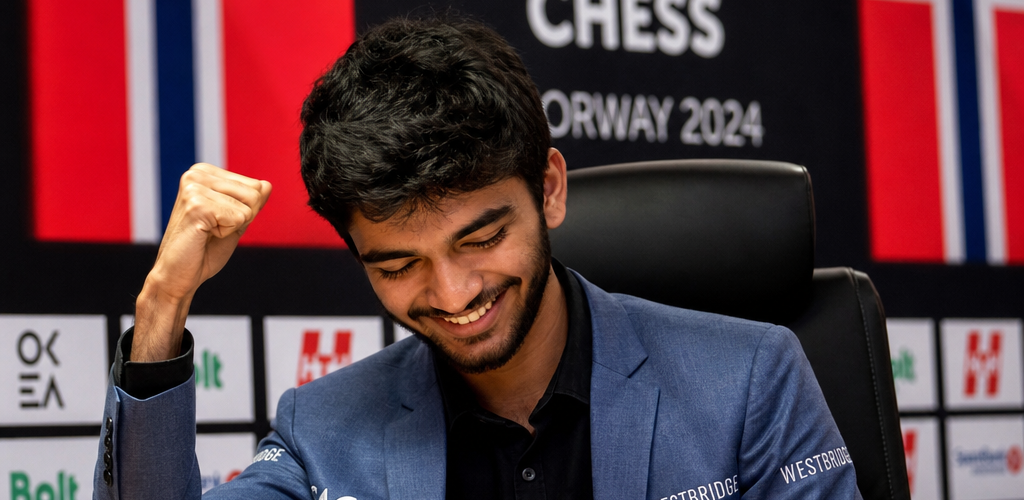
Rameshbabu Praggnanandhaa completed one of the most remarkable finishes in super-tournament chess history on Thursday, winning Norway Chess 2026 with a stunning four-game classical winning streak that saw him clinch the title a full point ahead of Wesley So. The 19-year-old Indian grandmaster beat Vincent Keymer in the final round to cap an extraordinary run that transformed him from a mid-table contender into the tournament champion.
So finished second after beating Alireza Firouzja in armageddon in the final round. Had the American grandmaster won his classical game instead, he would have claimed the title — but Praggnanandhaa’s relentless form over the closing rounds ensured that scenario never materialised. Firouzja finished third.
A Championship Built in the Final Four Rounds
What makes Praggnanandhaa’s victory so extraordinary is the trajectory. Through the first half of the tournament, the Indian teenager was not among the leaders. Then something clicked. Over the final four rounds, he reeled off four consecutive classical wins — a feat almost unheard of at this level of competition, where draws are the norm and a single classical victory can shift the entire standings.
His 12/12 point finish over those closing rounds left the rest of the field scrambling to keep pace. In super-tournament chess, where players routinely face opponents rated above 2700, winning four classical games in a row is the equivalent of a cricketer scoring four consecutive centuries in Test matches — statistically improbable and practically astonishing.
“I just felt very confident going into each game,” Praggnanandhaa said after his final-round victory. “The preparation was good, the positions felt natural, and I kept finding the right moments to push. When you’re winning, everything flows.”
The Final Round: Keymer Outplayed
In the decisive last game, Praggnanandhaa played the white pieces against Germany’s Vincent Keymer. The Indian grandmaster secured a comfortable advantage out of the opening and converted it with clinical precision — the hallmark of his play throughout the tournament’s closing stages.
Also read: Praggnanandhaa’s hat-trick in Round 9 that included a stunning win over World Champion Gukesh
The win carried additional pressure because of what was happening on the adjacent board. So was locked in a tense battle with Firouzja, and had he won in classical time, the title race would have gone to tiebreaks. Praggnanandhaa ensured that question became moot by finishing his game first with a decisive result.
What This Title Means for Indian Chess
Norway Chess is one of the most prestigious invitational super-tournaments in the world, featuring a consistently elite field. For Praggnanandhaa, this title adds to a career that has already included a World Championship Candidates appearance and a string of impressive results against the game’s absolute best.
India’s chess revolution, which began with Viswanathan Anand’s pioneering career, has now produced a generation of players who regularly compete for — and win — the biggest titles in the sport. Praggnanandhaa joins D. Gukesh, who recently became the youngest World Chess Champion, as part of an Indian chess wave that shows no signs of cresting.
“Praggnanandhaa’s closing stretch was the kind of performance that defines careers,” said veteran chess commentator and Grandmaster Srinath Narayanan. “Four classical wins against this calibre of opposition isn’t something you can plan or script. It requires a level of sustained concentration and precision that very few players in the world can deliver.”
The Women’s Event
In the women’s section, Bibisara Assaubayeva clinched the title with a round to spare, while Zhu Jiner’s third classical win in a row propelled her to second place. The women’s event showcased its own brand of fighting chess, with decisive results far outnumbering draws — a trend that organisers hope will attract more attention and sponsorship to women’s chess.
For Praggnanandhaa, the Norway Chess title will further cement his status as one of the leading contenders for the highest honours in the sport. As the chess calendar moves into the second half of 2026, the Indian prodigy has served notice that when he finds his rhythm, few in the world can match him.
Also read: the difficult Round 6 where all Indian players lost their classical games
The Tournament’s Broader Significance
Norway Chess has established itself as one of the premier invitational events on the chess calendar, regularly attracting the world’s top-10 players. The tournament’s unique format — which pairs classical games with armageddon tiebreakers to ensure decisive results — has been praised for producing fighting chess and reducing the number of drawn rounds that plague other super-tournaments.
Praggnanandhaa’s victory came against a field that included several players ranked in the world’s top 15. His ability to sustain concentration and precision over the tournament’s closing stages — when fatigue typically erodes performance and risk appetite — marks him as a player whose competitive temperament matches his considerable technical ability.
The Indian chess ecosystem, which now produces grandmasters at a rate that would have been unimaginable two decades ago, has created an infrastructure of training, competition, and institutional support that fuels this generation’s success. The Chess in Schools programme, corporate sponsorship from Tata Steel and other organisations, and the visibility provided by online streaming have collectively transformed chess from a niche pursuit to a mainstream sport in India.
What Comes Next
For Praggnanandhaa, the Norway Chess title will likely solidify his position in the world’s top five and strengthen his candidacy for future Candidates tournaments. The 2027 World Championship cycle looms large, and a title at Norway Chess — combined with his strong recent performances — makes him one of the players to watch as qualification events unfold.
More immediately, Praggnanandhaa is expected to return to India for training and domestic commitments before the second half of the super-tournament season begins. His Norway Chess triumph joins a growing list of Indian chess achievements in 2026, reinforcing the country’s status as the sport’s most dynamic force.
“We are living through a golden age of Indian chess,” said International Master Sagar Shah, co-founder of ChessBase India. “Between Gukesh’s World Championship, Praggnanandhaa’s Norway Chess title, and the depth of talent in the next generation, India is not just competing at the top — it’s dominating. And the best part is, these players are still getting better.”

- Fentanyl Vaccine Breakthrough: Scripps Research Develops Shot That Blocks Deadly Overdoses Before They Reach the Brain - June 13, 2026
- Nipah Virus Returns to Kerala — First Case of 2026 Confirmed, State Declares High Alert - June 12, 2026
- Jill Biden Reveals She Wanted to Keep PM Modi’s 7.5-Carat Diamond Gift but Returned It After State Department Valued It at $20,000 - June 8, 2026