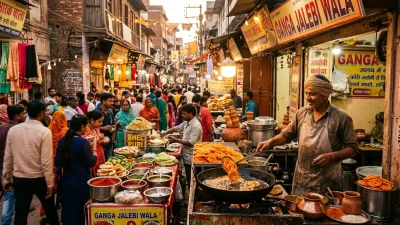
From Vada Pav to Momos: How India’s Street Food Icons Are Going Global in 2026

India’s street food has always been a source of national pride — a vibrant, democratic culinary tradition that transcends class, region, and religion. In 2026, that pride is going global. Indian street food icons — from Mumbai’s beloved vada pav and Delhi’s tangy golgappa to the steaming momos that have conquered every Indian city and the spicy chaat that defines the Indian snacking experience — are finding enthusiastic audiences in restaurants, food trucks, and pop-up markets across the world. The phenomenon represents a new chapter in Indian soft power, proving that the nation’s culinary influence extends far beyond the butter chicken and tikka masala that have long been its global ambassadors.
Vada Pav: Mumbai’s Gift to the World
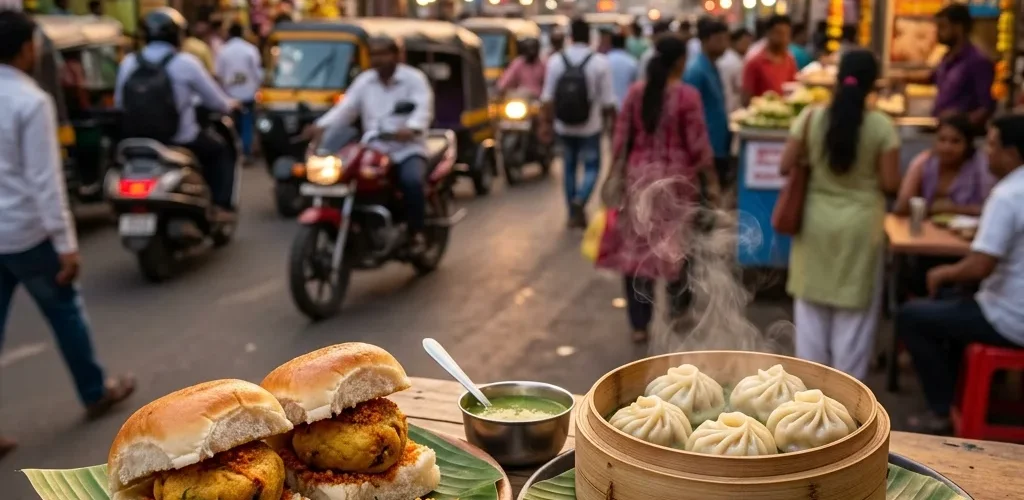
Vada pav — the gloriously simple combination of a spiced potato fritter sandwiched in a soft bread roll with green and garlic chutneys — has emerged as the most successful Indian street food export of 2026. The journey from Mumbai’s local train stations and office districts to international menus has been driven by a combination of diaspora entrepreneurship, social media virality, and the universal appeal of a handheld comfort food that delivers explosive flavour at a modest price point.
In London, the restaurant Vada Pav & Co. has expanded to three locations following its 2024 launch, with queues of up to 45 minutes during lunchtime service. In New York, Bombay Frankie — a fast-casual chain specialising in Indian street food — has introduced vada pav as a permanent menu item after its limited-time offering sold out within three days. In Dubai, where the Indian diaspora numbers over three million, vada pav stalls have become fixtures at food festivals and night markets, with vendors reporting that demand from non-Indian customers now exceeds sales to the Indian community.
The global vada pav movement has also inspired premium reinterpretations. In Singapore, a Michelin-starred Indian restaurant offers a deconstructed vada pav featuring truffle-infused potato, brioche bun, and three artisanal chutneys — a Rs 1,500 version of a snack that costs Rs 20 on a Mumbai street corner. While purists may baulk at such liberties, these high-end adaptations serve an important function: they introduce the concept and flavour profile to audiences who might never encounter the original.
Momos: From Himalayan Staple to Global Comfort Food
The momo — the steamed or fried dumpling that migrated from Tibet and Nepal into the Indian street food canon — has undergone perhaps the most dramatic expansion of any Indian street food item. Within India, momos have transcended their Himalayan origins to become a truly pan-Indian phenomenon, available on virtually every urban street corner from Chennai to Chandigarh. The Indian momo, adapted with spicier fillings, fiery red chutney, and creative variations including tandoori, kurkure (crunchy), and cheese-stuffed versions, is a distinctly Indian creation that has evolved far beyond its Central Asian ancestor.
Internationally, Indian-style momos are gaining traction in markets where conventional Chinese dumplings and Japanese gyoza have already established the dumpling category. In Australia, the Wow! Momo chain — India’s largest momo brand with over 600 Indian outlets — has launched its first international franchise in Melbourne, targeting both the Indian diaspora and the broader Australian appetite for Asian street food. In Canada, Indian momo stalls at night markets in Toronto and Vancouver have become social media favourites, with the spicy chilli oil momo emerging as a particular hit among non-Indian customers.
Chaat: The Flavour Bomb Goes International
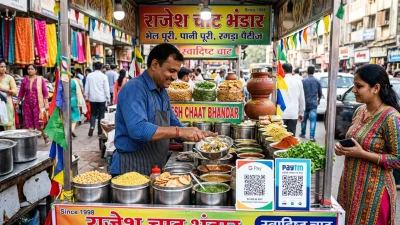
Chaat — the family of tangy, spicy, sweet, and crunchy snacks that define Indian street eating — is finding its global audience through both dedicated chaat restaurants and the incorporation of chaat elements into mainstream international menus. In the United States, celebrity chef Maneet Chauhan’s restaurants in Nashville feature a chaat section that has introduced thousands of American diners to the complex flavour layering of pani puri, dahi puri, and aloo tikki. In the UK, supermarket chain Marks & Spencer launched a line of chaat-inspired ready meals in early 2026, including a “Bombay Chaat Salad” and “Papdi Chaat Bowl” that have proven popular among health-conscious consumers drawn to the cuisine’s vegetable-forward, probiotic-rich profile.
The global chaat movement has been amplified by social media, particularly TikTok and Instagram Reels, where the visual drama of pani puri preparation — the hollow puri being punctured, filled with spiced water and chutneys, and consumed in a single explosive mouthful — has generated billions of views globally. Food anthropologists suggest that chaat’s appeal lies in its multi-sensory complexity: the combination of contrasting textures, temperatures, and flavour notes in a single bite creates a dopamine response that few other snack categories can match.
The Business of Indian Street Food Exports
The globalisation of Indian street food is supported by a maturing business ecosystem. Indian food-tech companies are developing frozen and shelf-stable versions of street food items that can be exported to international markets. Brands such as iD Fresh Food, Gits, and Haldiram’s have expanded their international distribution networks, placing chaat mixes, frozen samosas, and ready-to-eat vada pav in mainstream supermarkets across North America, Europe, and the Middle East.
The franchise model has also proven effective. Wow! Momo, Chaipoint, and Chai Pani have all secured international franchise agreements, exporting not just recipes but entire operational systems — including supply chain specifications, kitchen layouts, and brand guidelines — to franchisees in the Indian diaspora market. The economic potential is significant: the global Indian food market is estimated at USD 30 billion in 2026, and street food represents the fastest-growing segment within it. This international expansion of Indian culinary traditions parallels the global reach being achieved by India’s entertainment industry and cultural exports.
Cultural Ambassadors: The Vendors Behind the Movement
Behind the business statistics are individual vendors and entrepreneurs whose passion and skill are the real engines of India’s street food globalisation. Raju Omlet in Ahmedabad, whose hand-beaten omelettes have attracted international food tourists and Netflix documentary crews, exemplifies the power of individual mastery to create global cultural moments. In Delhi, the octogenarian proprietors of Paranthe Wali Gali’s most famous stalls have become inadvertent celebrities, their craft recognised as a form of intangible cultural heritage that Indian food historians are actively documenting and preserving.
The new generation of Indian street food entrepreneurs is more internationally minded. Young vendors in Mumbai, Bengaluru, and Delhi are experimenting with fusion formats — Korean-style golgappa, Mexican-Indian street tacos filled with paneer tikka, Japanese-influenced momo with miso dipping sauce — that appeal to globally travelled Indian consumers and international food tourists alike. These innovations are born at the intersection of tradition and creativity, honouring the essence of street food while refusing to be constrained by it.
Challenges: Standardisation, Regulation, and Authenticity
The globalisation of Indian street food faces challenges. Quality standardisation across international outlets remains inconsistent, with some franchise operations struggling to replicate the flavour intensity and textural contrasts that define the original street stall experience. Regulatory hurdles in international markets — including food labelling requirements, allergen declarations, and import restrictions on certain Indian spices and ingredients — create compliance costs that can make Indian street food less price-competitive than local alternatives.
The authenticity debate is also ever-present. As Indian street food is adapted for international palates — with reduced spice levels, modified textures, and premium pricing — critics argue that the essential character of the food is diluted. Proponents counter that adaptation is the natural process by which all cuisines globalise, and that introducing international audiences to Indian flavours in any form creates curiosity that ultimately drives demand for the authentic article. For readers exploring how Indian food traditions maintain their identity while reaching new audiences, Chettinad cuisine’s bold journey into the national spotlight offers a fascinating domestic parallel.
A Plate Without Borders
India’s street food is going global because it deserves to. The flavour complexity, the democratic pricing, the theatre of preparation, and the sheer joy of eating a perfectly assembled pani puri or a piping-hot vada pav are experiences that transcend cultural boundaries. In 2026, as Indian street food icons claim their place on menus from Melbourne to Manhattan, they carry with them the stories, traditions, and culinary genius of millions of vendors who have perfected their craft over generations. The world is eating India’s street food — and the world is better for it.

- Fentanyl Vaccine Breakthrough: Scripps Research Develops Shot That Blocks Deadly Overdoses Before They Reach the Brain - June 13, 2026
- Nipah Virus Returns to Kerala — First Case of 2026 Confirmed, State Declares High Alert - June 12, 2026
- Jill Biden Reveals She Wanted to Keep PM Modi’s 7.5-Carat Diamond Gift but Returned It After State Department Valued It at $20,000 - June 8, 2026