Rediscovering Chettinad Cuisine: Tamil Nadu’s Spiciest Regional Food Tradition Gains National Spotlight in 2026

In the labyrinthine mansions of Karaikudi and the surrounding villages of Tamil Nadu’s Sivaganga district, a culinary tradition of extraordinary intensity and complexity has flourished for centuries. Chettinad cuisine — the food of the Nattukottar Chettiars, a Tamil merchant community whose trading empire once spanned Southeast Asia — is one of India’s spiciest, most aromatic, and most technically sophisticated regional food traditions. In 2026, this once-obscure cuisine is stepping firmly into the national spotlight, driven by a convergence of food media attention, restaurant expansion, and a growing Indian appetite for authentic regional flavours that challenge the palate and reward the curious eater.
The Roots: A Cuisine Shaped by Trade and Travel
Understanding Chettinad food requires understanding Chettinad history. The Nattukottar Chettiars were merchant bankers who, from the 17th century onwards, built trading networks spanning Ceylon, Burma, Malaya, Singapore, and Vietnam. Their cuisine absorbed influences from these trading partners — star anise from China, cloves and nutmeg from the Spice Islands, dried meats and preservation techniques from Southeast Asian traditions — and fused them with the fiery, tamarind-sour cooking base of the Tamil country. The result is a cuisine that is simultaneously hyperlocal and cosmopolitan, rooted in the dry landscapes of central Tamil Nadu yet inflected with flavours gathered from across the Indian Ocean.
The defining characteristic of Chettinad cooking is its use of freshly ground spice pastes — masalas — that combine up to 25 different spices into complex, layered flavour profiles. Kalpasi (stone flower), marathi mokku (dried flower pods), and star anise are signature ingredients that distinguish Chettinad masalas from other South Indian spice blends. The grinding is traditionally done on a stone aattu kal (mortar and pestle), a practice that many Chettinad households maintain even in 2026, believing that the friction of stone produces a heat and depth of flavour that electric grinders cannot replicate.
The Dishes: A Repertoire of Fire and Flavour
Chettinad cuisine offers a repertoire that extends far beyond the chicken Chettinad familiar to most Indian restaurant-goers. Chettinad Pepper Chicken — cooked with a generous hand of freshly cracked black pepper, whole garlic cloves, and curry leaves in a dry preparation that delivers a searing, endorphin-releasing heat — is the cuisine’s most iconic dish. But the tradition encompasses hundreds of preparations, many rarely encountered outside the Chettinad region.
Kavuni Arisi, a celebratory black rice pudding sweetened with jaggery and studded with cashews and coconut, is served at weddings and festivals. Paniyaram — fermented rice and lentil batter cooked in a specialised pan to create crispy, doughnut-shaped dumplings — is a breakfast staple that varies from savoury to sweet. Kuzhi Paniyaram with kothamalli chutney (coriander chutney) is a morning ritual in Chettinad homes. Athirasam, a deep-fried jaggery and rice flour sweet, and Kavuni Arisi together represent the dessert tradition of a cuisine that, contrary to common perception, has a sophisticated sweet repertoire.
The non-vegetarian preparations are where Chettinad cuisine reaches its full expressive power. Chettinad Crab Masala, Prawn Varuval (dry-fried prawns with spices), Mutton Kuzhambu (a tamarind-based curry of extraordinary depth), and Quail Roast demonstrate the range of proteins and cooking techniques that the tradition encompasses.
National Spotlight: Restaurants and Media Drive Discovery
The 2026 surge in national interest in Chettinad cuisine is driven by several factors. First, a new generation of restaurants dedicated to authentic Chettinad cooking has opened in metropolitan India. Bangala in Karaikudi — a heritage property that has served Chettinad meals to visitors for decades — has inspired urban counterparts in Chennai, Bengaluru, Mumbai, and Delhi that bring the cuisine to city audiences with minimal compromise. Anjappar, the restaurant chain that first popularised Chettinad chicken nationally, has expanded to over 100 outlets, while newer entrants such as Ponnusamy and Dindigul Thalappakatti have added Chettinad specialties to their menus.
Second, food media and social platforms have amplified Chettinad cuisine’s visibility. YouTube cooking channels dedicated to authentic Chettinad recipes — several run by Chettinad home cooks sharing family recipes for the first time — have accumulated millions of views. Food documentaries and travel shows, including Netflix-distributed content featuring Chettinad’s spectacular mansions alongside its food culture, have introduced the cuisine to national and international audiences. The cuisine’s photogenic qualities — vivid red masalas, dramatic whole spice presentations, and the rustic beauty of Chettinad kitchens — make it particularly suited to the visual storytelling formats of Instagram and YouTube.
The Mansion Connection: Heritage Tourism Meets Food Tourism
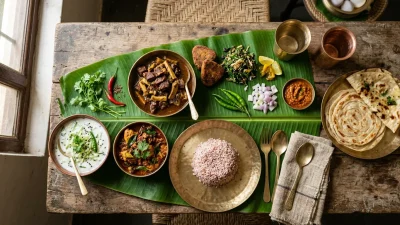
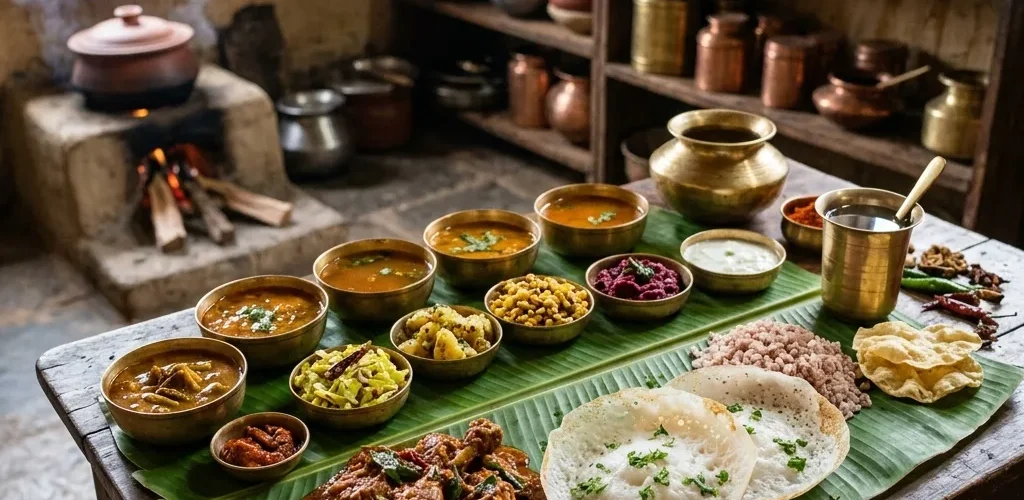
Chettinad’s culinary renaissance is inseparable from its heritage tourism story. The region’s extraordinary mansions — palatial homes built by merchant families in the 19th and early 20th centuries, featuring imported Italian marble, Burmese teak, Belgian chandeliers, and hand-painted tiles from Japan — are increasingly drawing tourists who combine architectural exploration with culinary immersion. Several mansions have been converted into heritage hotels and homestays that offer guests the complete Chettinad dining experience: multi-course meals served on banana leaves, prepared by household cooks using family recipes, in dining halls whose grandeur echoes the merchant wealth that created the cuisine.
The Tamil Nadu Tourism Development Corporation has launched a dedicated Chettinad Heritage and Food Trail in 2026, a self-guided route connecting the key mansion towns of Karaikudi, Kanadukathan, Athangudi, and Devakottai with recommended restaurants, cooking demonstration centres, and spice markets. This integration of food and heritage tourism aligns with broader Indian travel trends, much like Karnataka’s ancient heritage sites attracting record visitors by combining cultural and experiential tourism.
Preserving the Tradition: Challenges and Initiatives
Despite its rising national profile, Chettinad cuisine faces preservation challenges. The Chettiar community’s migration from the ancestral villages to cities across India and abroad has reduced the number of households where traditional cooking is practiced daily. Many of the most complex recipes — which require specific techniques, rare spice combinations, and hours of preparation — risk being simplified or lost as younger family members adopt urban lifestyles and cooking habits.
In response, several preservation initiatives have emerged. The Chettinad Food Foundation, established in 2024, is systematically documenting recipes from elderly community members, recording not just ingredients and proportions but the oral history, ritual significance, and seasonal context of each dish. The foundation has published a comprehensive recipe archive online, available in Tamil and English, and conducts cooking workshops in Chettinad and in metropolitan cities to transmit techniques to younger generations.
Cooking Chettinad at Home: A Beginner’s Guide
For home cooks interested in exploring Chettinad flavours, the entry point is the masala. A basic Chettinad masala requires fennel seeds, cumin, black pepper, dried red chillies, coriander seeds, turmeric, and a few distinctive additions — kalpasi (available from South Indian spice vendors) and star anise. Dry-roasting and grinding these spices fresh is non-negotiable; pre-ground spice mixes cannot replicate the aromatics of a freshly prepared Chettinad masala. From this base, a simple Chettinad chicken or vegetable kuzhambu can be prepared by tempering the masala with curry leaves, onion, and tomato, adding the protein or vegetable, and simmering with tamarind water until the gravy reaches a thick, coating consistency.
For deeper exploration, visiting Karaikudi and cooking with local families remains the ultimate education. Several homestay operators now offer cooking experiences that include market visits, spice grinding sessions, and hands-on preparation of three to four Chettinad dishes — an experience that combines culinary learning with cultural immersion in one of India’s most architecturally magnificent settings. Those interested in India’s broader regional culinary landscape should explore the Kashmiri Wazwan tradition for a fascinating contrast in royal feast cuisine from the opposite end of the subcontinent.
Spice, Fire, and Identity
Chettinad cuisine’s journey from regional obscurity to national spotlight is a story about identity — about a community’s culinary expression of its history, values, and relationship with the wider world. In every mortar-ground masala and every pepper-crusted piece of chicken, the Chettiars encoded their merchant heritage, their aesthetic sophistication, and their uncompromising commitment to flavour intensity. In 2026, as India increasingly celebrates its extraordinary regional food diversity, Chettinad cuisine is claiming the recognition it has always deserved — not as a novelty or a footnote, but as one of the great culinary traditions of the subcontinent, as relevant and revelatory today as it was when Chettiar ships sailed the spice routes of the Indian Ocean.

- Fentanyl Vaccine Breakthrough: Scripps Research Develops Shot That Blocks Deadly Overdoses Before They Reach the Brain - June 13, 2026
- Nipah Virus Returns to Kerala — First Case of 2026 Confirmed, State Declares High Alert - June 12, 2026
- Jill Biden Reveals She Wanted to Keep PM Modi’s 7.5-Carat Diamond Gift but Returned It After State Department Valued It at $20,000 - June 8, 2026