ED Arrests I-PAC Co-Founder Vinesh Chandel in Money Laundering Probe Linked to West Bengal Coal Scam: What It Means for TMC and DMK

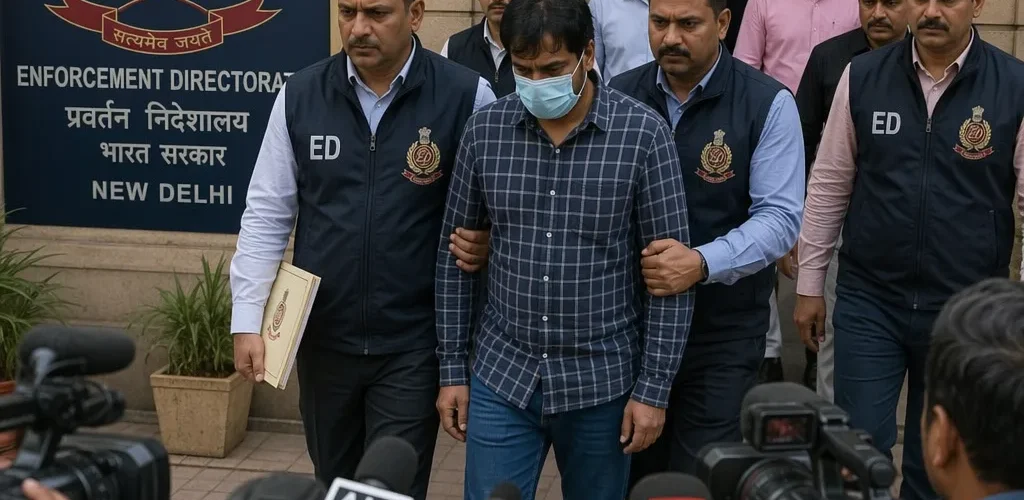
The Enforcement Directorate (ED) on April 14, 2026, arrested Vinesh Chandel, co-founder and director of the Indian Political Action Committee (I-PAC) — one of India’s most influential political consultancy firms — in connection with a money laundering investigation linked to the West Bengal coal scam. The arrest came 10 days after the ED conducted extensive searches at I-PAC premises and the residences of its directors in Delhi, Bengaluru, Hyderabad, and Mumbai. The probe has significant political ramifications, as I-PAC counts both the TMC (Trinamool Congress) and DMK among its most prominent clients, and the investigation is also examining financial connections to former AAP communication adviser Vijay Nair.
Who Is I-PAC and Why Does This Matter?
The Indian Political Action Committee, widely known as I-PAC, is the political consultancy firm founded by election strategist Prashant Kishor, who is widely regarded as one of the most influential political operatives in contemporary Indian politics. I-PAC has been credited with designing winning campaign strategies for multiple parties across India, including the BJP’s 2014 general election campaign, the TMC’s 2021 Bengal victory, the DMK’s 2021 Tamil Nadu sweep, and several other state-level campaigns.
While Prashant Kishor stepped away from I-PAC’s day-to-day operations in 2022, the firm has continued to operate under the leadership of directors including Vinesh Chandel, Pratik Jain, and Rishi Raj Singh. Its client list at the time of the ED probe included the TMC for the West Bengal 2026 elections and the DMK for its Tamil Nadu electoral strategy.
The firm’s arrest of a co-founder by the ED has sent ripples through India’s political establishment, raising questions about whether the investigation is a legitimate probe into financial irregularities or a politically motivated action targeting consultants associated with opposition parties.
The Coal Scam Connection: How I-PAC Got Entangled
The ED’s investigation stems from a broader probe into illegal coal mining and money laundering in West Bengal, a case that has been under investigation for several years. The coal scam involves allegations that proceeds from illegal mining operations in the state were laundered through a complex web of shell companies, real estate transactions, and business entities.
According to ED sources, the investigation revealed financial flows between entities connected to the coal scam and payments received by I-PAC for its political consultancy services. The ED alleges that some payments to I-PAC may have originated from tainted sources, effectively making the consultancy firm a potential participant in money laundering — even if unknowingly.
I-PAC has denied any wrongdoing, stating that all its client contracts are legitimate business arrangements with proper documentation, invoicing, and tax compliance. The firm’s lawyers have argued that I-PAC cannot be held responsible for the ultimate source of funds paid by its clients, as long as the payments were received through proper banking channels.
The Vijay Nair Connection: AAP’s Shadow Over the Probe
Adding another political dimension to the investigation, the ED has also been examining the financial dealings of Vijay Nair, the former communication adviser of the Aam Aadmi Party (AAP) and one of the accused in the Delhi liquor policy scam. On April 2, 2026, alongside the I-PAC searches, the ED also searched premises connected to Nair.
Sources say the agency is probing transactions related to payments between Vijay Nair and I-PAC, examining whether any funds connected to the liquor scam investigation flowed through or to the political consultancy firm. The investigation into these transactions is separate from but parallel to the coal scam probe, creating a complex web of financial investigations that touch multiple political entities.
Nair’s association with AAP and I-PAC’s work with TMC and DMK means the ED probe has potential implications for at least three major opposition parties — a fact that critics have highlighted in their claims that the investigation is politically targeted.
The Arrest and Legal Proceedings
Vinesh Chandel was arrested in Delhi on April 14 and produced before a special Prevention of Money Laundering Act (PMLA) court for custodial interrogation. The ED had earlier issued multiple summonses to I-PAC directors, including Pratik Jain and Rishi Raj Singh, who allegedly refused to appear before the agency despite repeated notices — a factor that contributed to the escalation to searches and arrest.
Earlier in January 2026, the ED had conducted preliminary searches on I-PAC’s offices, seizing documents and electronic devices. The April searches were more extensive, covering personal residences of directors in four cities. The escalation from searches to arrest suggests the ED believes it has found evidence of direct involvement by I-PAC leadership in the alleged laundering activities.
Chandel’s legal team has challenged the arrest, arguing that the evidence does not support money laundering charges against I-PAC or its directors. A bail application is expected to be filed shortly.
Political Reactions: Opposition Cries Foul, BJP Defends Agencies
The arrest has predictably divided political opinion along party lines. The TMC has called the investigation “political vendetta” aimed at destabilising its campaign ahead of the West Bengal Assembly elections. TMC leaders have pointed out that ED actions against I-PAC intensified precisely as the firm was managing TMC’s election strategy.
The DMK, while more measured in its public response, has expressed concern about the timing of the investigation and its potential impact on democratic processes. Senior DMK leaders have questioned whether investigating a political consultancy firm during an active election cycle constitutes interference in the democratic process.
The BJP has defended the investigative agencies, maintaining that the ED operates independently and that its investigations are based on evidence, not political considerations. BJP spokespersons have pointed out that the coal scam investigation predates the current election cycle and involves serious allegations of financial crimes.
Legal experts note that the PMLA provisions used in the case — which allow for attachment of assets and long periods of custodial interrogation — have been controversial since their expansion, with the Supreme Court examining their constitutional validity in ongoing proceedings.
What This Means for India’s Political Consultancy Industry
Beyond the immediate political implications, the I-PAC investigation raises fundamental questions about the regulation and accountability of political consultancy firms in India. Unlike many Western democracies where political consultancies operate within regulated frameworks with disclosure requirements, India’s political consultancy industry operates in a relatively unregulated space.
I-PAC’s model — working across party lines, handling large sums for campaign management, and operating at the intersection of politics, media, and finance — is inherently exposed to risks from the financial activities of its clients. The question of how far a consultancy firm’s responsibility extends for verifying the sources of its clients’ funds is one that Indian law has not clearly addressed.
The outcome of the Vinesh Chandel case could set important precedents for how political consultancy firms operate in India, potentially leading to calls for greater regulation, disclosure requirements, and client verification processes in an industry that has become central to how Indian elections are fought and won.
Looking Ahead: Legal Battles and Electoral Impact
With West Bengal’s second phase of elections on April 29 and counting on May 4, the timing of the arrest ensures maximum political impact. Whether that impact helps the BJP by discrediting TMC’s campaign machinery or generates sympathy for the opposition as victims of “agency warfare” remains to be seen.
For I-PAC, the immediate challenge is operational. With a co-founder in custody, directors under investigation, and offices having been searched, the firm’s ability to function effectively during an active election campaign is severely compromised. The arrest of Vinesh Chandel is not just a legal matter — it is a political earthquake whose aftershocks will be felt across India’s electoral landscape for months to come.

- India’s Startup Funding Crosses $7.2 Billion in H1 2026 - July 1, 2026
- After Ireland Shock, India’s T20I Side Faces Bigger Test - July 1, 2026
- Ireland Stun World Champions India 2-0 in Belfast, Sooryavanshi Debate Rages On - June 29, 2026